
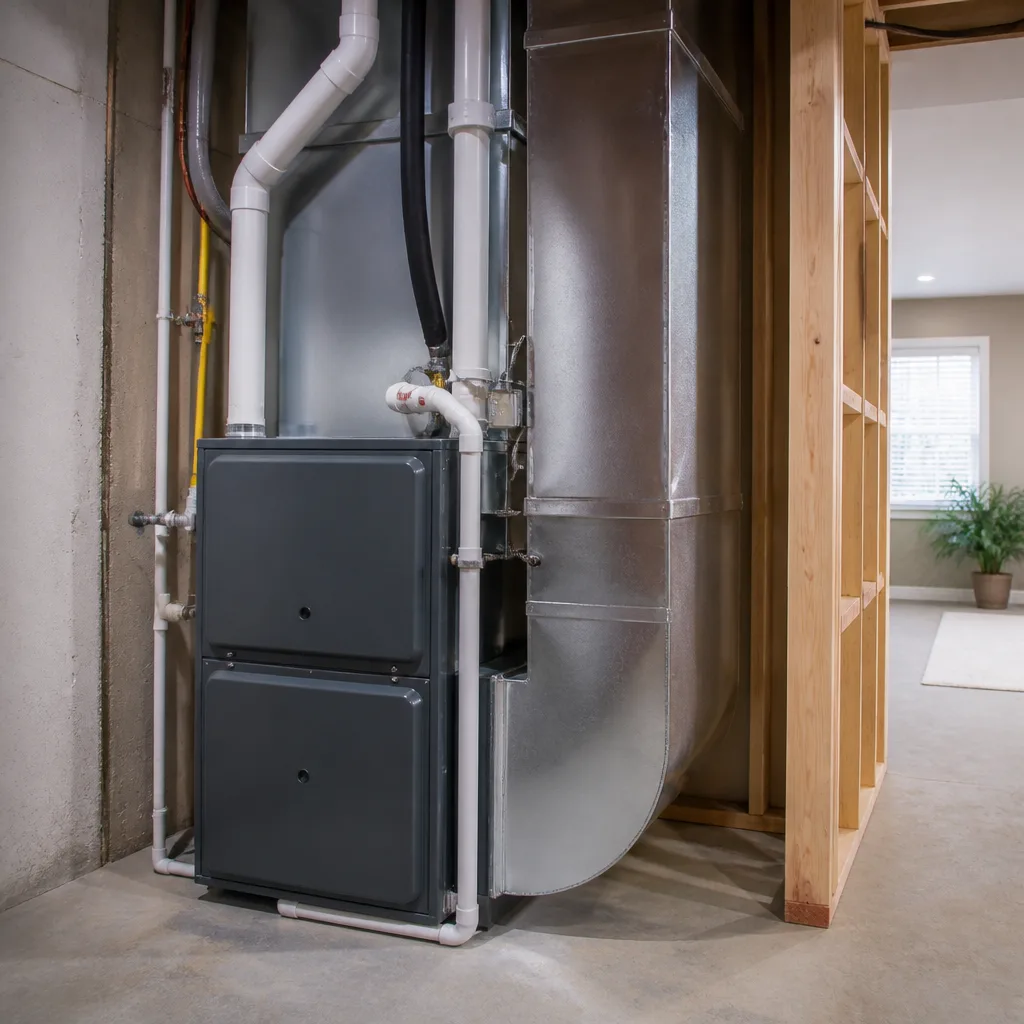
 Furnace & heating
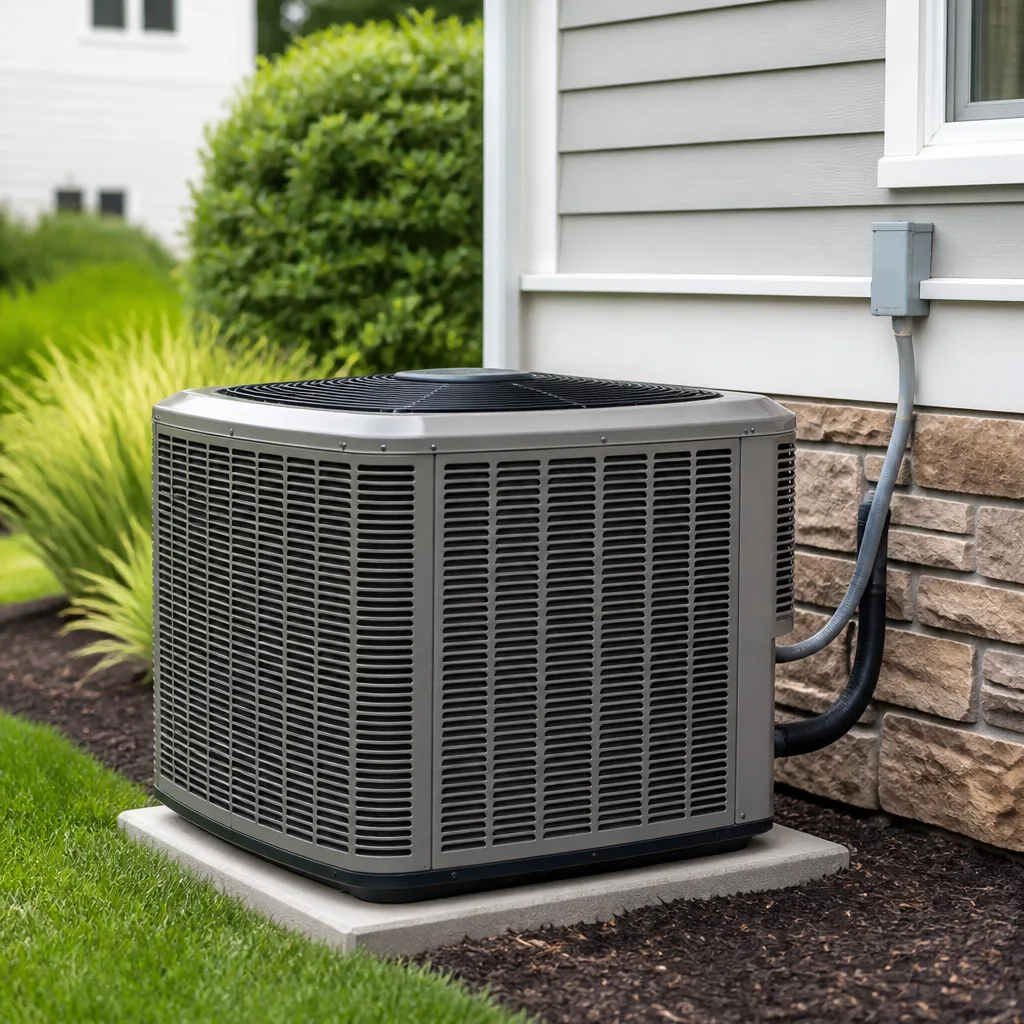 AC repair
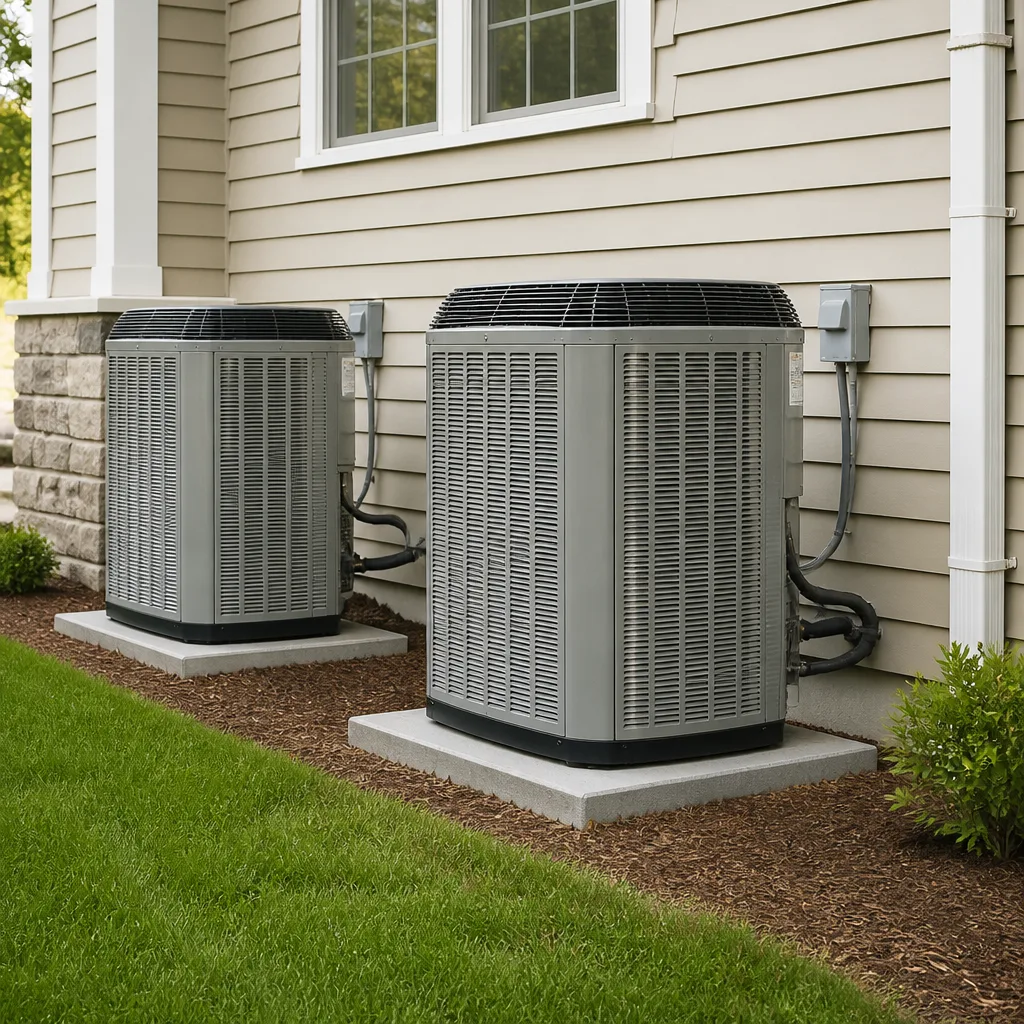 Heat pumps
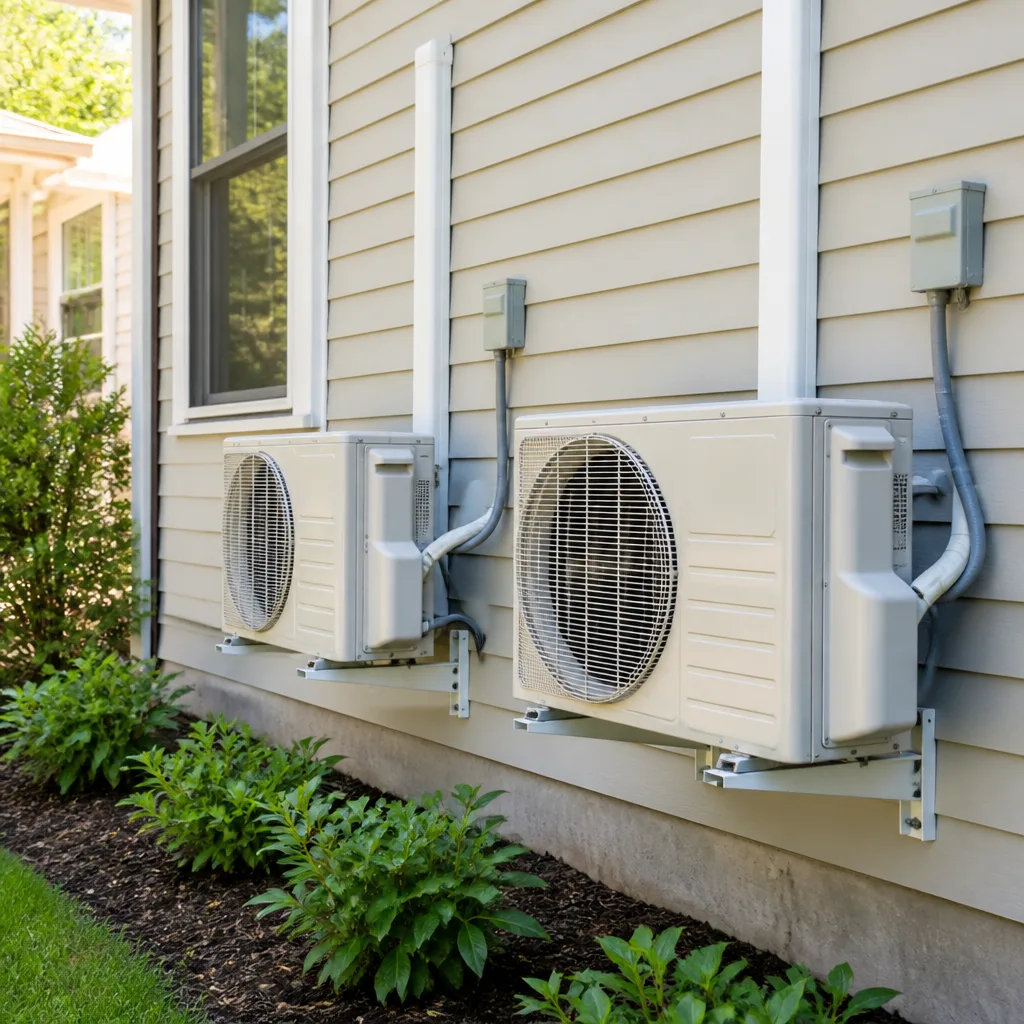 Ductless mini splits
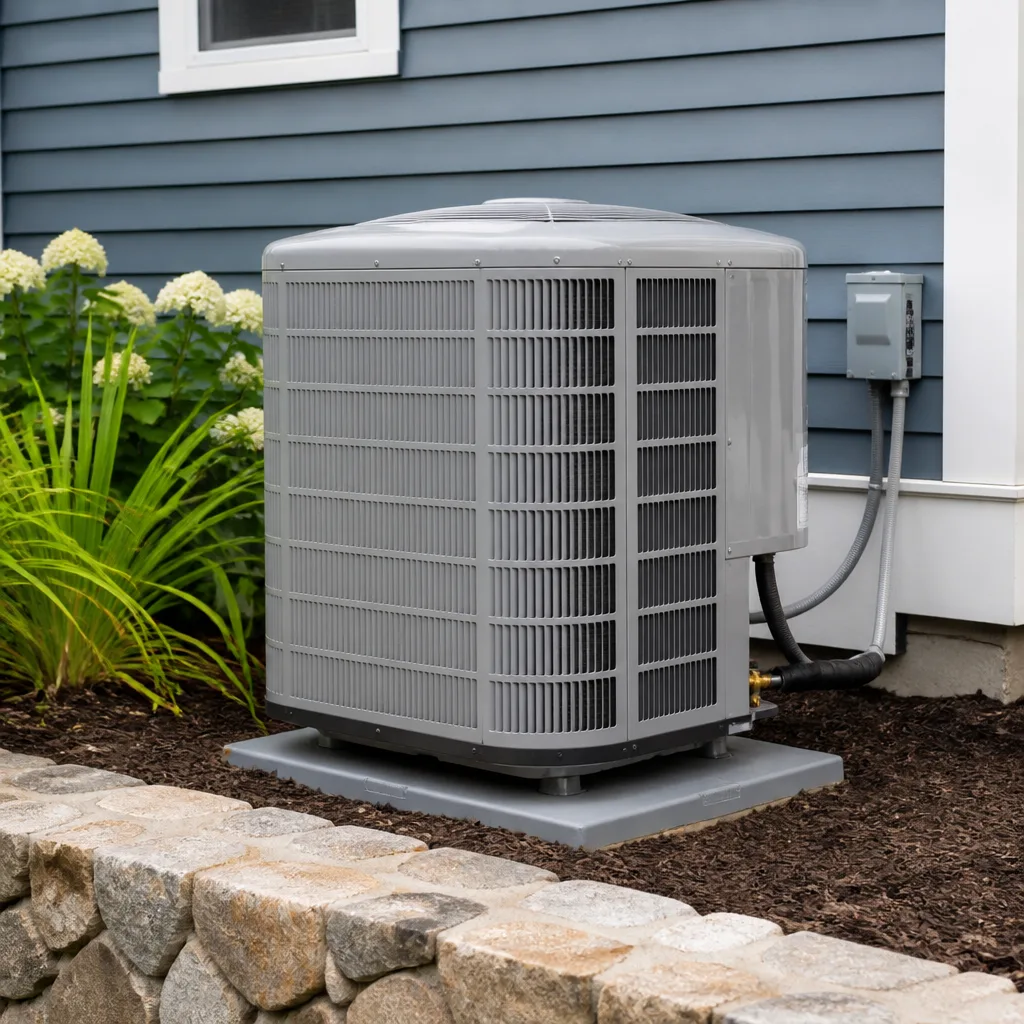 Carrier
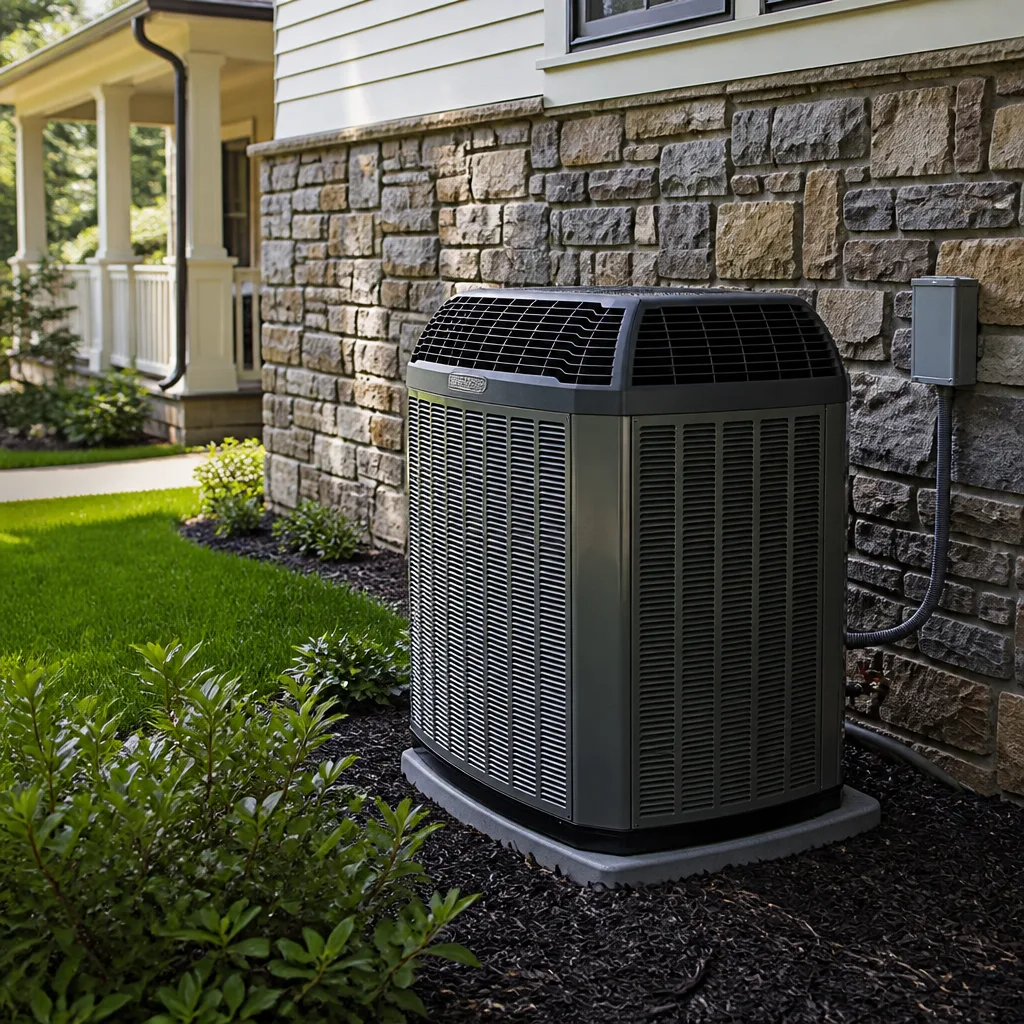 Trane
Trane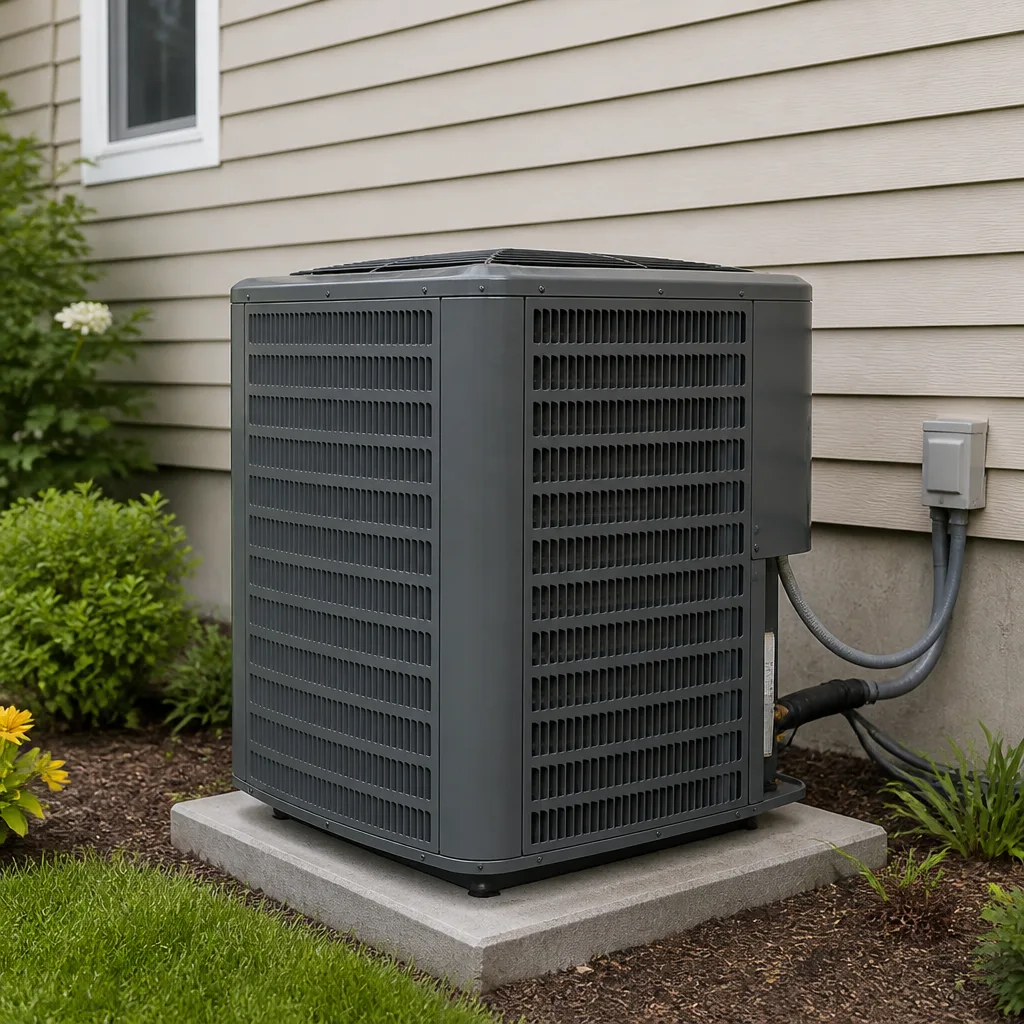 Goodman
Seasonal tune-up and full diagnostic on your Carrier, Trane, or Goodman system - readings shown to you before any repair is proposed
Diagnosis first, numbers second - you approve the repair price before a single part goes in.
Get your free estimateDaikin Capacitor Replacement: The Fort Worth Owner’s Guide
A failed capacitor is the single most common reason a Daikin condenser fan won’t spin or the compressor just hums without starting. We stock Daikin-compatible capacitors on our trucks and typically replace them same-day in Fort Worth for $150 to $400 installed, depending on the model and whether it’s a single, dual, or turbo-style capacitor. The part itself usually runs $15 to $60; the rest is the diagnostic, the swap, and testing the system end-to-end so you’re not back in the same spot in August.
Most homeowners discover the problem by accident. The thermostat is set to 72, the inside blower is blowing air, but that air feels warm. Outside, the condenser unit is making a low hum but the fan isn’t turning. Sometimes the unit trips a breaker. That’s the capacitor failing to give the motors the voltage kick they need to start, and Fort Worth summers punish capacitors harder than almost any climate in the country.
Which Daikin Models This Applies To
This guide covers the Daikin split-system residential lines most common in Fort Worth homes: the DX series (DX13, DX14, DX16, DX18), the Fit system (DZ series with the smaller footprint inverters), and older R-410A Daikin Comfort and Goodman-Daikin crossover units that share the same capacitor architecture. If you’ve got a Daikin mini-split, that’s a different electrical setup, and we handle those too, but the capacitor design is not the same.
The gotcha with Daikin is the capacitor’s microfarad (μF) rating and voltage tolerance. A capacitor labeled 45/5 μF at 370 or 440 volts will not safely substitute for one rated 35/5 at 440, even if they look identical and come in the same oval can. Matching the wrong rating causes the compressor to draw too much inrush current, which shortens its life. On the OEM-versus-aftermarket question: Daikin factory capacitors are solid, but we’ve installed thousands of AmRad, Titan HD, and Packard equivalents with excellent results in Texas heat. The key is matching the spec exactly and buying a unit rated for 440V whenever the original was, since 440V capacitors handle voltage spikes better on hot days when the grid strains.
Styles & brands we work with
Signs Your Daikin Capacitor Replacement Is Failing
- Condenser fan not spinning while the unit hums – The cap has lost enough of its charge to start the fan motor. The hum is the fan motor locked on the start winding, pulling current but not rotating. Left unrepaired, this burns out the fan motor.
- Compressor short-cycling or refusing to start – A weak compressor-side capacitor can’t provide the torque the compressor needs, so it cycles on the thermal overload. You’ll hear it click on, run a minute, then shut off. Each cycle is heat and stress the compressor carries.
- AC blows warm air – The blower inside runs fine because it’s on a different circuit. The outdoor unit isn’t doing its half of the job, so the coil never sheds heat and the air inside never cools.
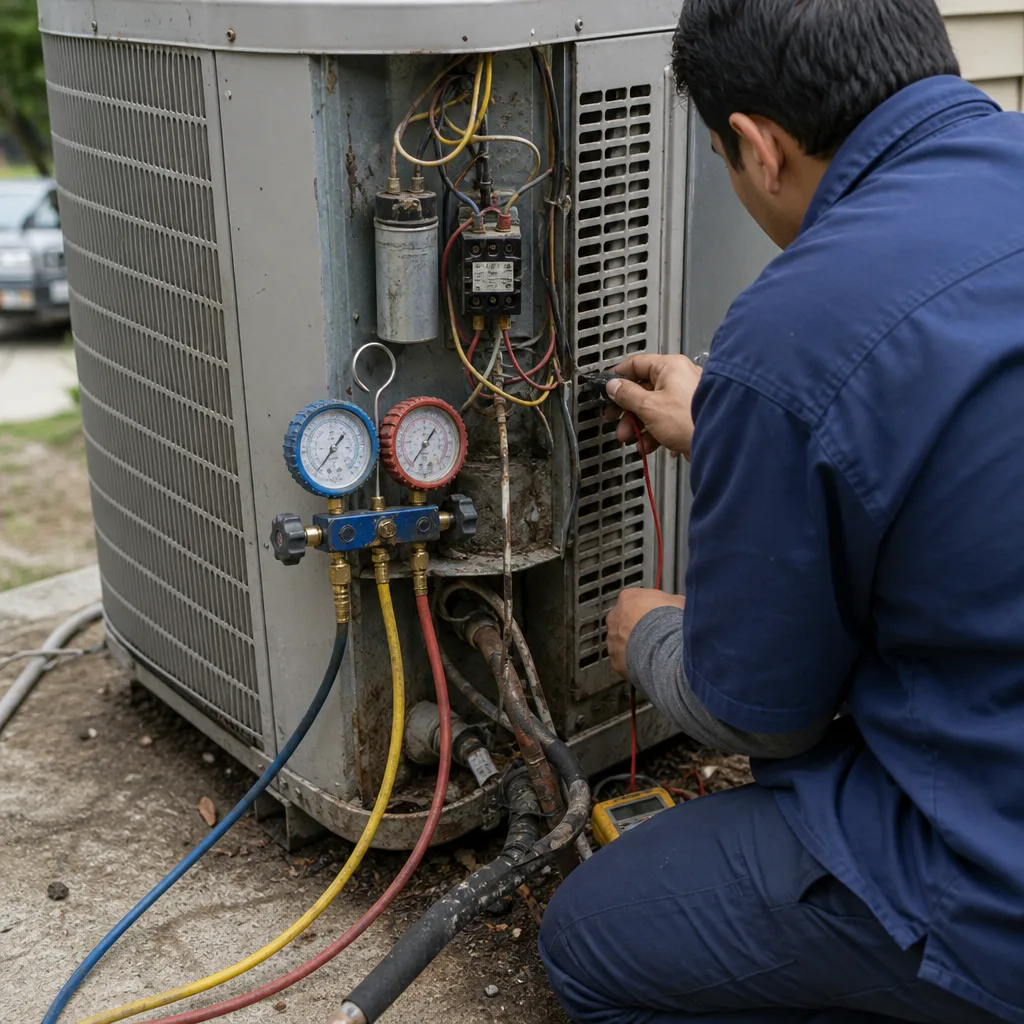
- Bulging, leaking, or rattling capacitor can – If you open the panel and the capacitor’s top is domed or rusty fluid has leaked down the sides, it’s failed and needs replacing now. A rattling cap has detached internally and will fail completely soon.
- Unusual clicking or buzzing from the outdoor unit – That’s the start relay and contactor trying repeatedly to get a motor going. The longer this goes on, the more you’re putting a load on components that were never meant to handle repeated failed starts.
See the difference
 Before
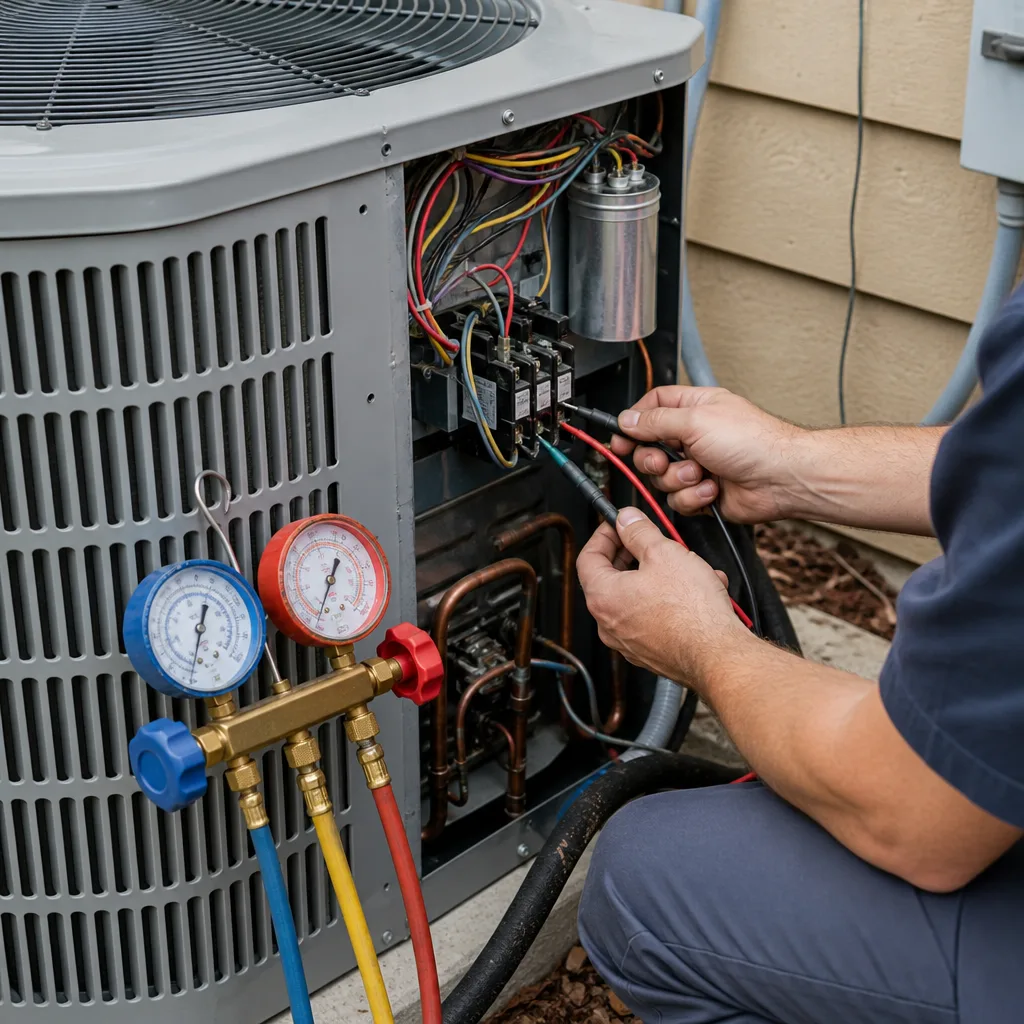 After
After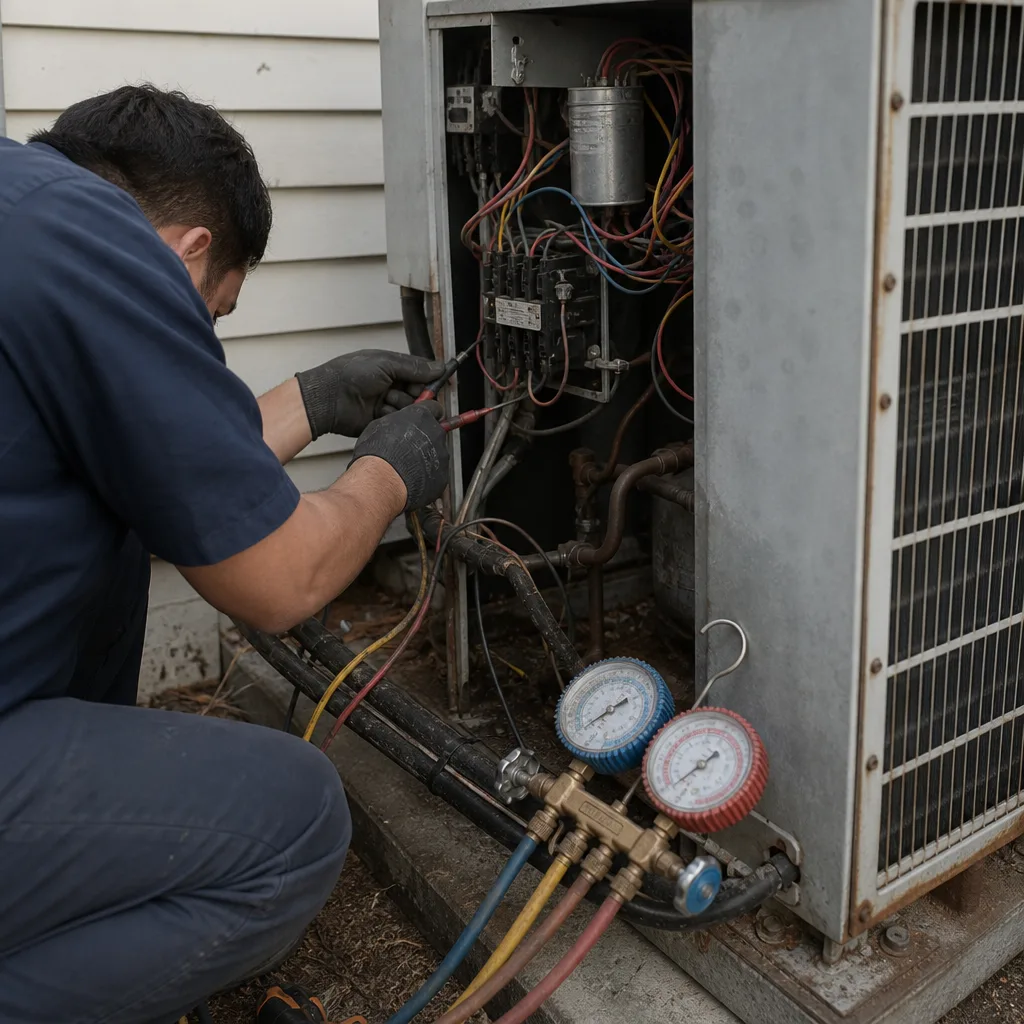 Before
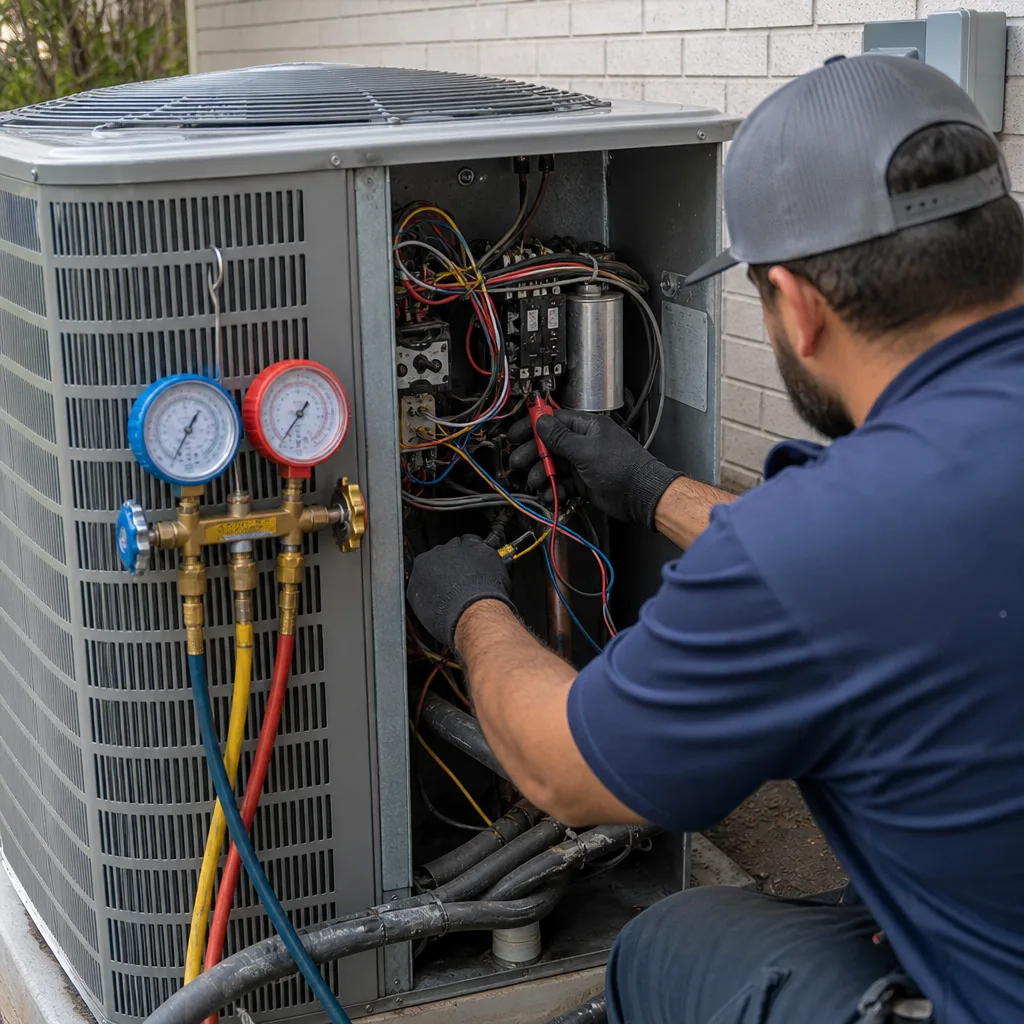 After
After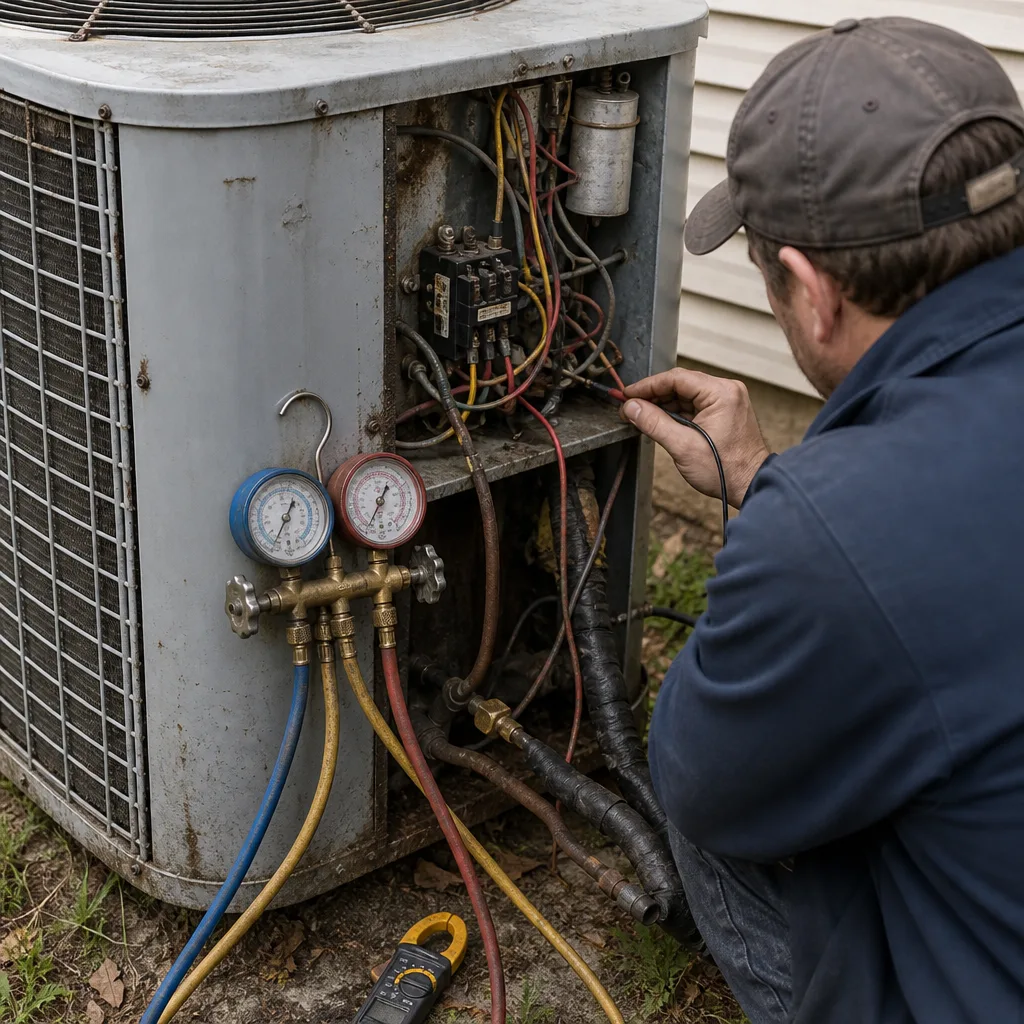 Before
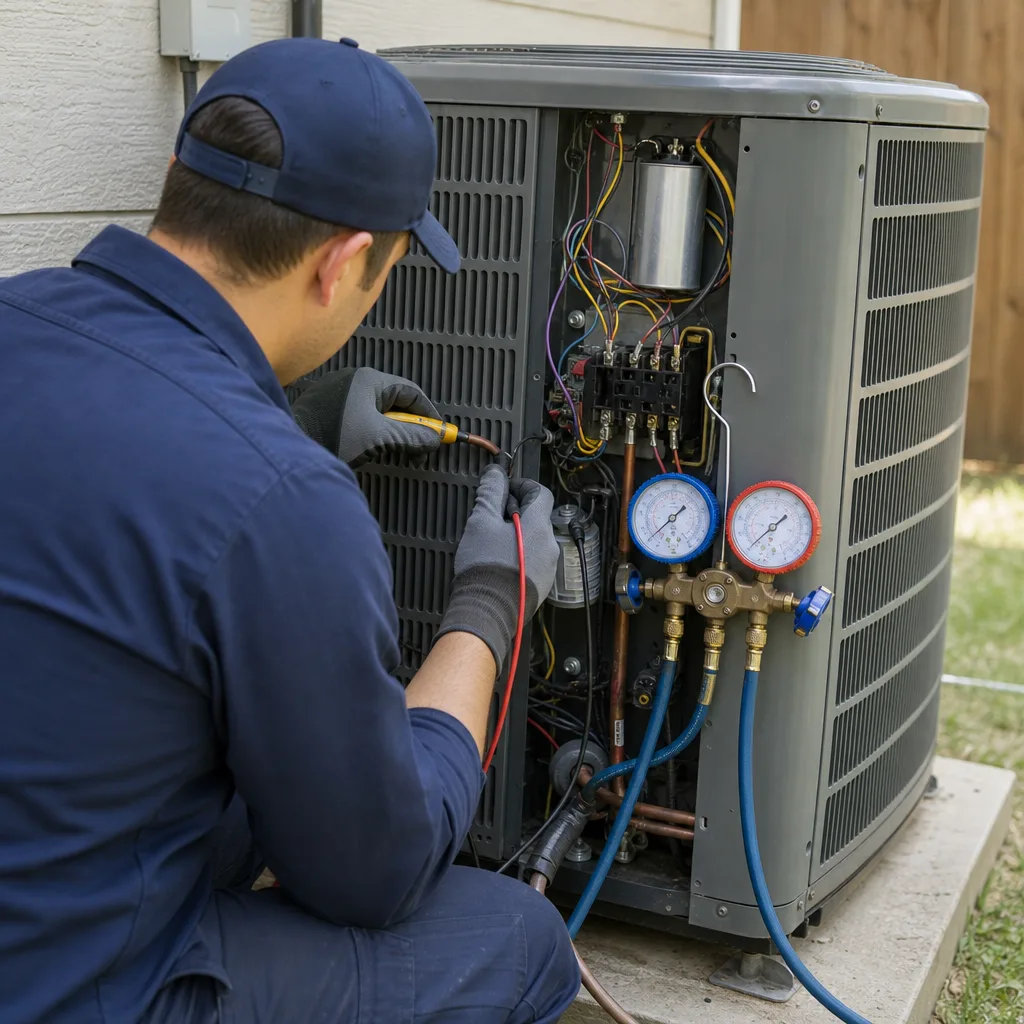 After
AfterReplacement Cost & What’s Included
In Fort Worth, a Daikin capacitor replacement runs $150 to $400 installed, and we hand you a written price before we open the panel, not after. Most jobs land between $180 and $250. The spread comes down to three things: whether it’s a single-run capacitor or a dual-run (the dual serving both fan and compressor costs a bit more), whether it’s a standard 370V or the heavier 440V spec, and whether the cap failed alone or took the contactor with it. When a capacitor fails, the contactor often shows pitted contacts, and we’ll show you that in the report if we see it.
Every capacitor replacement at Halden includes the diagnostic, the part, the labor, and a full system test: we run the unit through a complete cooling cycle and check the amp draw on both motors to confirm they’re within spec. You get a written guarantee on the repair, and if the capacitor fails inside the coverage window, we come back free. That’s automatic, not an upsell.
DIY or Call Us?
Capacitors store voltage even after the power is off. A charged capacitor can hit you with a shock strong enough to cause cardiac arrest if you don’t know how to discharge it safely, and the terminals stay live for a while after the disconnect is pulled. We’re not going to give you a step-by-step on discharging a capacitor, because this is exactly the kind of repair where a confident five-minute job becomes a hospital visit when the wrong metal object touches the wrong terminal.
What you can safely do is check the breaker, verify the thermostat is calling for cooling, and look at the outdoor unit from the outside for a bulging panel. Then call us at (817) 632-5499. We’ll have a uniformed tech there with the correct Daikin-rated capacitor on the truck, a flat price in writing before any work starts, and your system running before the house gets warm. Andre’s signature phrase on these calls is pretty simple: flat price up front, cool house by tonight.
FAQs
A Daikin capacitor lasts roughly 5 to 10 years in Fort Worth’s climate, but hard summers, voltage dips on the grid, and nearby lightning strikes can shorten that significantly. The heat alone breaks down the internal dielectric fluid faster than almost any other environmental factor. If your system is 8+ years old and has never had a capacitor replaced, it’s on borrowed time.
No. A capacitor is a sealed, non-serviceable component. Once the dielectric breaks down or the can bulges, the only correct fix is a new capacitor with the same microfarad and voltage ratings. Any attempt to patch one is unsafe and won’t hold. Call (817) 632-5499 and we’ll have the right replacement installed today.
The actual swap takes 20 to 40 minutes once the tech confirms the diagnosis. Adding in the diagnostic, system test, and paperwork, you’re looking at about an hour from arrival to a running, cooling system. We quote it same-visit because our trucks carry the Daikin-compatible specs most Fort Worth homes need.
Yes. Our vans carry single-run, dual-run, and 440V capacitors that cover the vast majority of Daikin residential units in Fort Worth. If your unit needs an uncommon spec, we can source it same-day from local supply houses in the DFW area, which keeps the job moving without a second visit.
Written by Andre Fuller, Owner, Halden Heating and Air Fort Worth at Halden Heating and Air Fort Worth, serving Fort Worth and nearby areas.