
 AC repair
 Furnace & heating
 Heat pumps
 Ductless mini splits
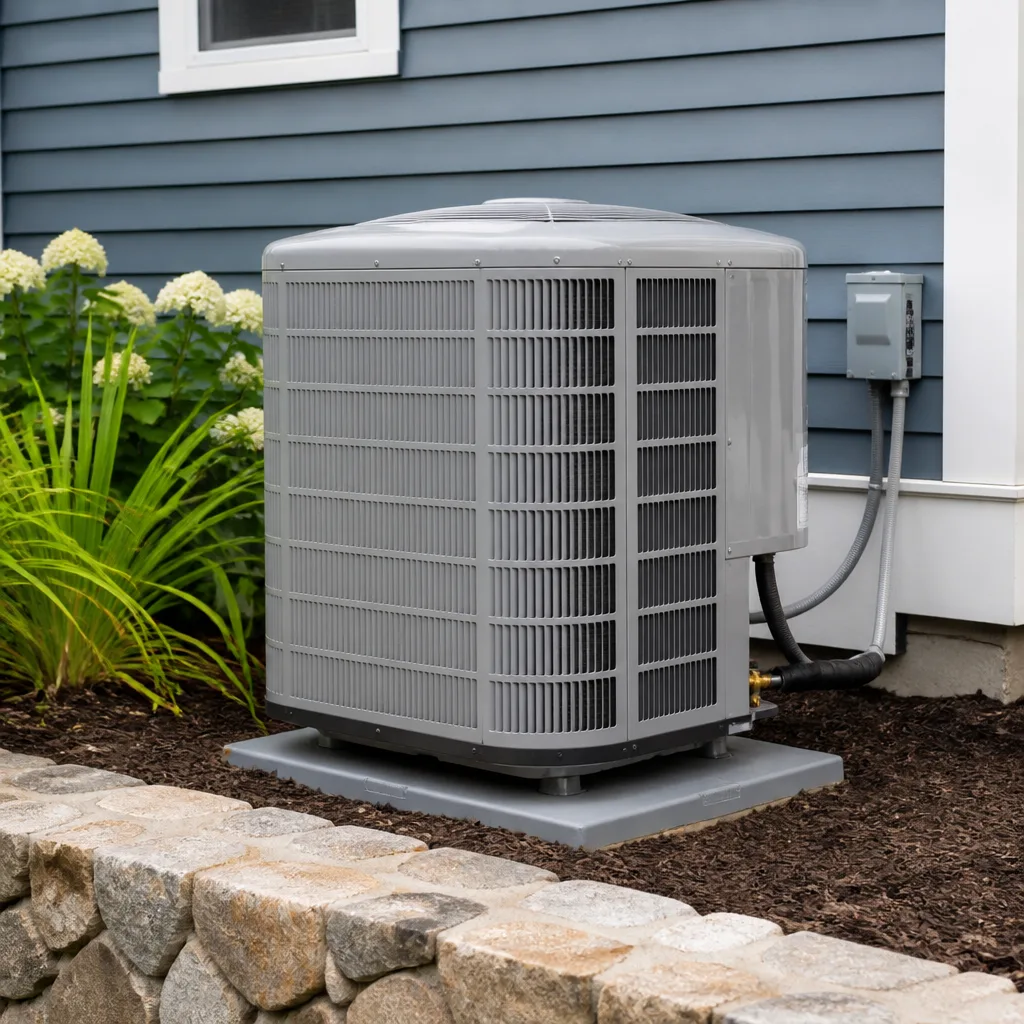 Carrier
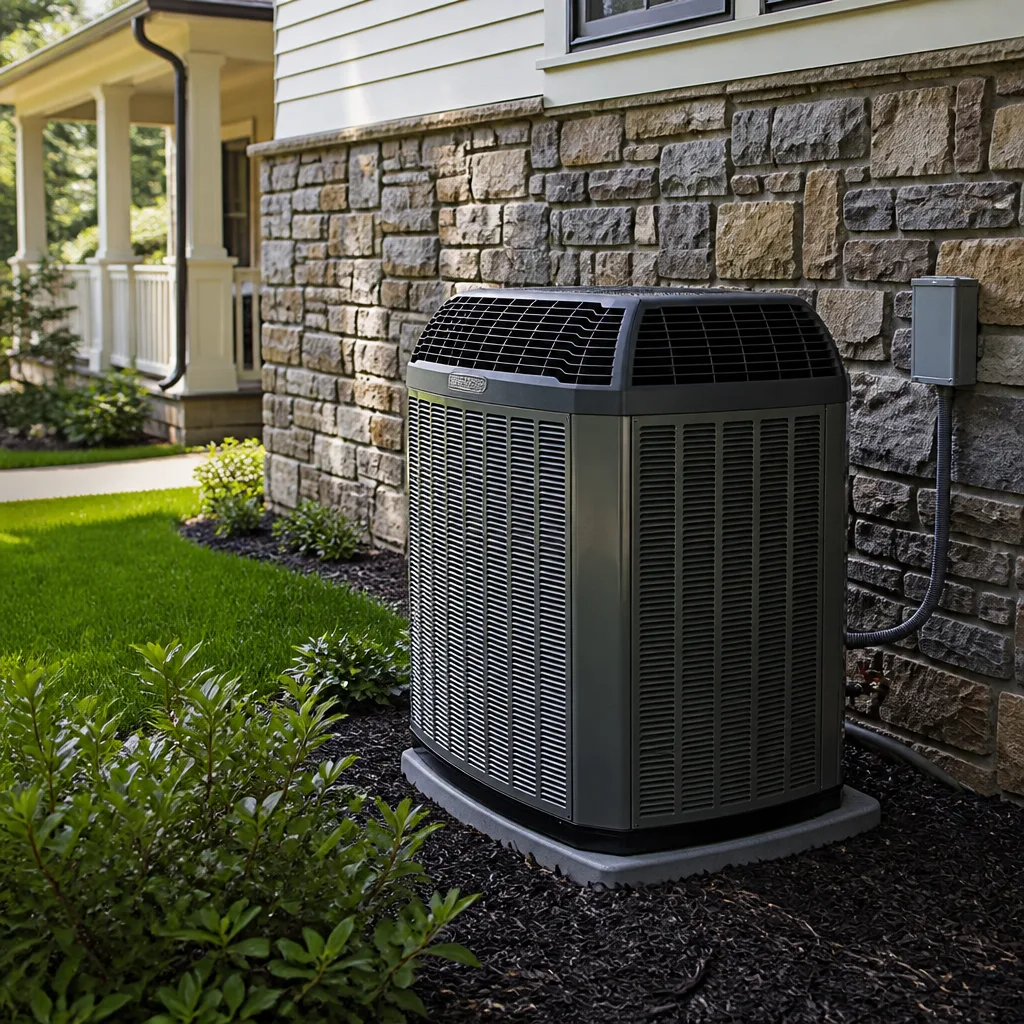 Trane
Trane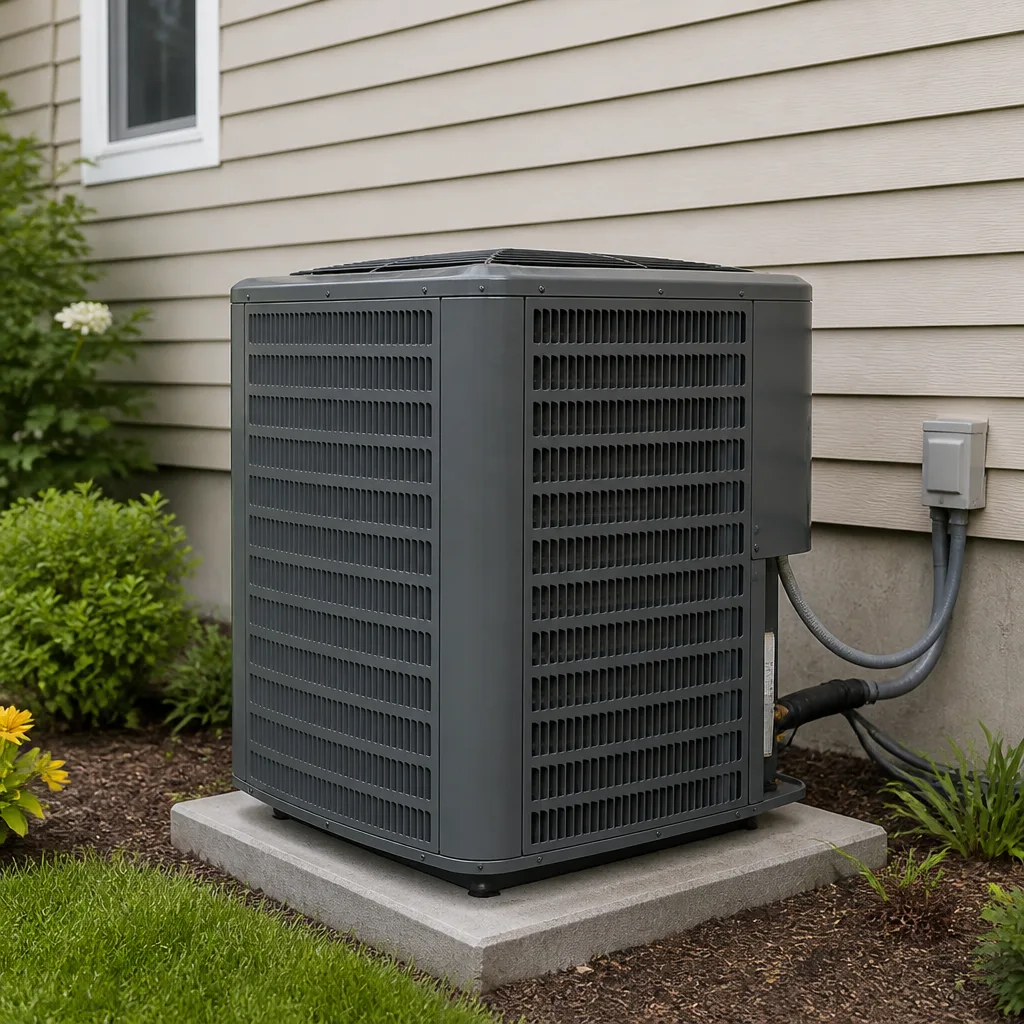 Goodman
Seasonal tune-up and full diagnostic on your Carrier, Trane, or Goodman system - readings shown to you before any repair is proposed
Diagnosis first, numbers second - you approve the repair price before a single part goes in.
Get your free estimateAmerican Standard Ductwork Repair: The Fort Worth Owner’s Guide
Most American Standard ductwork repairs in Fort Worth run between $250 and $900 installed, depending on how much duct has failed and whether we’re sealing, replacing sections, or rebuilding a plenum. We stock American Standard-compatible duct fittings, collars, and sealants on our trucks, so most jobs finish the same day we arrive. You’ll usually spot the problem before we do: rooms that never quite cool, a sudden spike in your electric bill, or dust blowing from vents that were clean six months ago.
Ductwork is the delivery system for everything your American Standard system produces. When it leaks, you’re paying to condition your attic. Here’s what Fort Worth homeowners need to know before they call anyone.
Which American Standard Models This Applies To
Ductwork isn’t model-specific the way a control board or blower motor is, but the connection points, sizing, and static pressure requirements absolutely depend on which American Standard system you’re running. The compatibility question comes down to three things: duct diameter at the plenum, airflow in cubic feet per minute (CFM), and whether your system uses flex duct, rigid sheet metal, or a mix of both.
American Standard’s Silver, Gold, and Platinum series air handlers and furnaces all ship with specific static pressure ratings. The Platinum 20 and Gold 17 variable-speed units are particularly sensitive to duct design. An undersized return can starve a variable-speed blower, causing it to ramp up and down hunting for airflow it can’t get. That’s a compatibility gotcha we see often in older Fort Worth homes where the original ductwork was sized for a single-stage unit from 1998 and someone later dropped in a high-efficiency American Standard system without touching the ducts. The equipment is fine. The delivery system isn’t.
For OEM versus aftermarket: American Standard doesn’t manufacture its own flex duct or sheet metal fittings. Ductwork components come from supply-house brands like Atco, Dundas Jafine, and Hart & Cooley, all manufactured to SMACNA and ACCA Manual D standards. What matters is that whoever installs the ductwork in Fort Worth follows Manual D load and airflow calculations, not just that the box says “compatible.” We stock quality aftermarket components from those same manufacturers, and for anything American Standard-branded at the equipment connection, we can source it same-day from local Fort Worth supply houses we’ve worked with for years.
Styles & brands we work with
Signs Your American Standard Ductwork Repair Is Failing
- Uneven room temperatures, even when the thermostat reads correctly. This usually means a supply duct has separated or collapsed somewhere in the attic, sending conditioned air to rafters instead of the back bedroom. The American Standard system is doing its job; the ductwork is losing the race.
- Dust building up fast on surfaces after a system cycle. A return-side leak pulls unfiltered attic air, which means fiberglass insulation particles and Fort Worth’s finest clay dust entering your home. You’ll see it on ceiling fans and window sills first.
- Higher electric bills during mild months. When ducts leak, your American Standard unit runs longer cycles to hit the setpoint. Fort Worth spring and fall should be cheap months for cooling. If they aren’t, the conditioned air is going somewhere other than your living room.
- Whistling, fluttering, or banging noises when the blower ramps up. Whistling means air escaping through a small gap under pressure. Fluttering is loose duct liner or a separated inner core. Banging is a duct run that was never properly supported and moves when static pressure builds.
- Rooms that smell musty or feel humid when the AC runs. A duct leak on the supply side depressurizes the house, which pulls humid outdoor air in through every crack. Your American Standard coil is removing moisture, but the ducts are reintroducing it before that air ever reaches you.
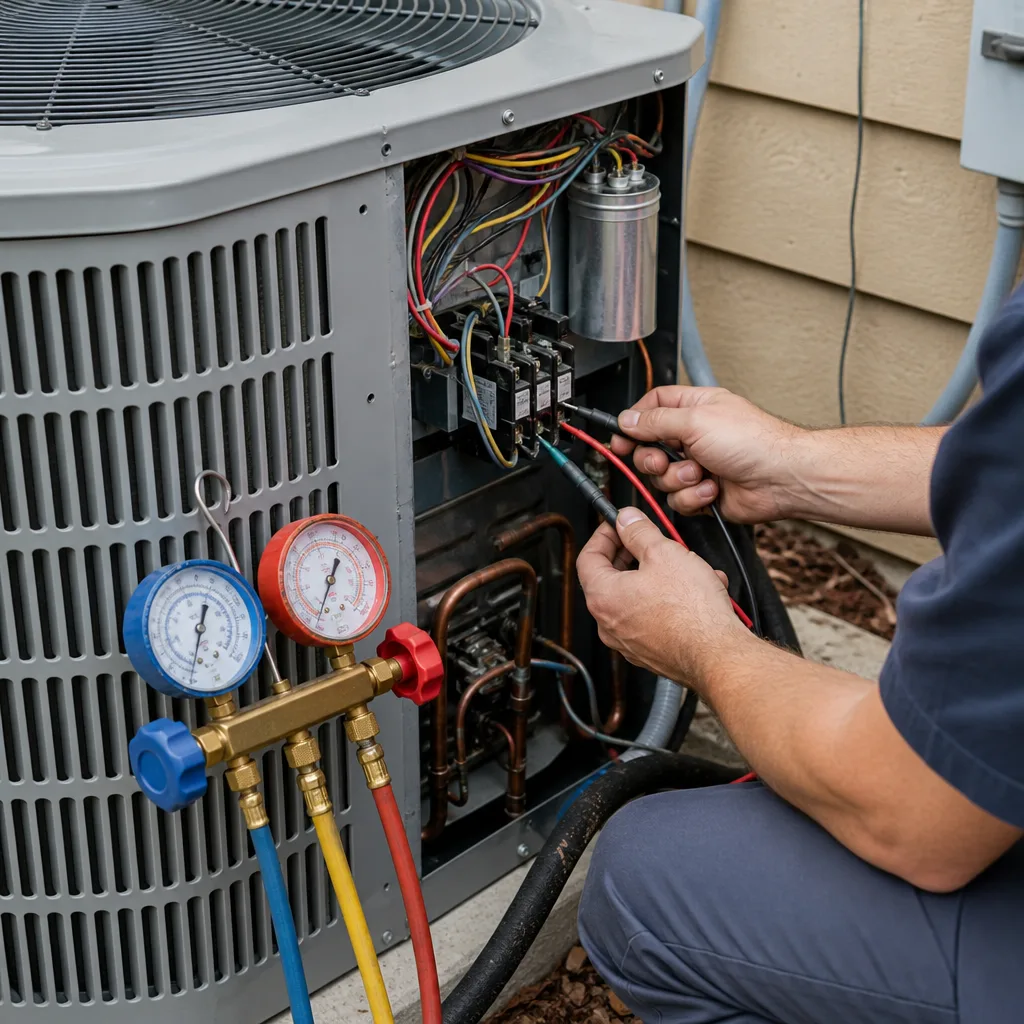
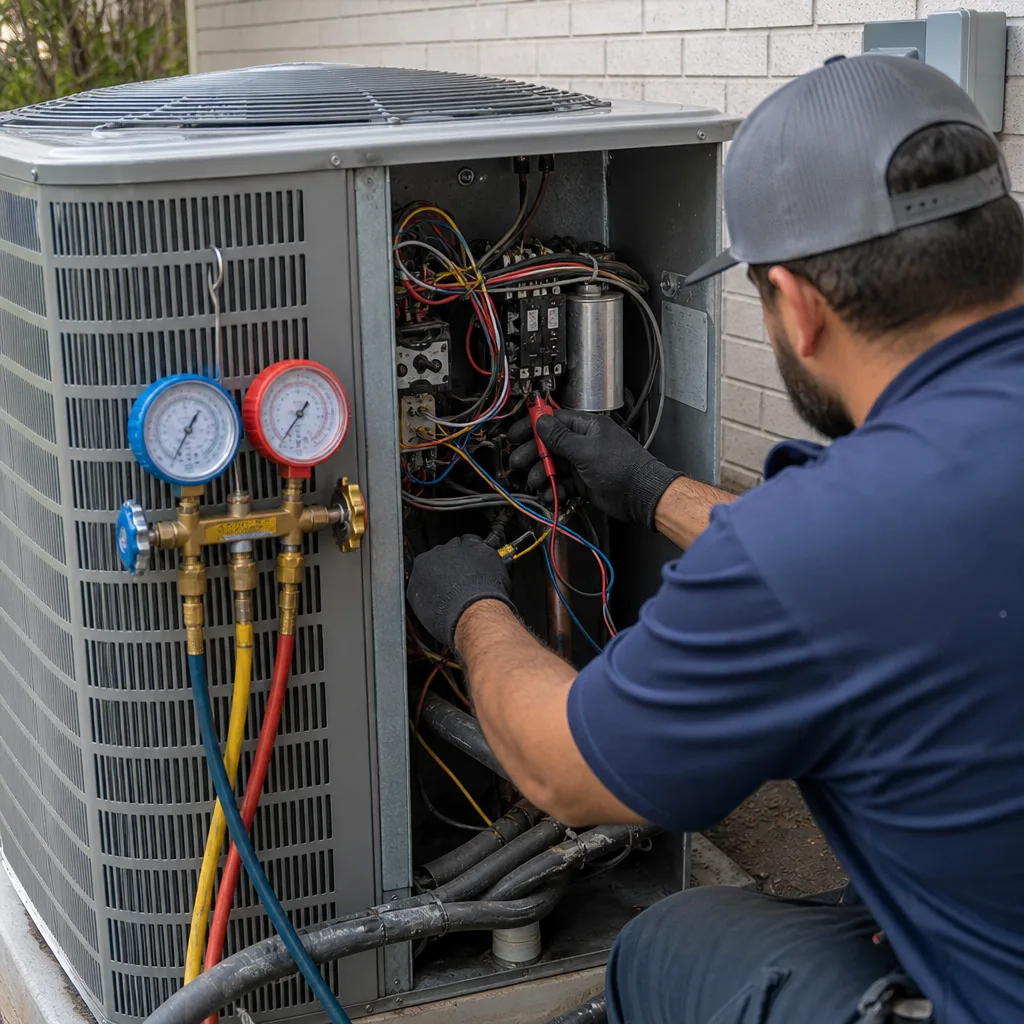
See the difference
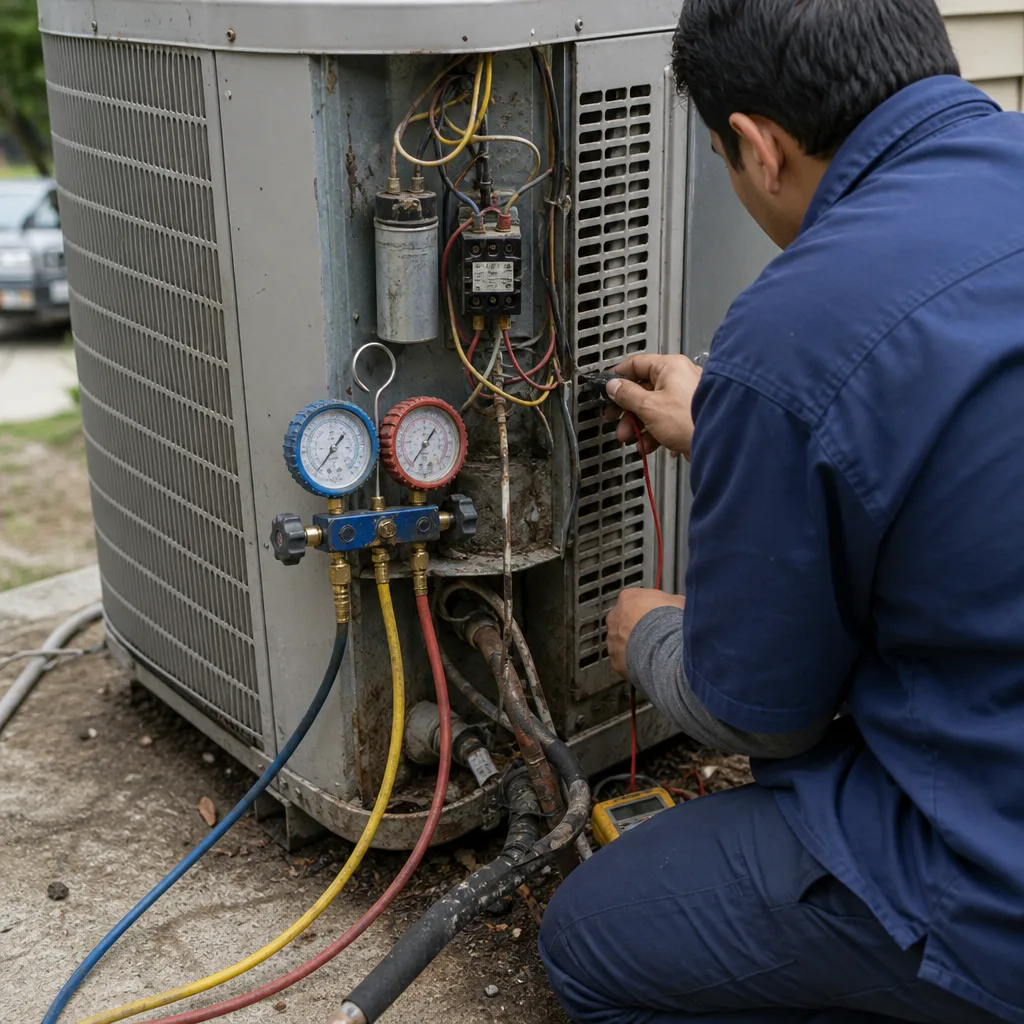 Before
 After
After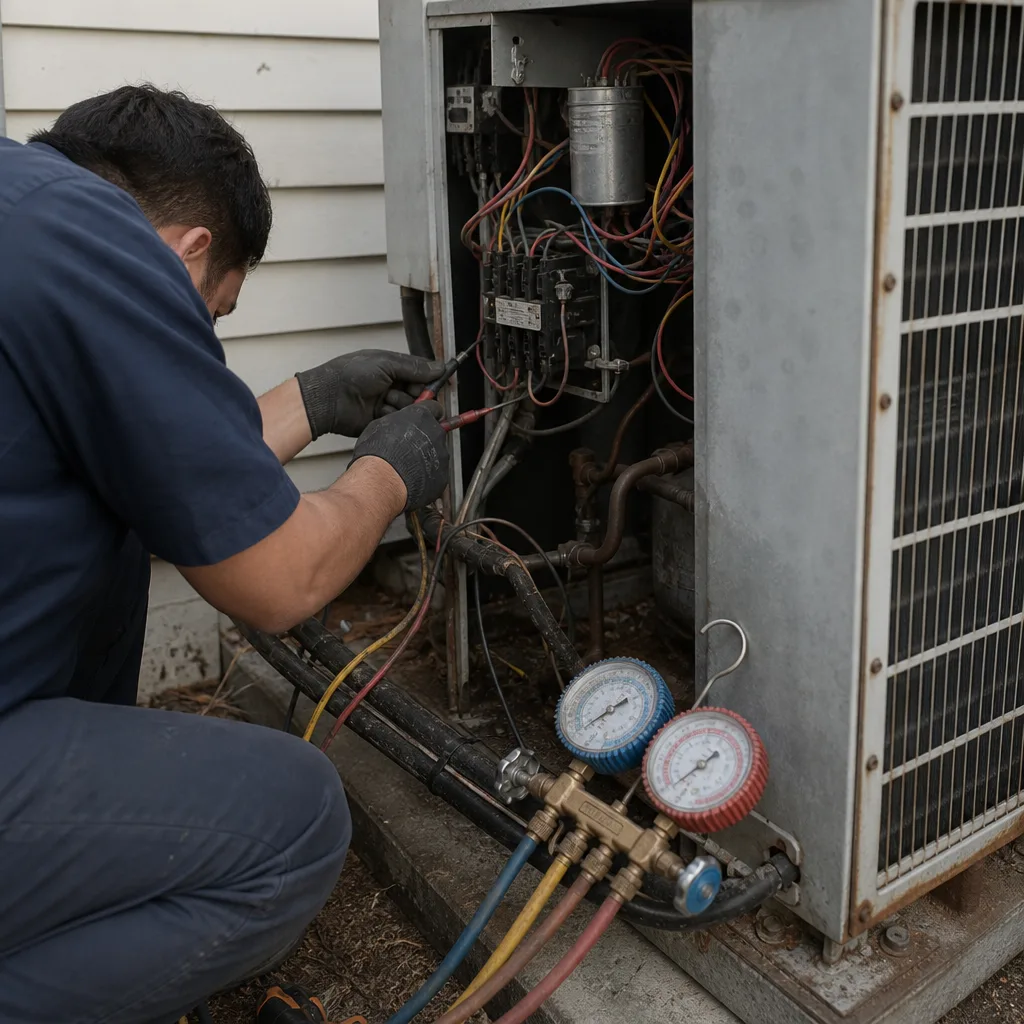 Before
 After
After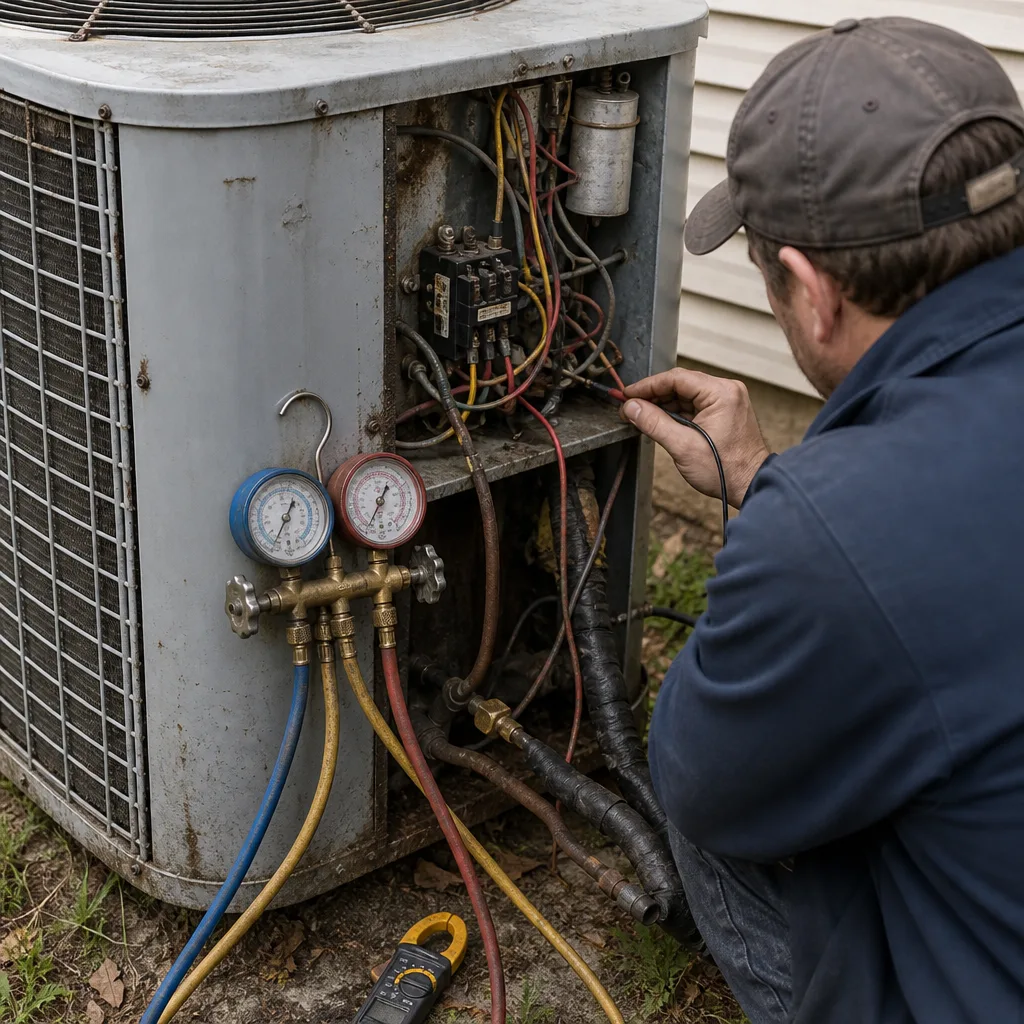 Before
 After
AfterReplacement Cost & What’s Included
In Fort Worth, ductwork repair pricing breaks down by the scope of the failure. Small repairs, like sealing a separated elbow or patching a punctured flex run, land between $250 and $400. Replacing a failed duct run that’s collapsed or crushed typically runs $400 to $700 per run. A full plenum rebuild or significant return-side correction runs $700 to $900 plus materials for longer runs. That lines up with our broader repair pricing: most HVAC repairs in Fort Worth run between $150 and $650, and ductwork sits on the higher end because it’s labor-intensive work in a hot attic.
Every ductwork repair we quote includes the materials, the labor, mastic sealing, proper support straps, and a written price before we start. You’ll know the number before a tool leaves the truck. If the repair fails within the coverage window, we come back at no charge. That’s the flat price up front, cool house by tonight standard we’ve run on since Andre Fuller started doing this work.
DIY or Call Us?
Here’s the honest split. You can safely check your visible ductwork in the attic if you have a walkable path and decent light. Look for obvious separations at joints, kinked or collapsed flex runs, or disconnected collars. You can also check your air filter and vent registers. What you shouldn’t do is climb into a Fort Worth attic in July to repair ductwork yourself. Attic temperatures hit 140 degrees easily, and heat exhaustion sets in faster than most people expect. Beyond the heat, ductwork repair requires proper mastic application, correct support spacing, and airflow testing to verify the fix.
If you find a separated duct and want to understand what you’re looking at, call us. We’ll explain what we see and give you a flat quote. Call (817) 632-5499 and we’ll have a real person on the line, not a voicemail tree.
FAQs
Flex duct in a Fort Worth attic typically lasts 12 to 18 years before the outer vapor barrier degrades and the inner core separates. The extreme attic heat here cooks the plastic liner faster than in milder climates. Rigid sheet metal ductwork lasts 30-plus years if sealed properly at installation, but most Fort Worth homes use flex for the branch runs.
Yes, if the duct core is intact and the failure is at a joint, collar, or elbow, sealing with mastic and proper tape is a permanent fix. If the inner liner has separated or the duct is crushed, sealing won’t help, and replacement is the only honest repair. We’ll show you photos of what we find before we recommend one over the other.
Most single-run duct repairs finish in 2 to 4 hours. A full plenum rebuild or multiple run replacement can take a full day. We’ll give you a time estimate with your written quote, and our technicians arrive with a live arrival time you can track to your door, not a four-hour window.
We stock standard sizes of flex duct, collars, mastic, support straps, and sheet metal fittings on every truck. If your job requires an American Standard-specific plenum adapter or a specialty fitting, we source it same-day from Fort Worth supply houses. We also service Carrier, Trane, and Lennox systems, so our trucks are set up for multi-brand repairs.
If your American Standard system is moving air but your rooms aren’t getting it, the ducts are the likely culprit. Call (817) 632-5499 for a free estimate and we’ll have a real person on the line, ready to schedule.
Written by Andre Fuller, Owner, Halden Heating and Air Fort Worth at Halden Heating and Air Fort Worth, serving Fort Worth and nearby areas.