
 Furnace & heating
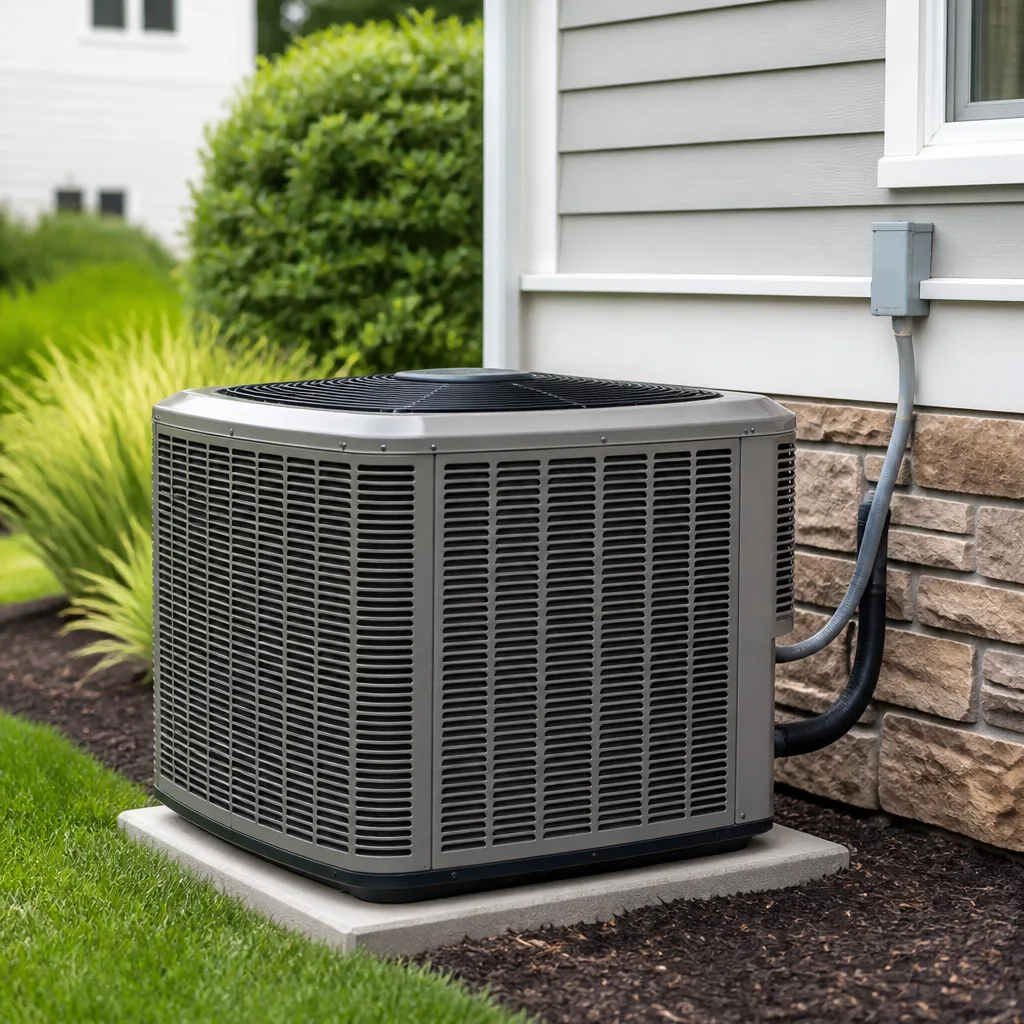 AC repair
 Heat pumps
 Ductless mini splits
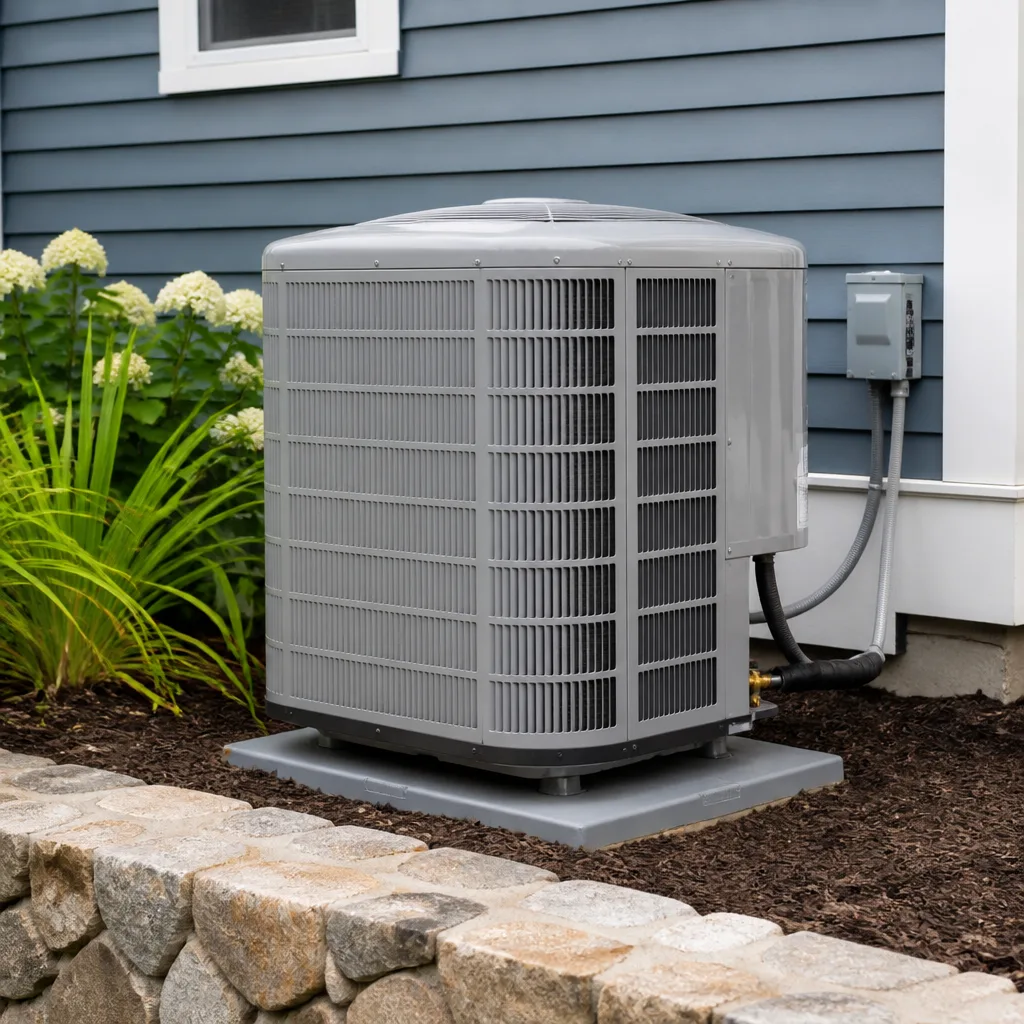 Carrier
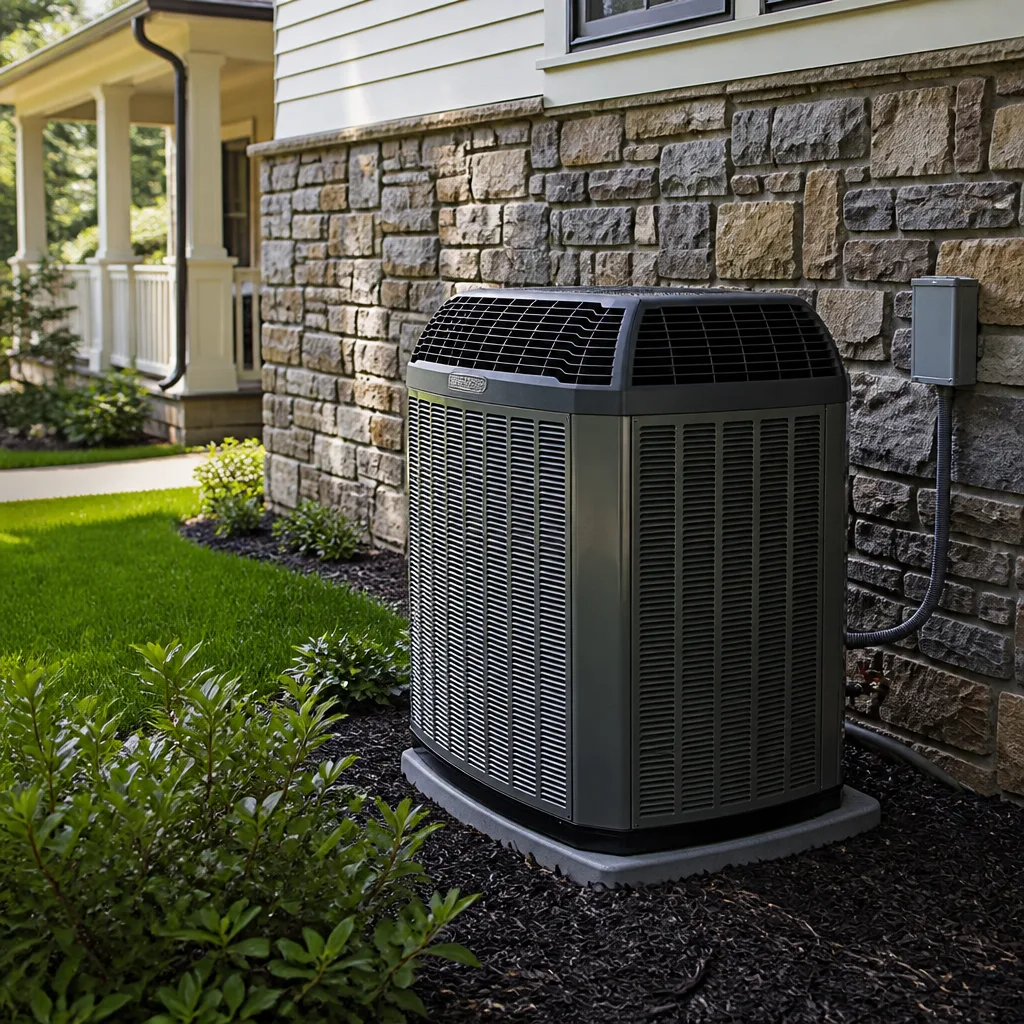 Trane
Trane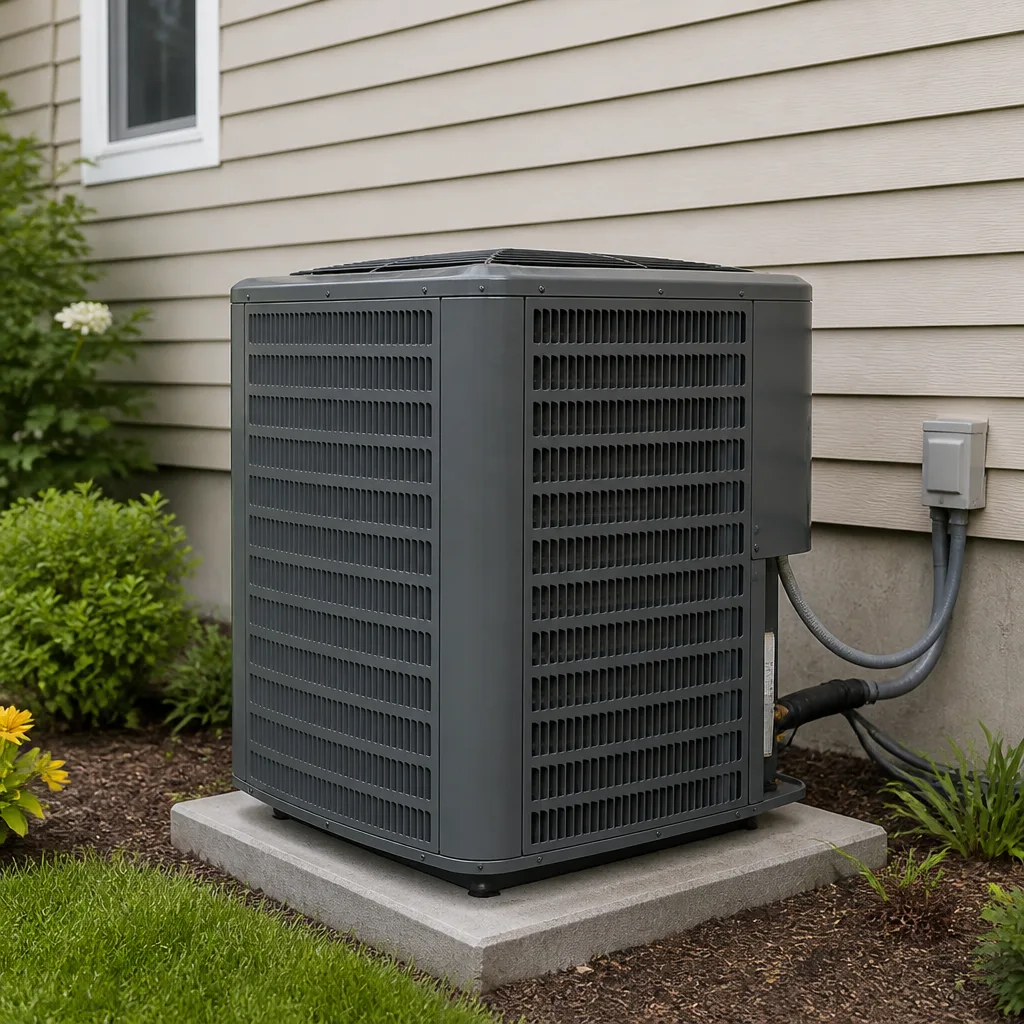 Goodman
Seasonal tune-up and full diagnostic on your Carrier, Trane, or Goodman system - readings shown to you before any repair is proposed
Diagnosis first, numbers second - you approve the repair price before a single part goes in.
Get your free estimateBryant Capacitor Replacement: The Fort Worth Owner’s Guide
A Bryant capacitor replacement in Fort Worth typically costs between $150 and $400 installed, depending on the capacitor type and your unit’s specific Bryant model. We stock dual-run and start capacitors on our trucks that fit most Bryant residential systems, so in the majority of cases we can have your AC running the same day you call. The part itself runs $25 to $90, with the rest being labor, diagnostics, and the written guarantee you get on every repair.
Most homeowners discover the capacitor has failed the hard way: the outside unit hums but the fan won’t spin, or the compressor clicks and gives up. Sometimes the AC runs fine all afternoon, then quits when Fort Worth hits 98 degrees and the capacitor finally gives out under the heat load. If you’ve ever poked the fan with a stick to get it going, you know exactly what a dying capacitor feels like.
- Installed Bryant capacitor replacement in Fort Worth: $150 – $400
- We carry dual-run capacitors (the most common Bryant failure) on the truck
- Same-day service available in most Fort Worth neighborhoods, including the Cultural District, TCU area, and North Side
- Every replacement includes a written guarantee and a free return visit if the part fails
- Capacitors store an electrical charge, even with the power off – this is not a part you want to touch without knowing exactly what you’re doing
Which Bryant Models This Applies To
The capacitor is the part that stores and releases the electrical jolt needed to start your compressor and fan motor. Bryant uses different capacitor configurations depending on the era and efficiency tier of your system, and matching the wrong one is the fastest way to turn a $250 repair into a $1,200 compressor replacement.
Most Bryant residential systems from the last 15 years – the Preferred and Evolution lines being the ones we see most in Fort Worth – use a dual-run capacitor. This is a single cylinder that handles both the compressor and the condenser fan. Older Bryant units, especially the Legacy series and anything installed before roughly 2005, often use separate start and run capacitors for the compressor plus a stand-alone fan capacitor. That’s three parts instead of one.
The compatibility gotcha: Bryant dual-run capacitors have two key specs printed on the side, and both have to match what the unit asks for. The first is microfarad rating (typically 35/5, 40/5, 45/5, or 50/5 for residential Bryants), and the second is voltage rating, usually 370V or 440V. A 440V-rated capacitor can replace a 370V one, but never the reverse. That spec mistake happens more often than you’d think, and it’s exactly what we check before installing anything.
When it comes to OEM Bryant capacitors versus quality aftermarket equivalents, the honest truth is that the aftermarket brands we use (AmRad and Titan HD are our go-to choices) are built to the same or better tolerances than Bryant-labeled parts. The Bryant name on the side doesn’t mean they manufacture it themselves. What matters is matching the microfarad rating within 5% and buying from a supplier that tests each unit. A good aftermarket capacitor is $30 to $60, while a dealer-only Bryant replacement often runs $70 to $90 for the identical electrical specs.
To identify what your system needs, look at the label on the old capacitor if it’s still readable. The microfarad rating is abbreviated “MFD” or “µF,” followed by two numbers like “45/5.” If the label has melted off (common on Fort Worth roofs and west-facing condenser pads), our techs can pull the spec from the compressor and fan motor labels instead. You want those numbers before anyone buys a part.
Styles & brands we work with
Signs Your Bryant Capacitor Replacement Is Failing
Capacitors don’t leave a note on the kitchen counter. They usually fail slowly, and then all at once. Here’s what people notice before they call us:
- Humming outdoor unit with no fan spinning. The capacitor can’t deliver the starting jolt, so the motor just sits there and vibrates. If you’ve been pushing the fan blade with a stick to get it spinning, that’s a classic capacitor failure, not a fan motor problem.
- AC runs, then shuts off after a few minutes. The compressor draws extra current when the capacitor is weak, which trips the thermal overload. The unit cools the house for a while, then cycles itself off to protect the compressor. This comes and goes for weeks before it fails completely.
- The capacitor case looks swollen or split. Inside the metal cylinder is a coil of film and electrolytic fluid. Texas heat cooks that fluid until the pressure splits the case at the seams. If the top looks domed like a muffin, the capacitor is done.
- Hard starting, especially in the afternoon. Fort Worth’s hottest hours pull the most voltage through the capacitor. A weak one starts fine at 9am, then struggles at 4pm when the sun has been beating on the condenser all day. It’s not your imagination that it quits at the worst possible time.
- Newer unit tripping the breaker repeatedly. When the capacitor fails completely, the compressor tries to start, can’t, and stalls. That stall can spike the amp draw enough to pop the breaker. One popped breaker is weather; two in a week is a capacitor asking to be replaced.
Important safety note: Capacitors store an electrical charge even after the power is cut. A charged capacitor can deliver a shock that causes serious injury. This is not a part you want to handle with the panel off, and it’s the reason we discharge the capacitor first on every job before touching it. If you’re investigating, look at the part, not through it, and keep your hands out when the power is on.
See the difference
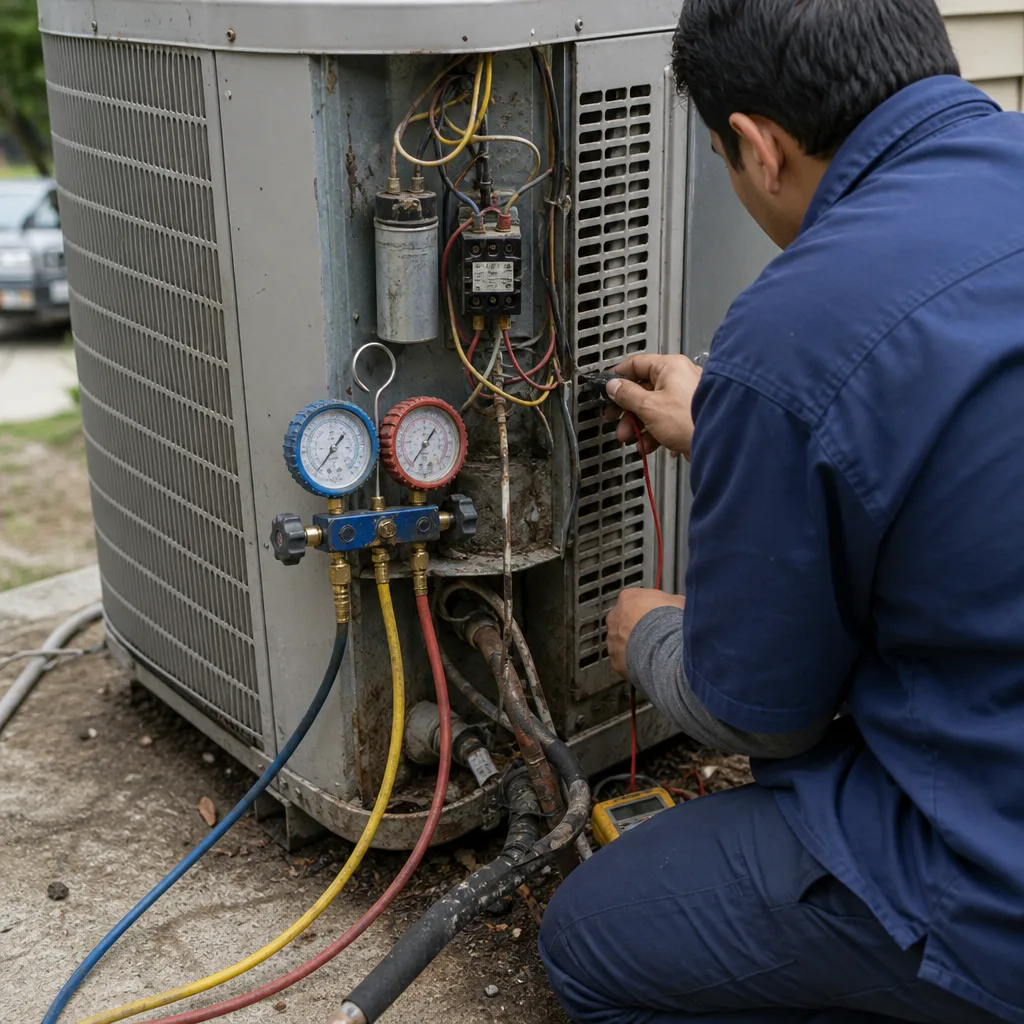 Before
 After
After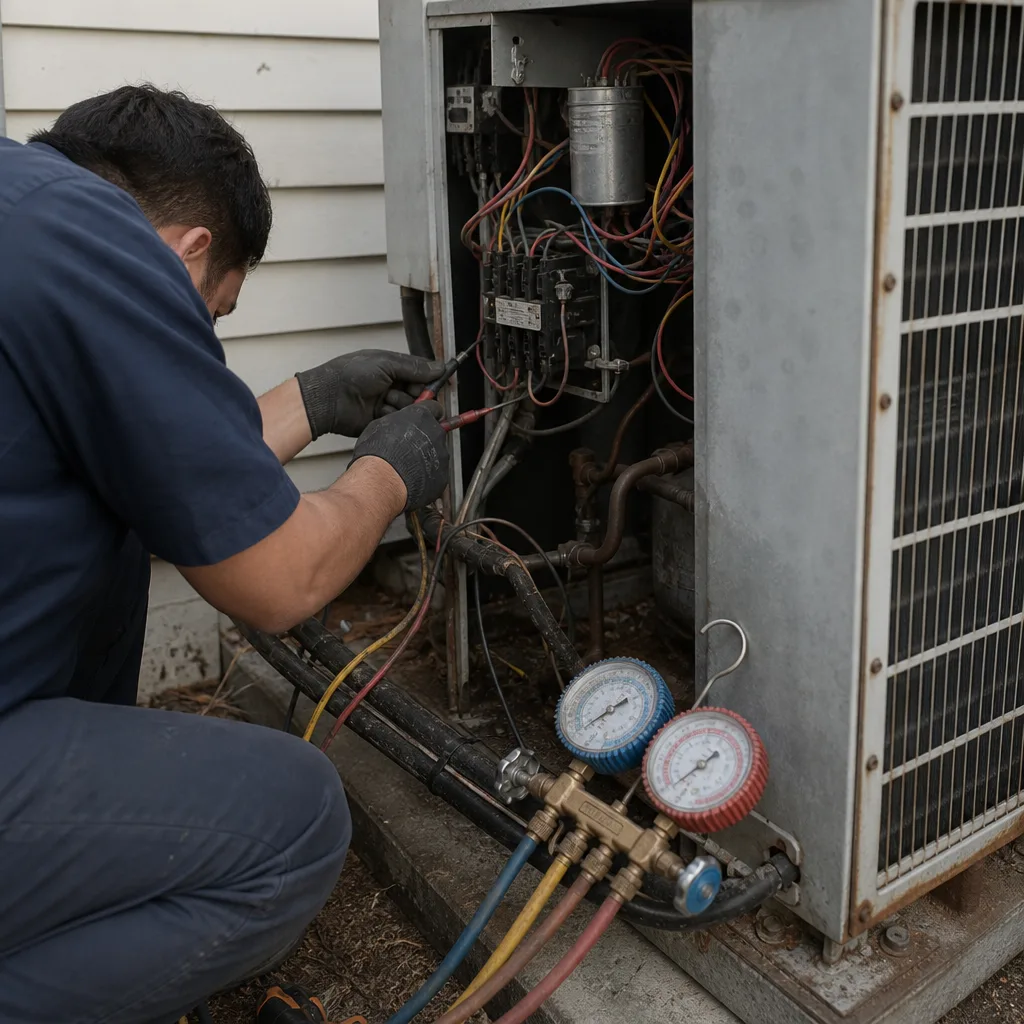 Before
 After
After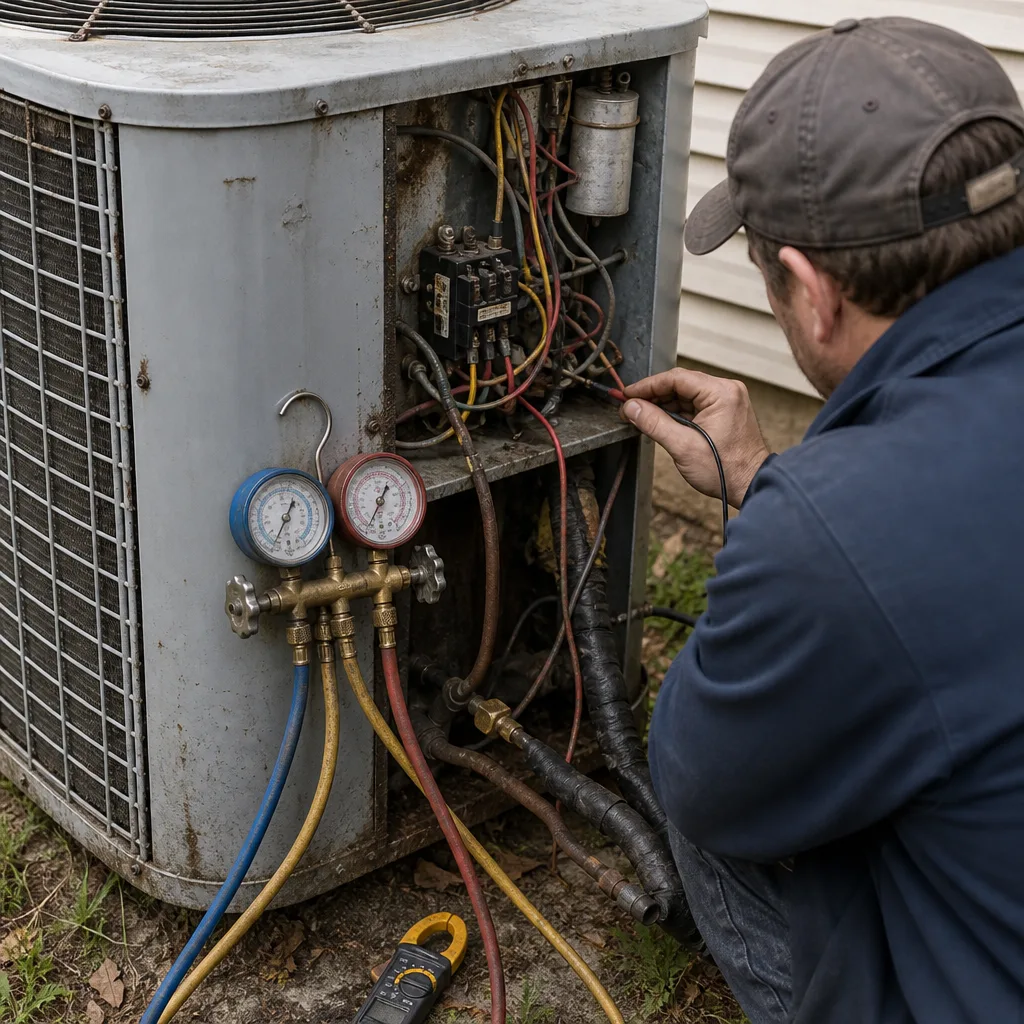 Before
 After
AfterReplacement Cost & What’s Included
In Fort Worth, a Bryant capacitor replacement runs $150 to $400 installed. Here’s how that breaks down:
| Item | Cost Range |
|---|---|
| Diagnostic service call | $0 (waived with repair) |
| Dual-run capacitor (35/5 to 50/5, 440V) | $30 – $90 |
| Start capacitor only (Legacy series older units) | $25 – $85 |
| Labor & installation | $85 – $225 |
The range comes down to a few things: whether your Bryant uses a single dual-run capacitor or multiple separate ones, whether we’re replacing just the capacitor or also a weakened contactor (the relay switch that powers the unit), and what part of Fort Worth you’re in relative to our truck route that day. The quote we hand you before any work starts includes the part, labor, our service charge, and the written guarantee. No add-ons, no surprises at the door.
Every capacitor replacement we do includes the 365-Day Done Right Promise. If the part fails within 12 months, we replace it free, and the return visit is on us. That’s written on every invoice, not discussed over the phone and forgotten.
DIY or Call Us?
I’ll be straight with you: a capacitor is a $40 part that can absolutely wreck your compressor if you install the wrong one, wire it backward, or skip the discharge step and shock yourself. I’ve seen weekend warriors save fifty bucks on the part, then pay us $300 to undo the wiring birds’ nest they made and $1,800 for a compressor that fried because the wrong microfarad rating let it start too slowly, too many times.
What you can safely do: look at the capacitor label, write down the MFD and voltage numbers, and take a photo with your phone. That helps you get an honest quote over the phone. You can also check that the breaker is on and the thermostat is calling for cooling. Those are safe, useful, and don’t require putting your hands near a live electrical component.
What you shouldn’t do: remove the capacitor with the unit’s power on, with the unit’s power off but without discharging the capacitor, or with a universal capacitor you bought online and guessed the settings on. The high-voltage part of this job is real, and the risk isn’t just to the capacitor. If you’d rather not find out what 440 volts feels like at 2pm in Fort Worth, call us at (817) 632-5499. We’ll send a background-checked technician with a live arrival time you can track, and a written price before we open a panel.
FAQs
A Bryant capacitor in Fort Worth typically lasts 5 to 10 years, but our Texas heat regularly cuts that to 3 to 6, especially if your condenser is on the west or south side of the house with no shade. The electrolyte inside degrades faster when the ambient temperature around the unit climbs past 140 degrees, which happens every summer.
No, a capacitor is a sealed, non-serviceable component. Once the case swells or the microfarad reading drifts more than 5% off spec, replacement is the only repair. The good news is the part is cheap relative to what it protects. Call (817) 632-5499 for a free estimate.
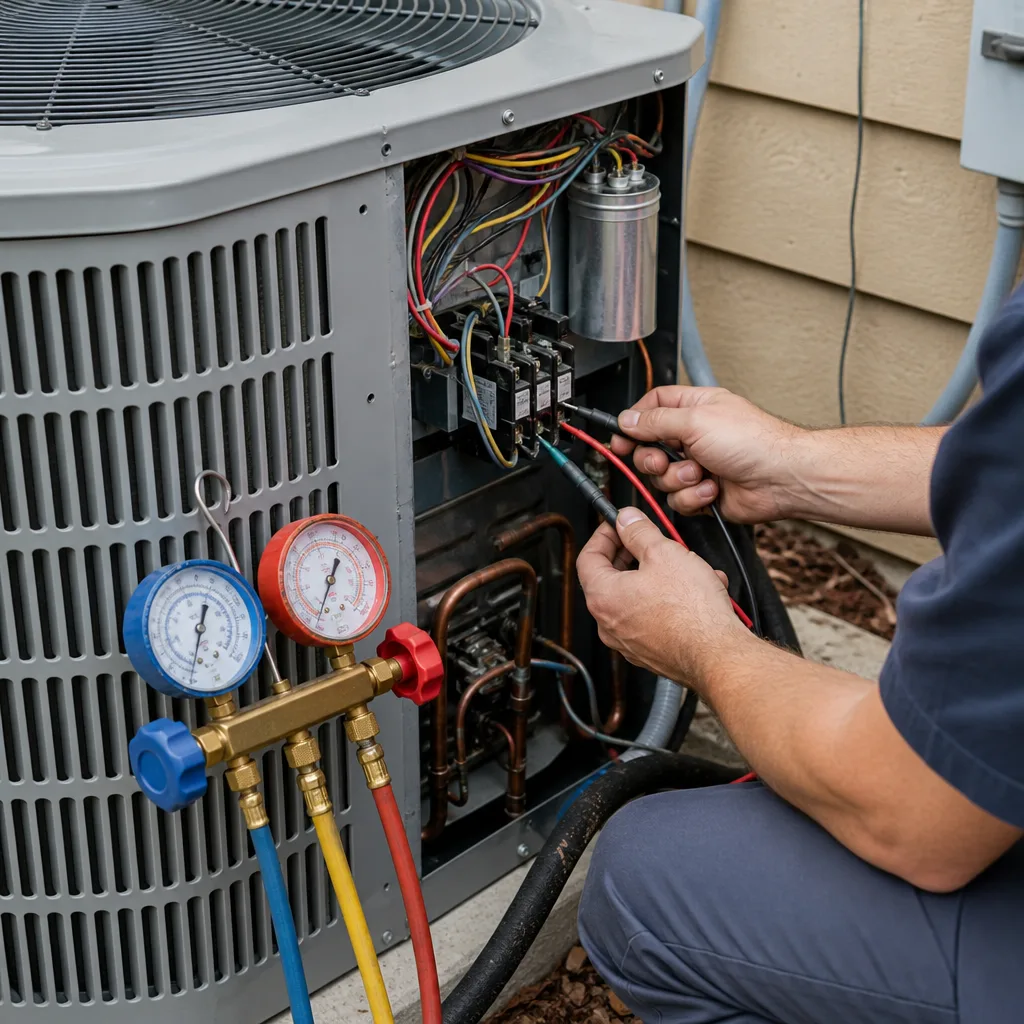
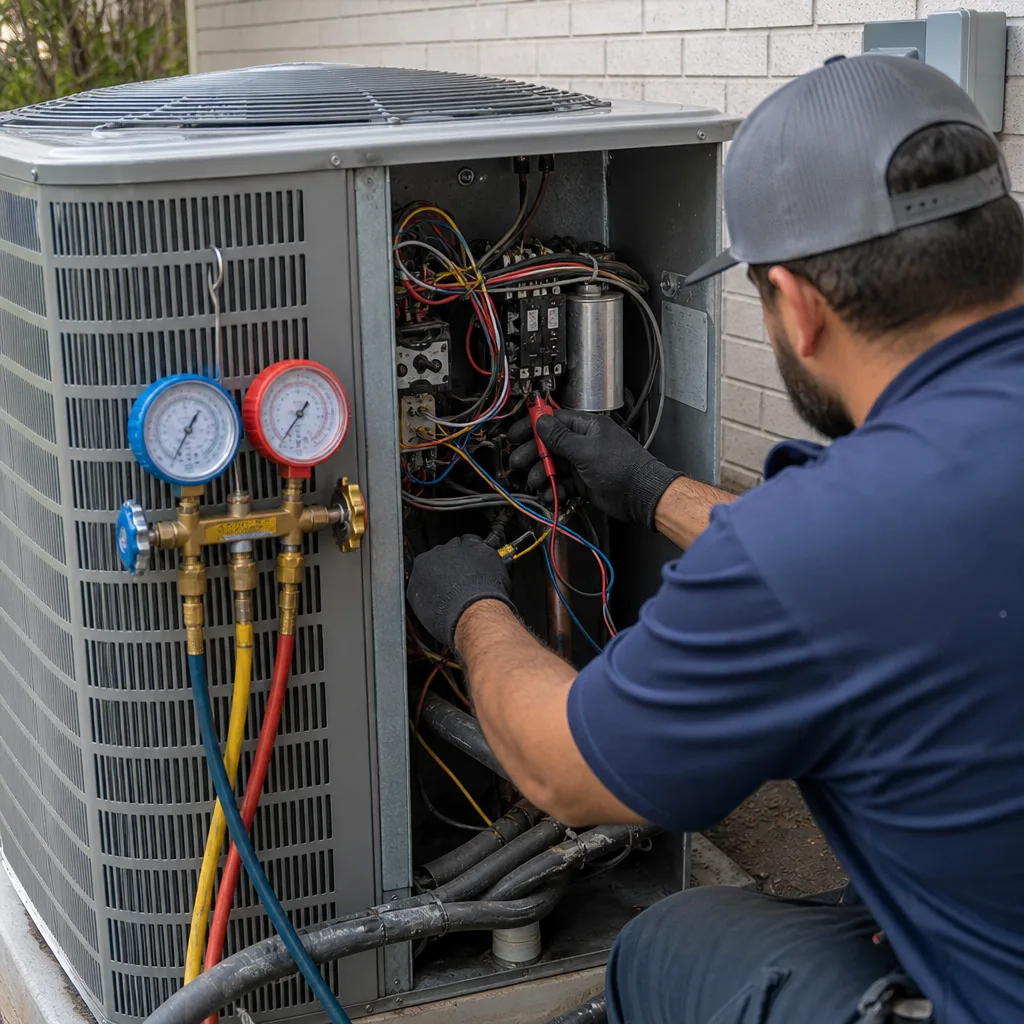
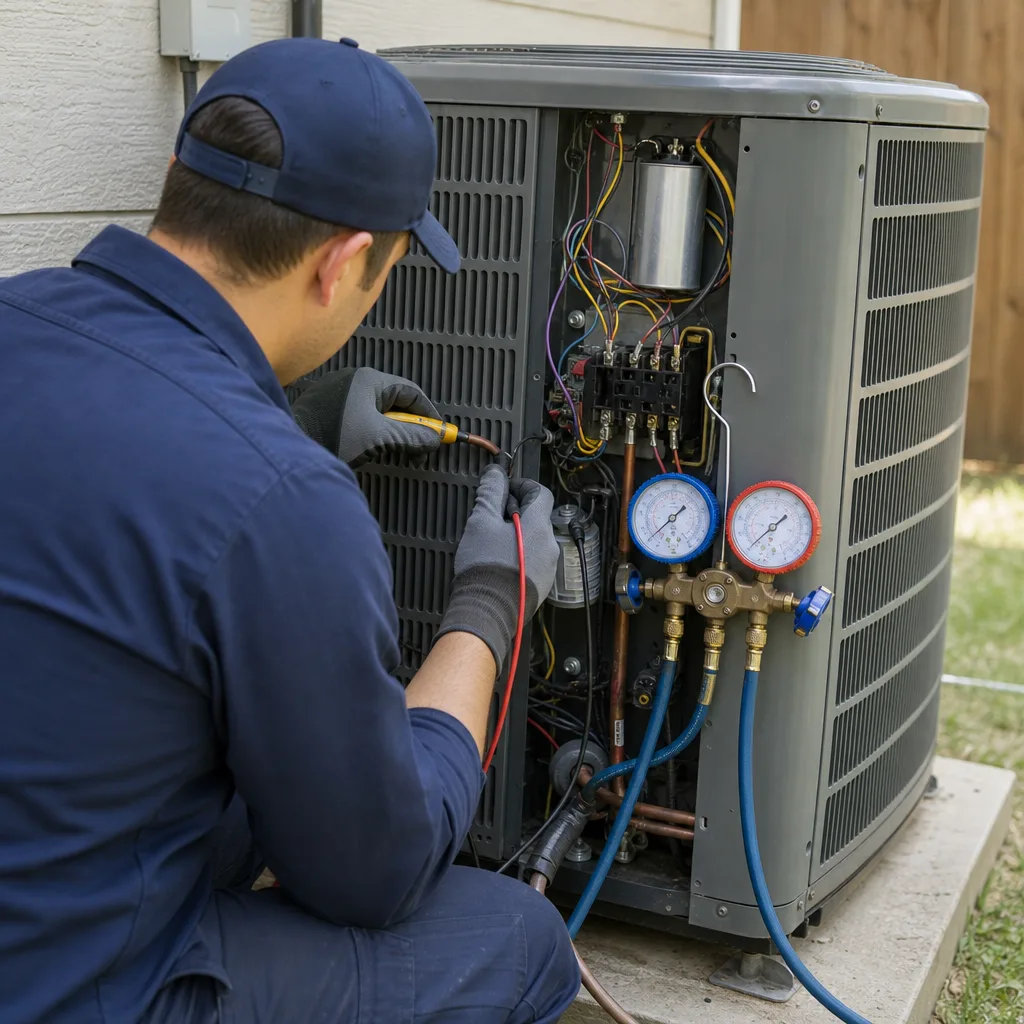
A standard Bryant dual-run capacitor swap takes 30 to 45 minutes once the tech is at the unit. That includes discharging the old capacitor, pulling the spec from the motor labels, installing the new one, testing the amp draw, and verifying the system starts and cools correctly. You’ll get a photo of the before and after.
Yes. Our techs carry dual-run capacitors in the most common Bryant ratings (35/5, 40/5, 45/5, 50/5, all 440V) plus a range of separate start capacitors for older Legacy-series units. In most Fort Worth service calls, we install the replacement on the first visit. For the rare spec we don’t have, our supplier delivers same-day, and we’ll tell you that before we schedule the return trip.
If your Bryant AC is humming, not spinning, or quitting at the hottest hour of the day, call Halden Heating and Air Fort Worth at (817) 632-5499. We’ll give you a written price before any work starts, send a technician with a live arrival time you can track, and back the repair with the 365-Day Done Right Promise. Flat price up front, cool house by tonight.
Written by Andre Fuller, Owner, Halden Heating and Air Fort Worth at Halden Heating and Air Fort Worth, serving Fort Worth and nearby areas.