
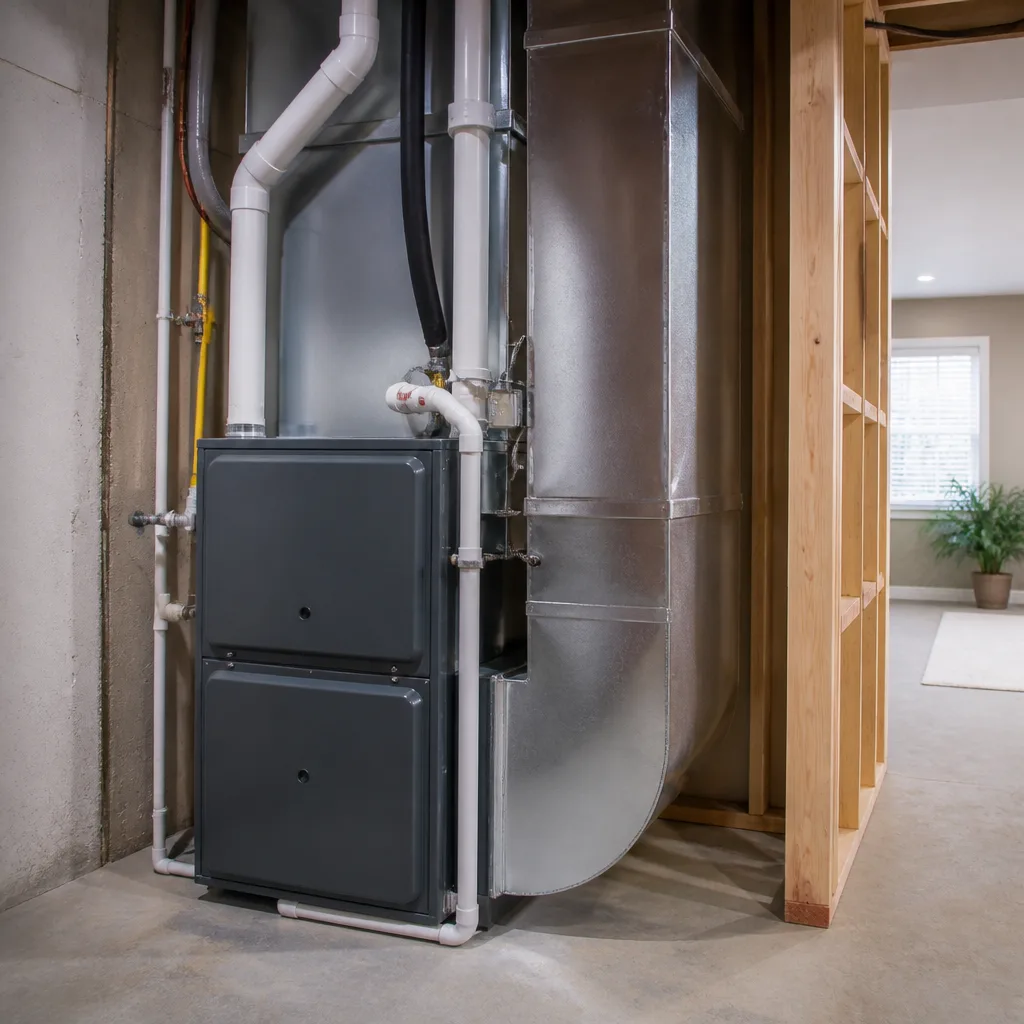
 Furnace & heating
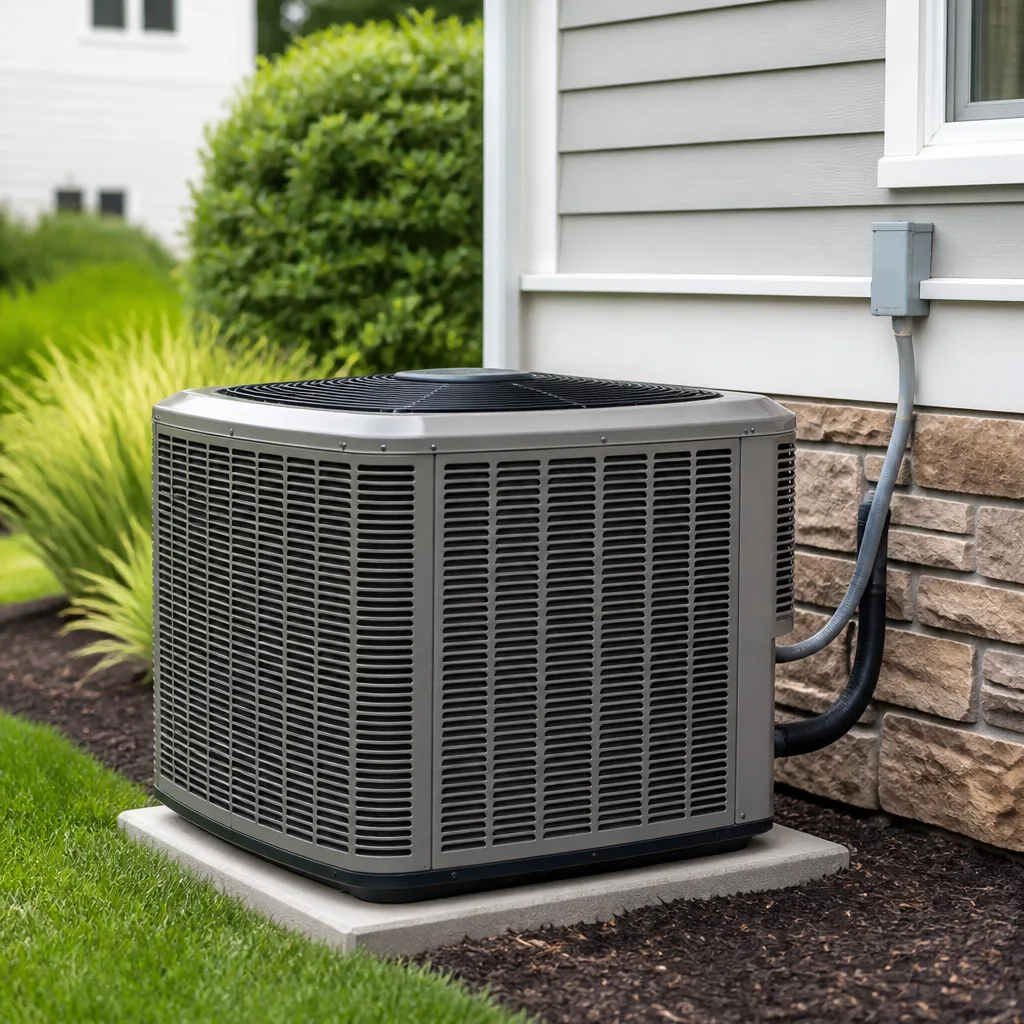 AC repair
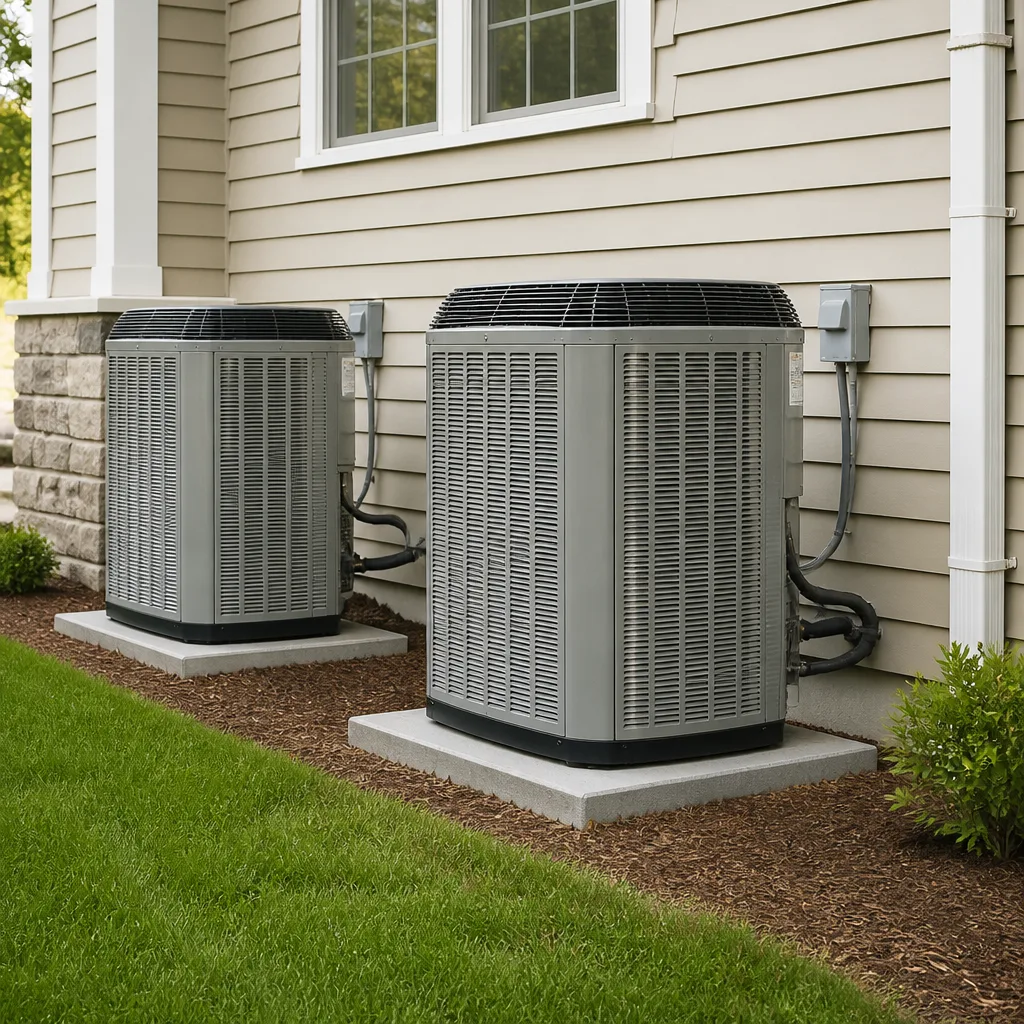 Heat pumps
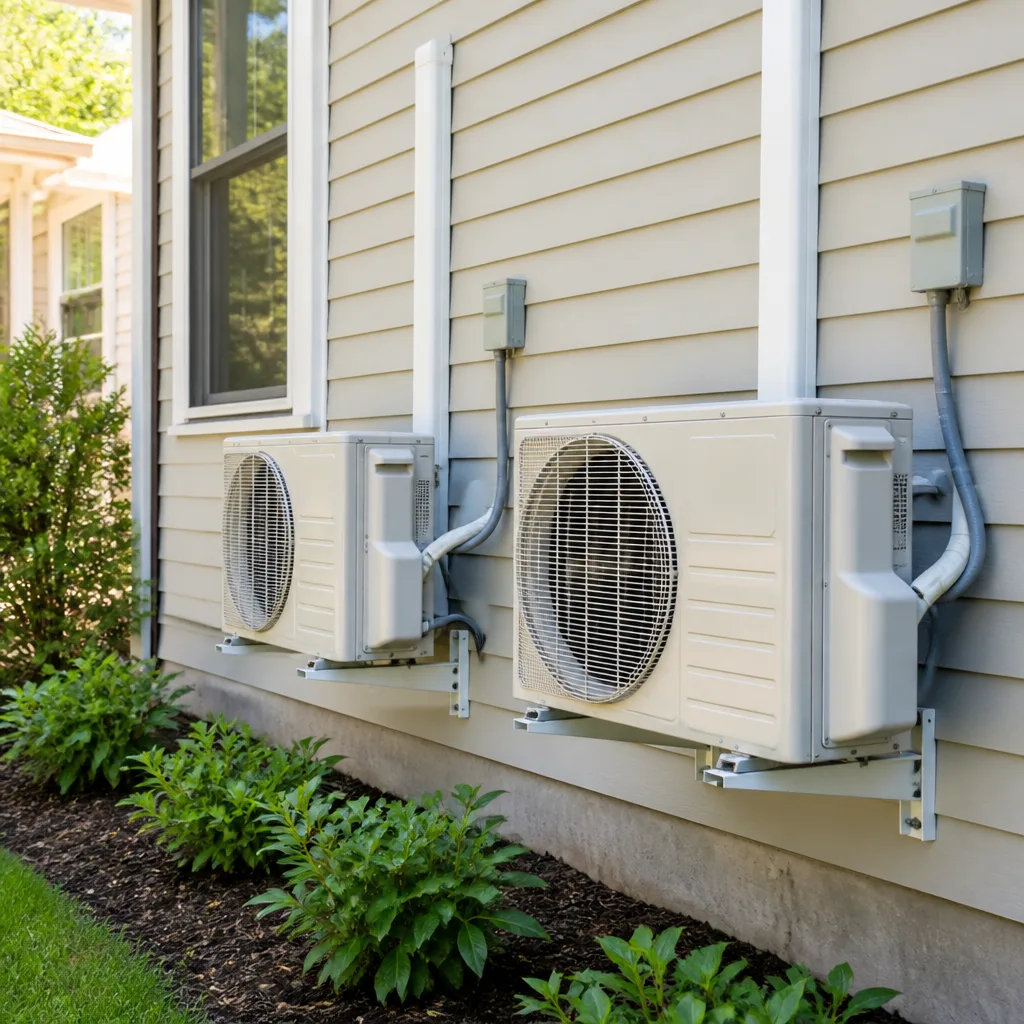 Ductless mini splits
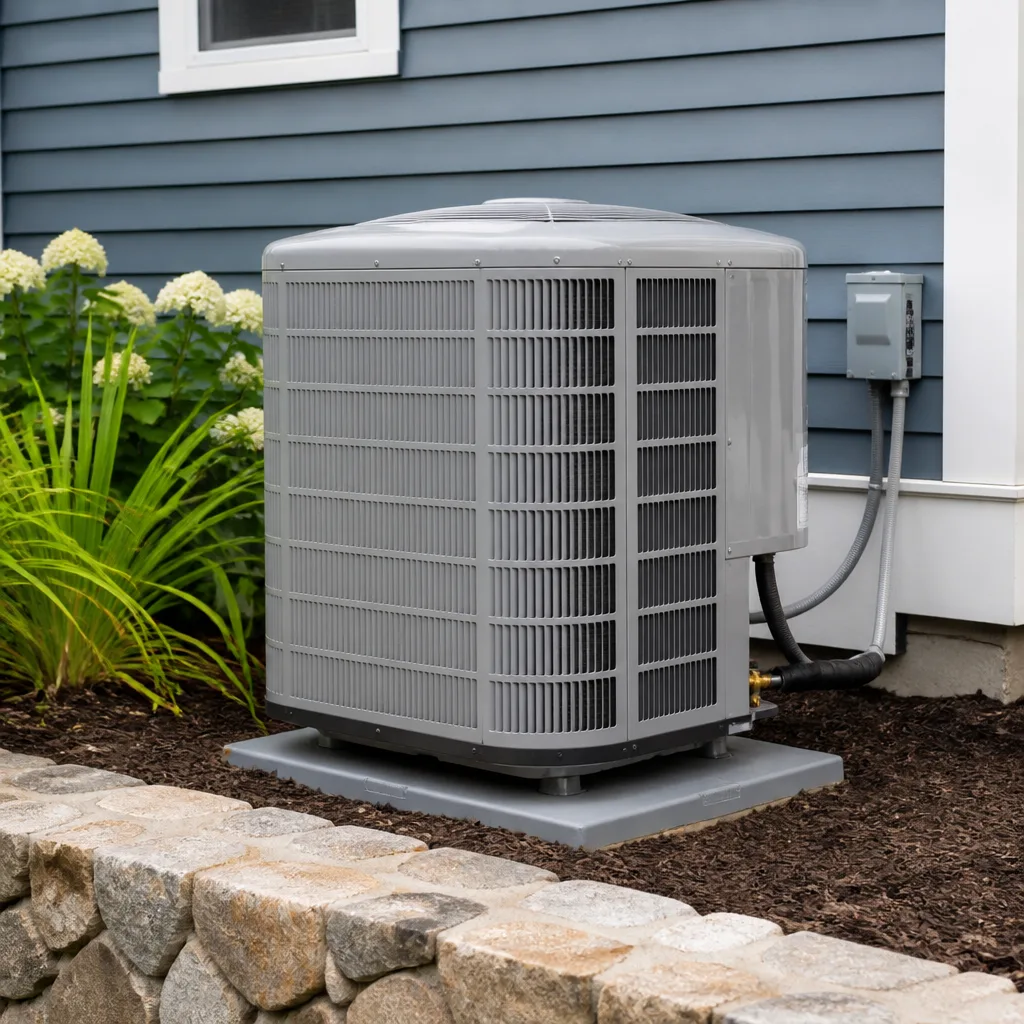 Carrier
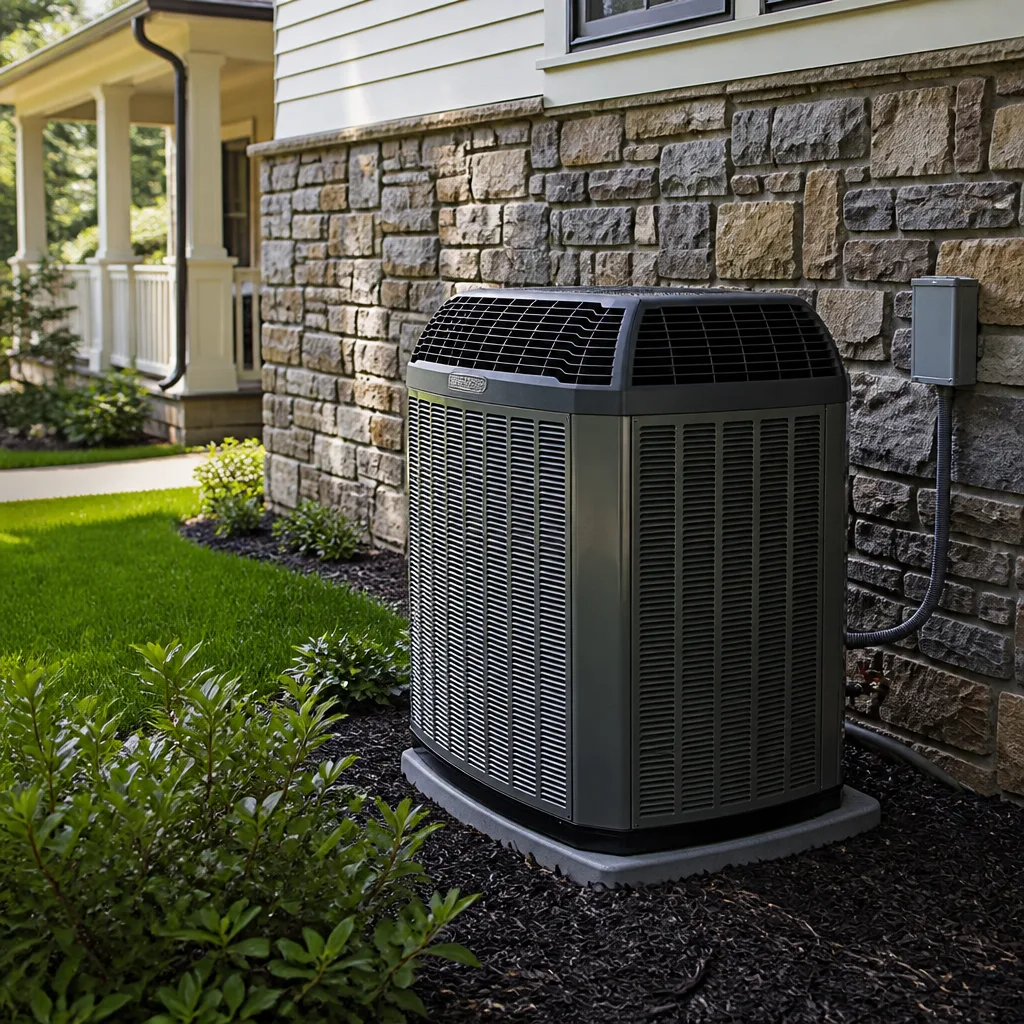 Trane
Trane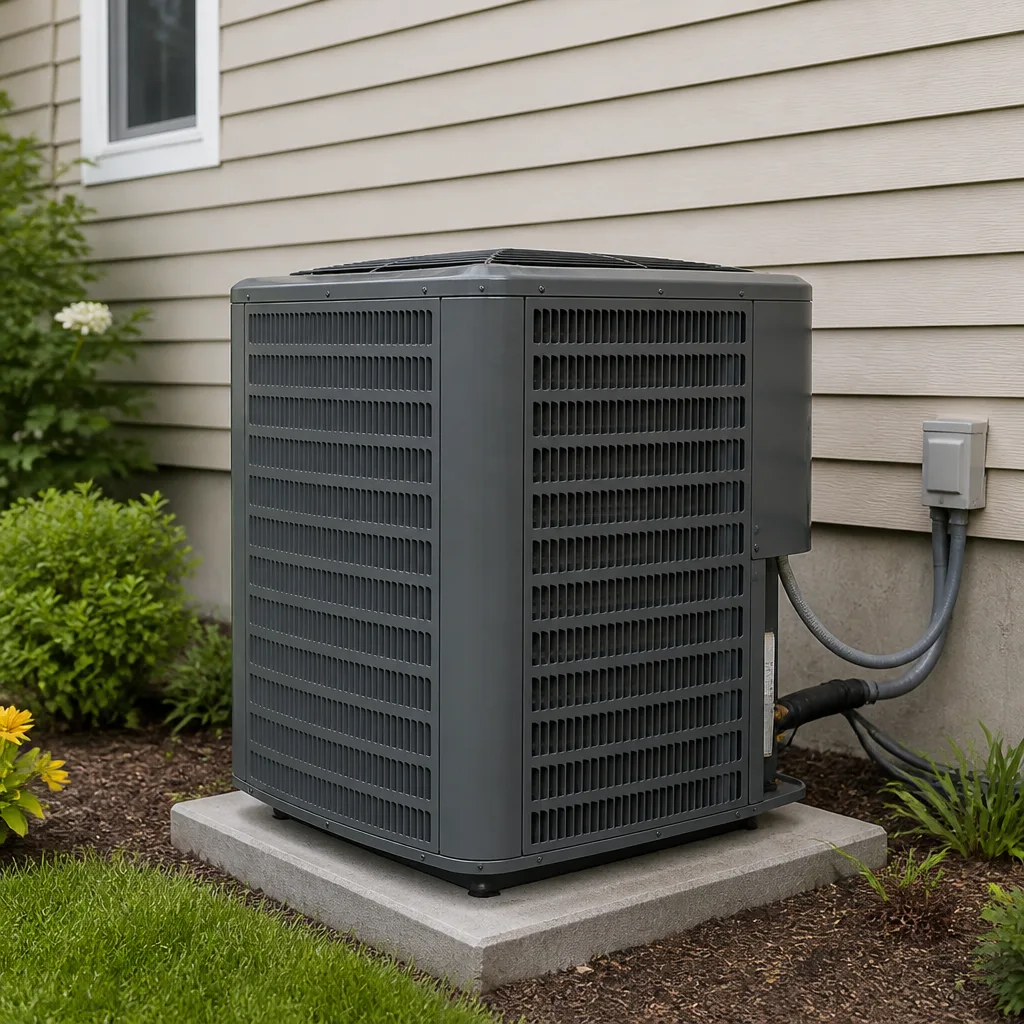 Goodman
Seasonal tune-up and full diagnostic on your Carrier, Trane, or Goodman system - readings shown to you before any repair is proposed
Diagnosis first, numbers second - you approve the repair price before a single part goes in.
Get your free estimateGoodman Capacitor Replacement: The Fort Worth Owner’s Guide
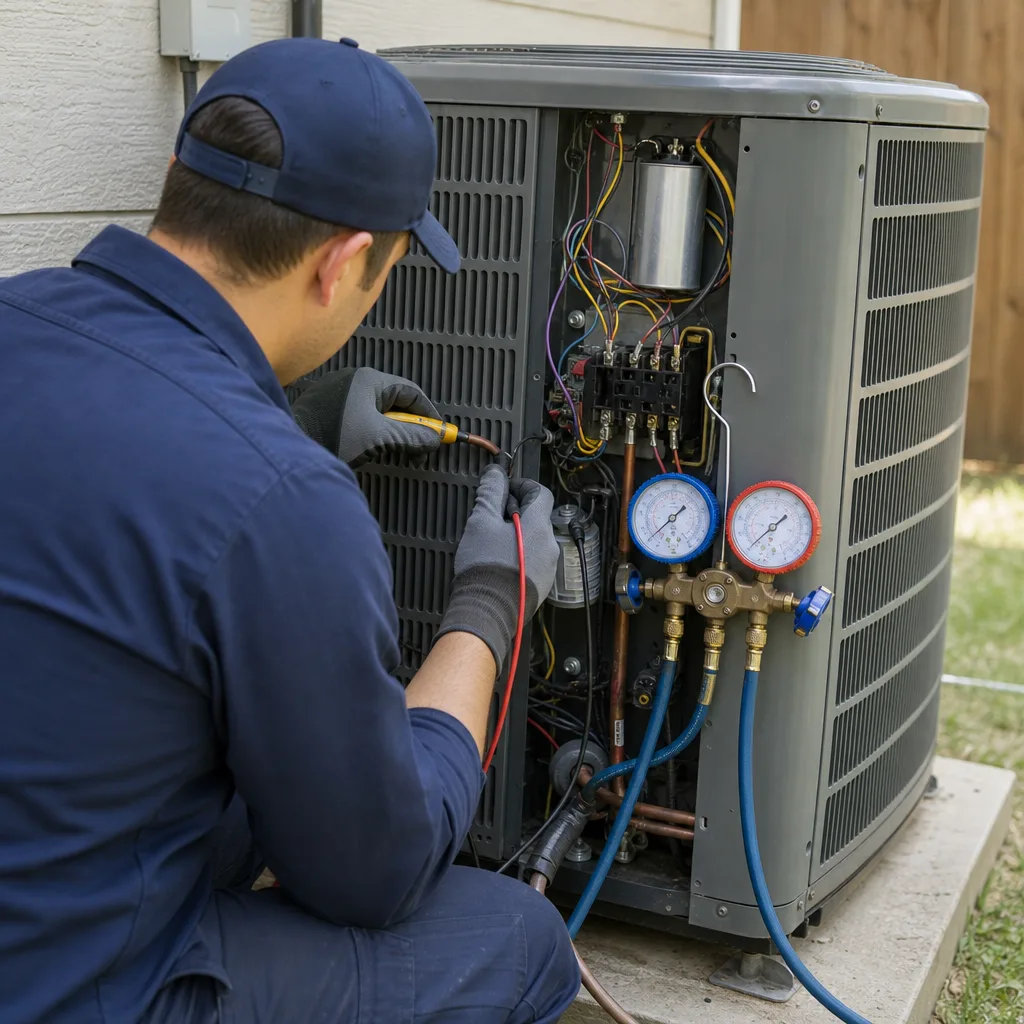
A Goodman capacitor replacement in Fort Worth typically runs between $150 and $320 installed, depending on whether it’s a single or dual-run capacitor and which Goodman series you own. We keep both OEM Goodman capacitors and quality aftermarket equivalents on our trucks, so most calls are completed same-day, often within the first hour. The capacitor is the small cylinder inside your outdoor condenser unit that gives the compressor and fan motor the electrical jolt they need to start spinning, and when it fails, you’ll usually notice the AC is running but blowing warm air, or the outdoor unit is humming without the fan turning.
Most Fort Worth homeowners discover a failed capacitor the hard way: it’s 98 degrees in July, the thermostat says 72, and the air coming out of the vents feels like a hair dryer. The outdoor unit might be buzzing, the fan might not be spinning, or the compressor clicks on and off every few minutes. That’s the capacitor telling you it’s done.
Which Goodman Models This Applies To
Goodman uses capacitors across nearly every residential AC and heat pump line they’ve produced in the last 20 years. We regularly replace them on Goodman GSX, GSZ, GSC, and SSZ series condensers, along with the newer GSXC and GSZC communicating units. If you’ve got a Goodman packaged unit sitting on your roof or beside the house, same part family, same failure pattern.
The compatibility gotcha most people miss: Goodman has used both 370-volt and 440-volt rated capacitors depending on the year and series. A 370V capacitor installed where a 440V rating is called for will fail early, sometimes within a single Texas summer. We match the voltage rating and microfarad (μF) spec printed on the side of your old capacitor, not just the physical size. The μF rating is the capacitance value, think of it as the “strength” of that starting jolt. A dual-run capacitor might read something like 45/5 μF, meaning 45 microfarads for the compressor and 5 for the fan motor. Install the wrong μF and the motor runs hot, draws more amps, and burns out faster, and in Fort Worth’s heat, “faster” can mean weeks, not years.
For the OEM-vs-aftermarket question: Goodman’s factory capacitors are solid but unremarkable, and honestly, the aftermarket options from brands like AmRad, Titan HD, and Genteq often carry better temperature ratings. Given that Fort Worth attics and condenser pads routinely hit 120-plus degrees in summer, we lean toward aftermarket capacitors with a 70°C temperature rating or higher when the original was rated lower. That’s a real lifespan upgrade, not an upsell.
One thing to be clear about: Halden Heating and Air Fort Worth is an independent HVAC contractor. We’re not affiliated with Goodman or its parent company, Daikin. We service and stock parts for their equipment because they’re everywhere in Tarrant County, and we know them inside and out.
Styles & brands we work with
Signs Your Goodman Capacitor Replacement Is Failing
- Outdoor unit hums but the fan doesn’t spin. The capacitor has lost enough μF to no longer give the fan motor its starting torque. You might see the fan blades twitch slightly but never fully engage.
- AC runs but blows warm air. The compressor isn’t actually running even though the unit sounds like it’s alive. Without the capacitor’s start boost, the compressor sits there drawing locked-rotor amps and overheating.
- Compressor short-cycles or clicks on and off. A weak capacitor can’t hold the compressor in operation, so it starts, struggles, and shuts down on thermal overload. This on-off pattern wrecks compressors over time.
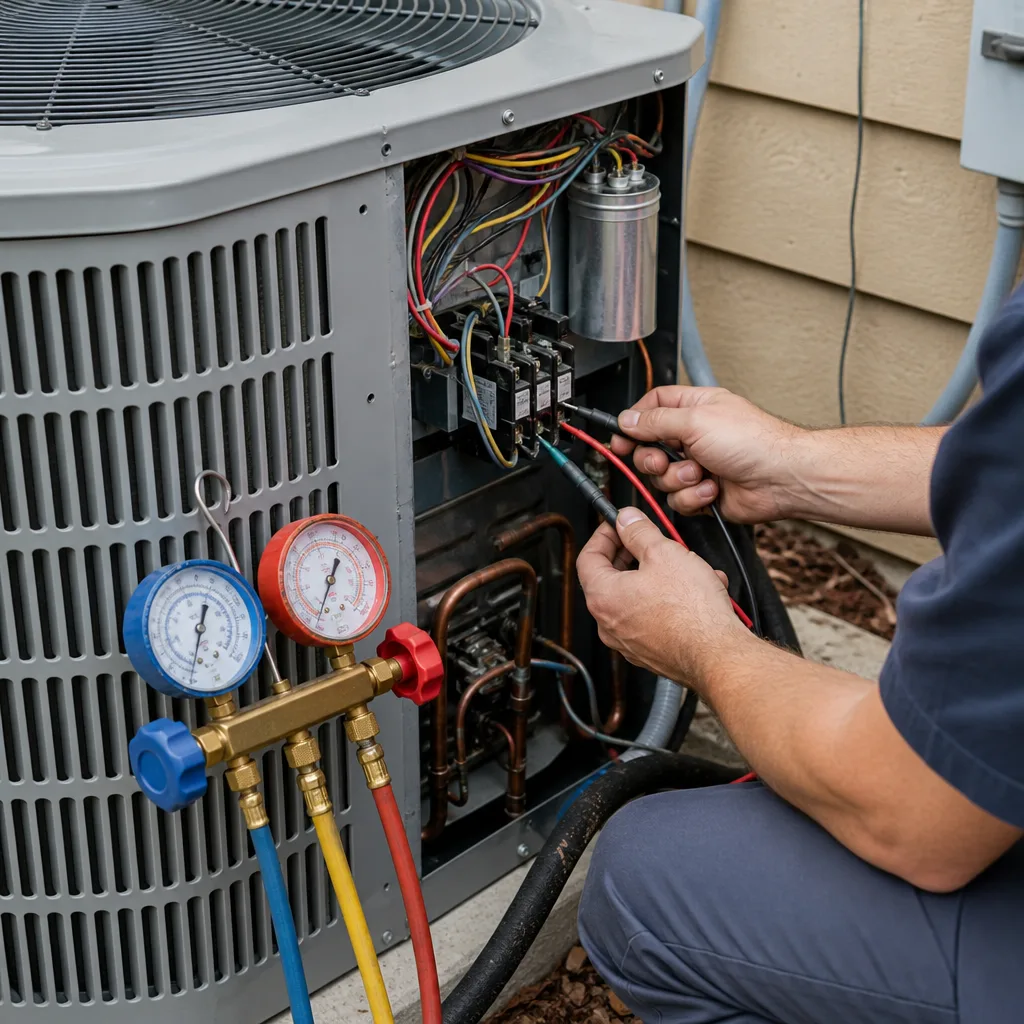
- Visible bulging or leaking from the capacitor’s top. A swollen or split capacitor casing means the internal dielectric has overheated and expanded. This is the most obvious physical sign and it’s visible just by looking at the part.
- AC works fine at night but trips the breaker during the day. Heat increases electrical resistance. A marginal capacitor that functions in the cooler overnight air fails under the afternoon load when the sun is beating directly on the condenser.
If you’re seeing any of these, the capacitor is the prime suspect. It’s also the cheapest fix in the system, which is the good news.
See the difference
 Before
 After
After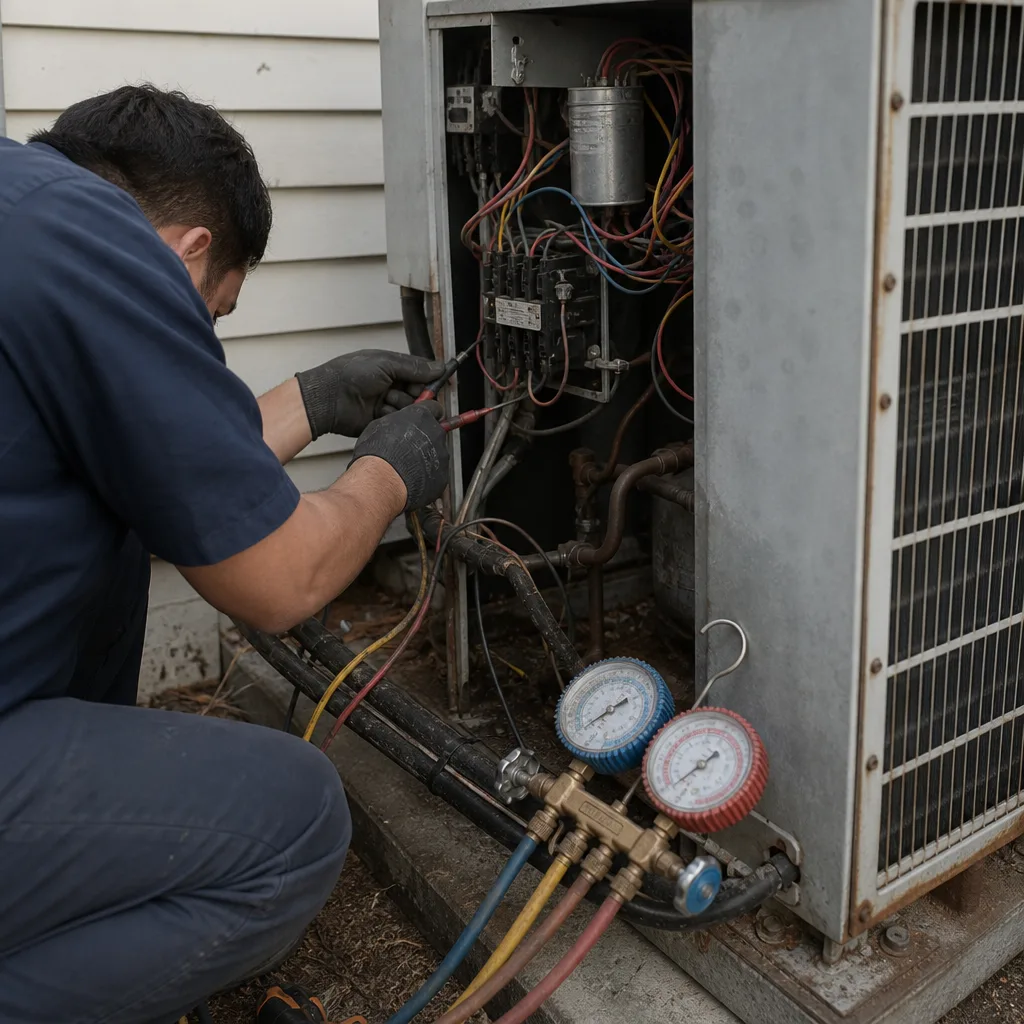 Before
 After
After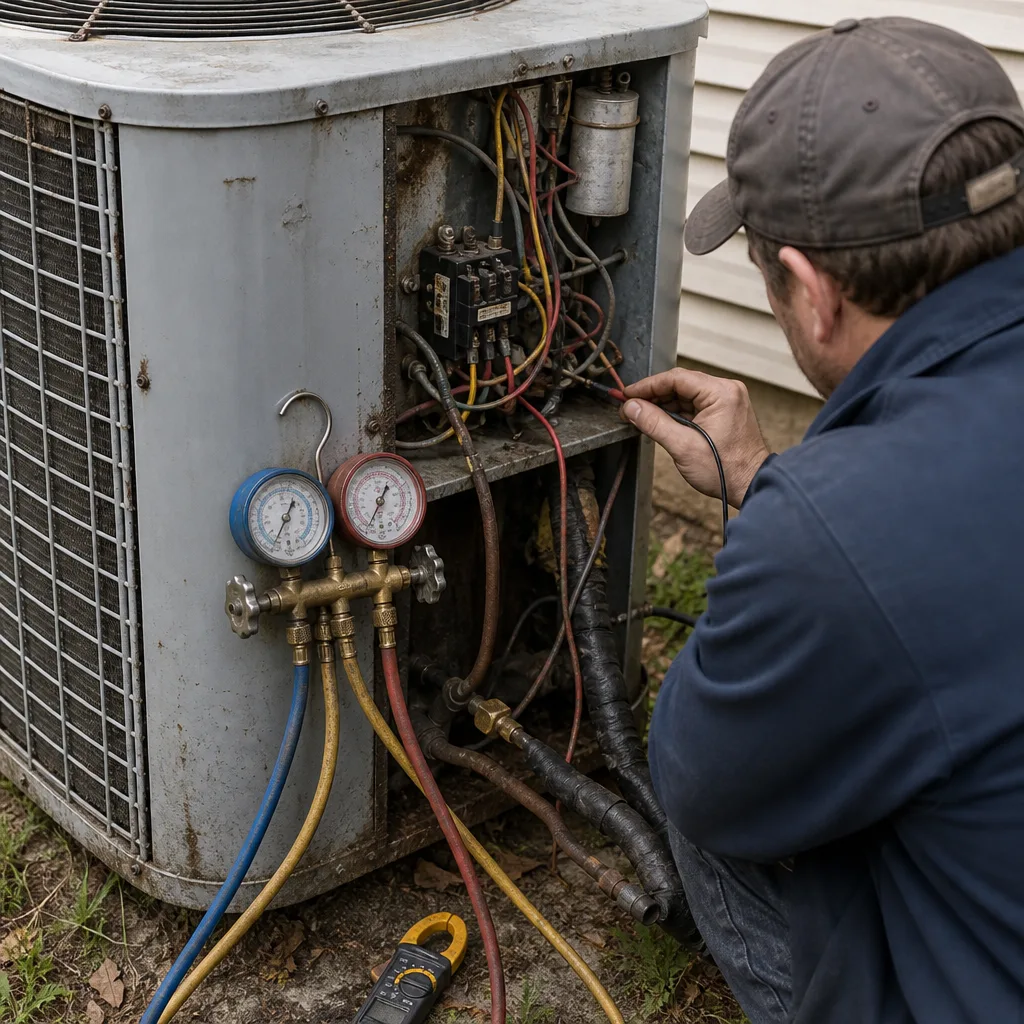 Before
 After
AfterReplacement Cost & What’s Included
In Fort Worth, a capacitor replacement on a Goodman system typically lands between $150 and $320 total, installed. A single-run capacitor, which serves just the fan or just the compressor, sits at the lower end. A dual-run capacitor, which serves both and is more common on newer Goodman residential condensers, runs toward the higher end. The capacitor itself is a $15 to $60 part depending on brand and spec. The rest is the labor, the diagnosis, and the written guarantee that comes with our work.
What’s included when we do it: we test the old capacitor’s actual μF reading (not just a visual inspection), install the correctly rated replacement, verify the compressor and fan motor are pulling proper amperage afterward, and hand you a written price before we touch anything. Every repair carries our 365-Day Done Right Promise. If that capacitor fails within a year, the return visit is free, automatically. No arguing, no fine print. Andre Fuller put that policy in writing because a surprise second bill is the fastest way to lose a customer forever.
DIY or Call Us?
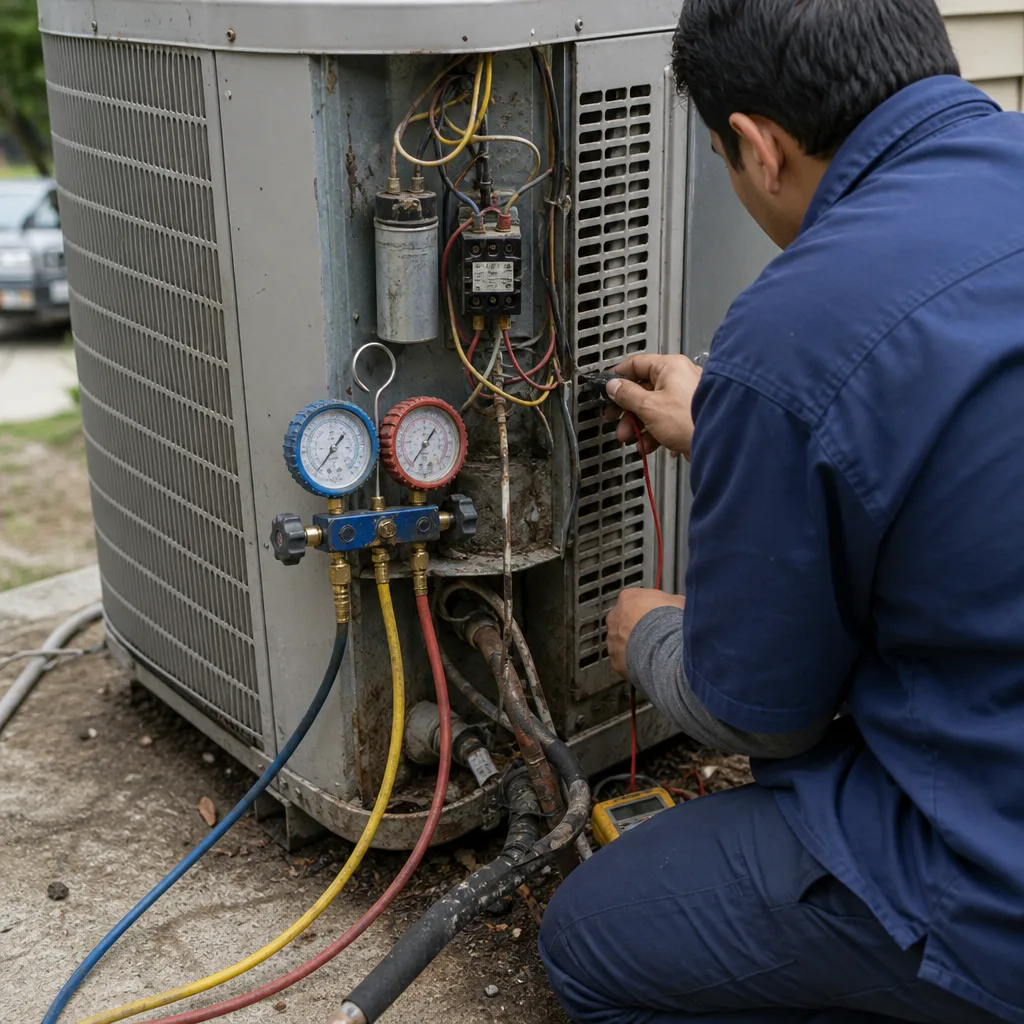
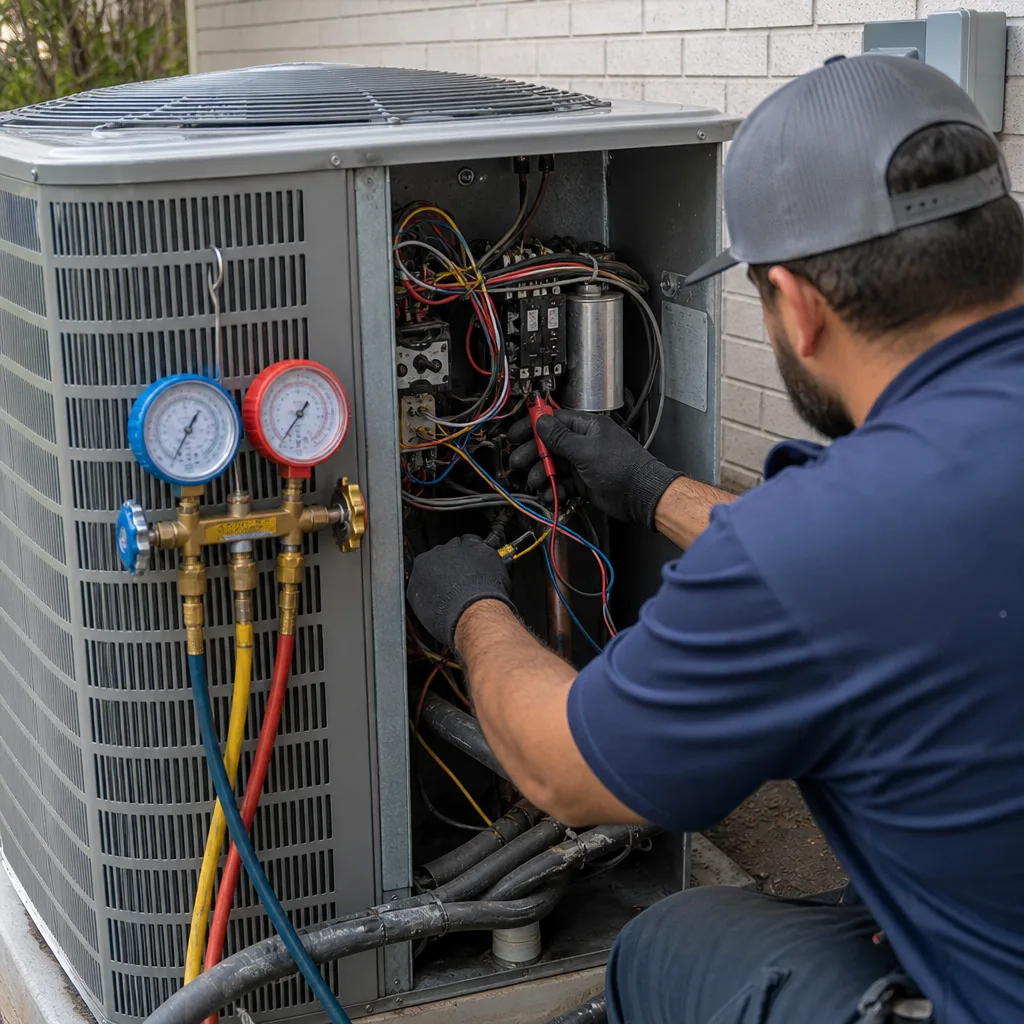
Here’s the honest split. You can safely look at your capacitor. Pop the access panel off your Goodman condenser (power off at the breaker, please), and look for a bulging top, oil residue, or a bloated casing. That’s a visual check, and it’s helpful to know before you call. What you should not do is touch the terminals. Capacitors store 370 to 440 volts even with the power off, and a charged capacitor can put you on the ground, or worse. We discharge them safely with a resistor before removal every single time.
Beyond the shock risk, there’s the diagnosis. A capacitor can fail electrically while looking perfectly fine on the outside. That requires a multimeter reading under load, not just a glance. And installing the wrong μF rating, even from a well-meaning YouTube video, is how a $25 part becomes a $900 compressor replacement next summer. Flat price up front, cool house by tonight. Call (817) 632-5499 and we’ll have a tech tracking to your door with a live arrival time, not a four-hour window.
FAQs
A factory Goodman capacitor in the Fort Worth climate lasts roughly 5 to 8 years on average, but we’ve replaced some at the 3-year mark and seen others chug along past 10. The Texas heat on the condenser pad through 100-plus degree summers is the killer, not age alone. If your Goodman is 5 years or older and acting up, the capacitor is the first thing we check.
No. Capacitors are sealed units and once the internal dielectric breaks down, there’s no fixing them. Replacement is the only option, which is actually good news because it’s one of the least expensive parts in your Goodman system. Call (817) 632-5499 for an exact quote, estimates are free.
Most Goodman capacitor replacements take 30 to 60 minutes from power-off to cool air flowing again. Add a little time for the diagnosis and the amperage check afterward, and you’re looking at a single visit, usually same-day in Fort Worth.
Yes. Our trucks carry a range of single and dual-run capacitors covering the most common Goodman μF and voltage ratings. We also stock equivalents for Carrier, Trane, and Lennox systems. If you’ve got an unusual spec, we source it same-day through our local Fort Worth parts suppliers.
Written by Andre Fuller, Owner, Halden Heating and Air Fort Worth at Halden Heating and Air Fort Worth, serving Fort Worth and nearby areas.