
Last updated October 16, 2026
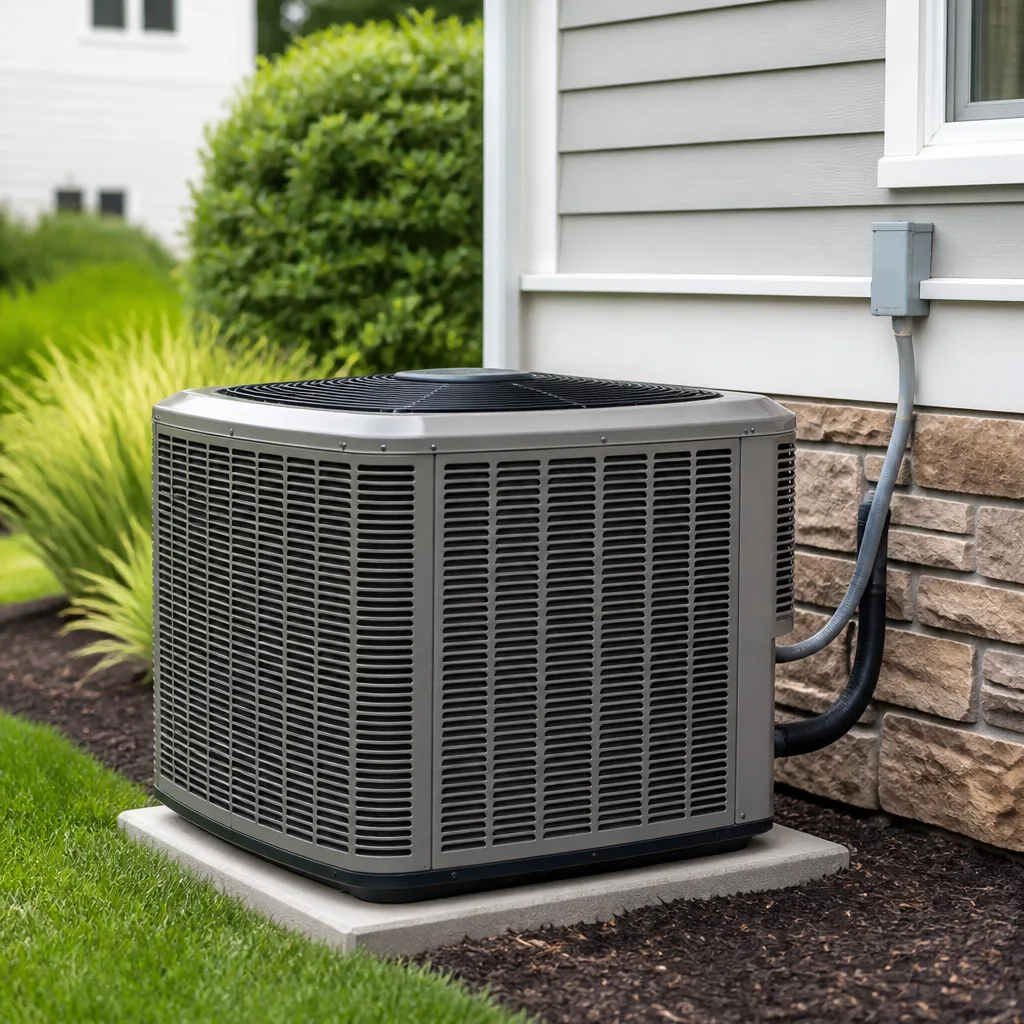 AC repair
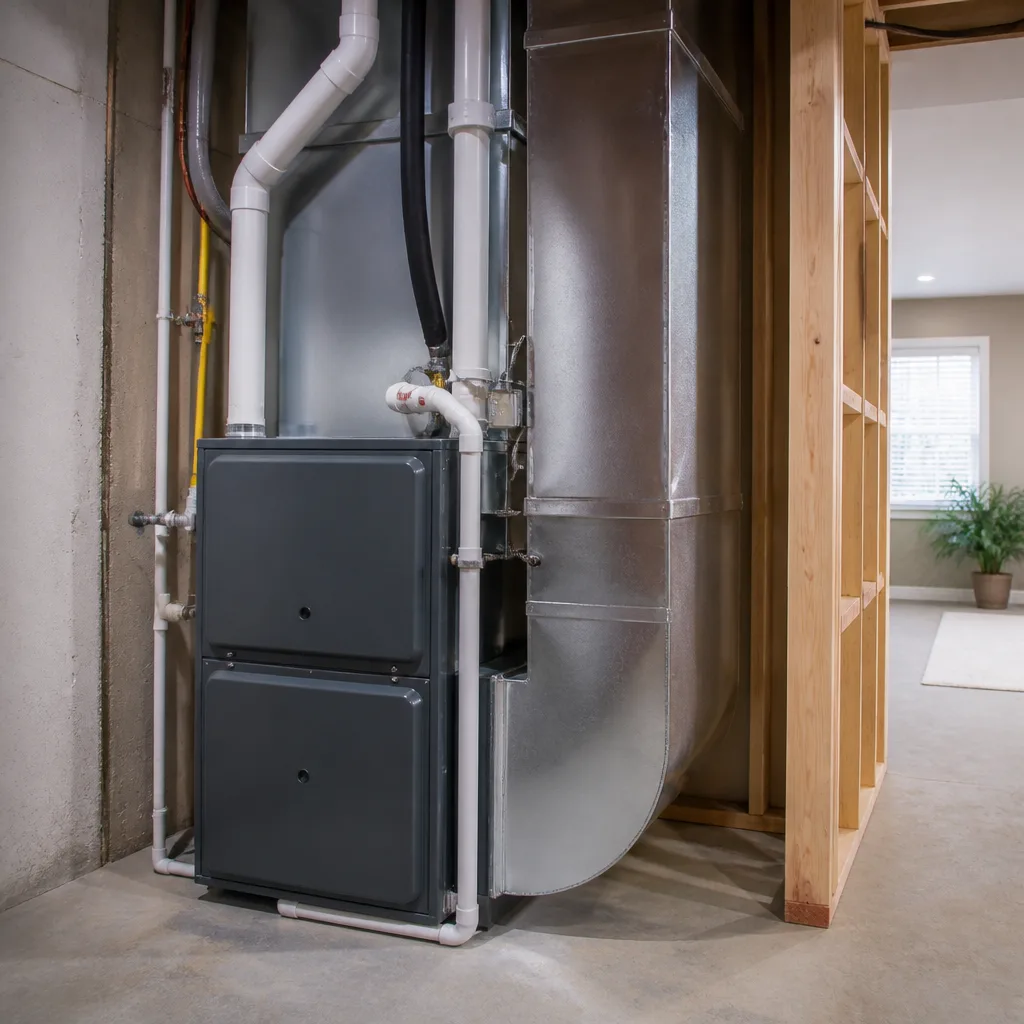 Furnace & heating
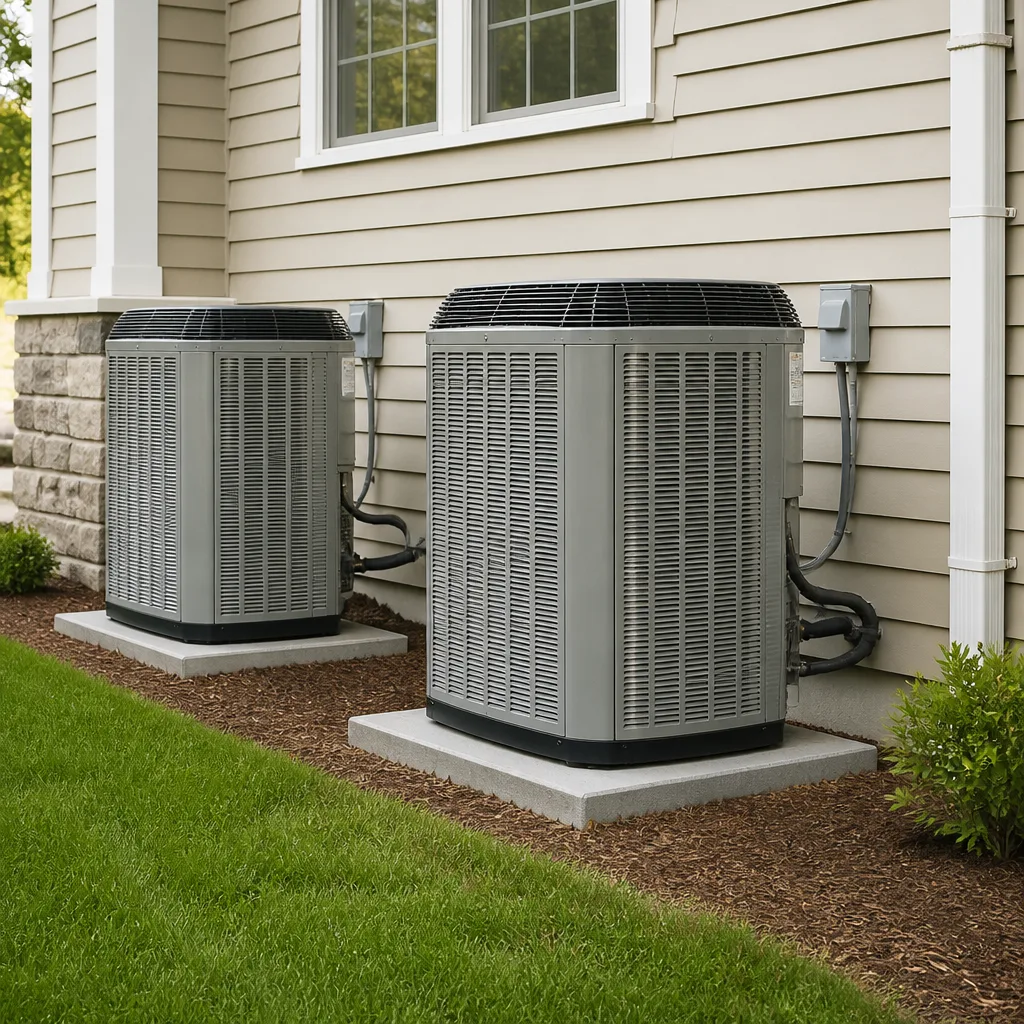 Heat pumps
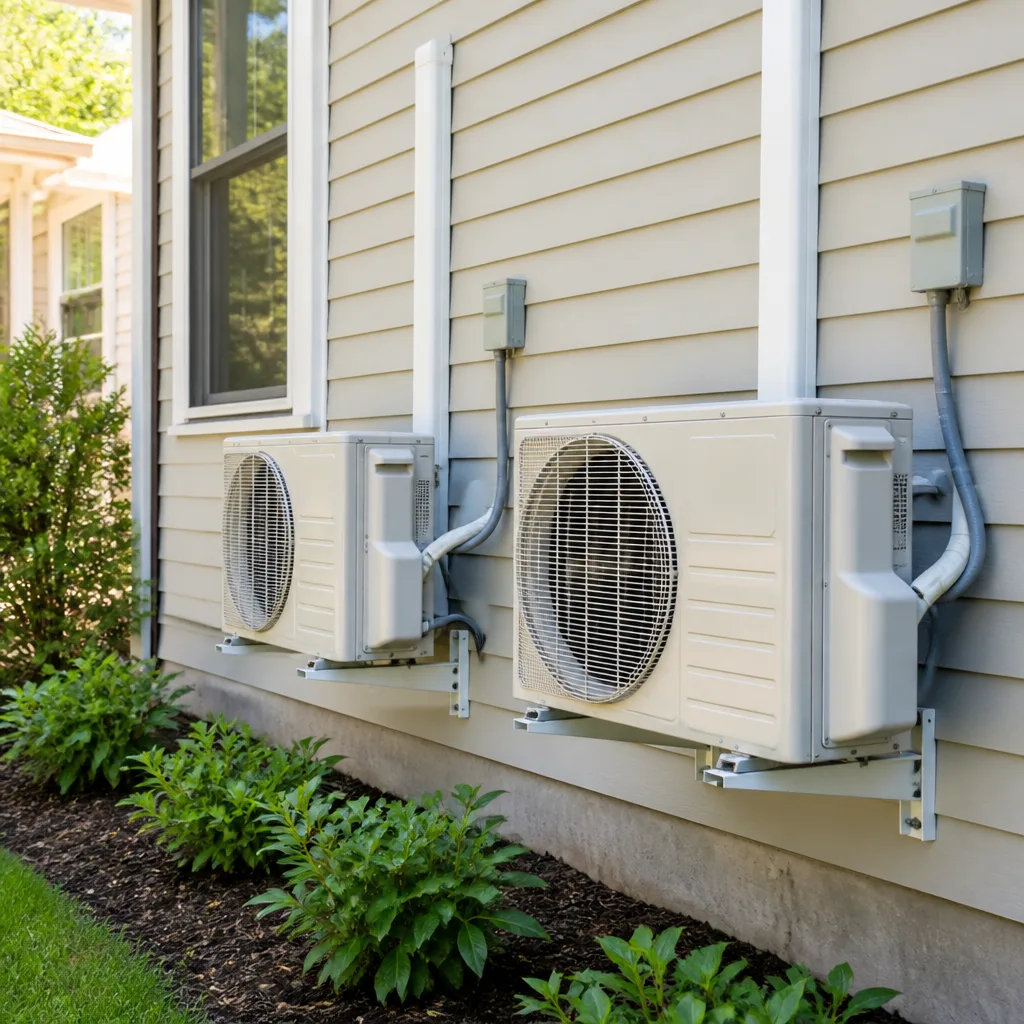 Ductless mini splits
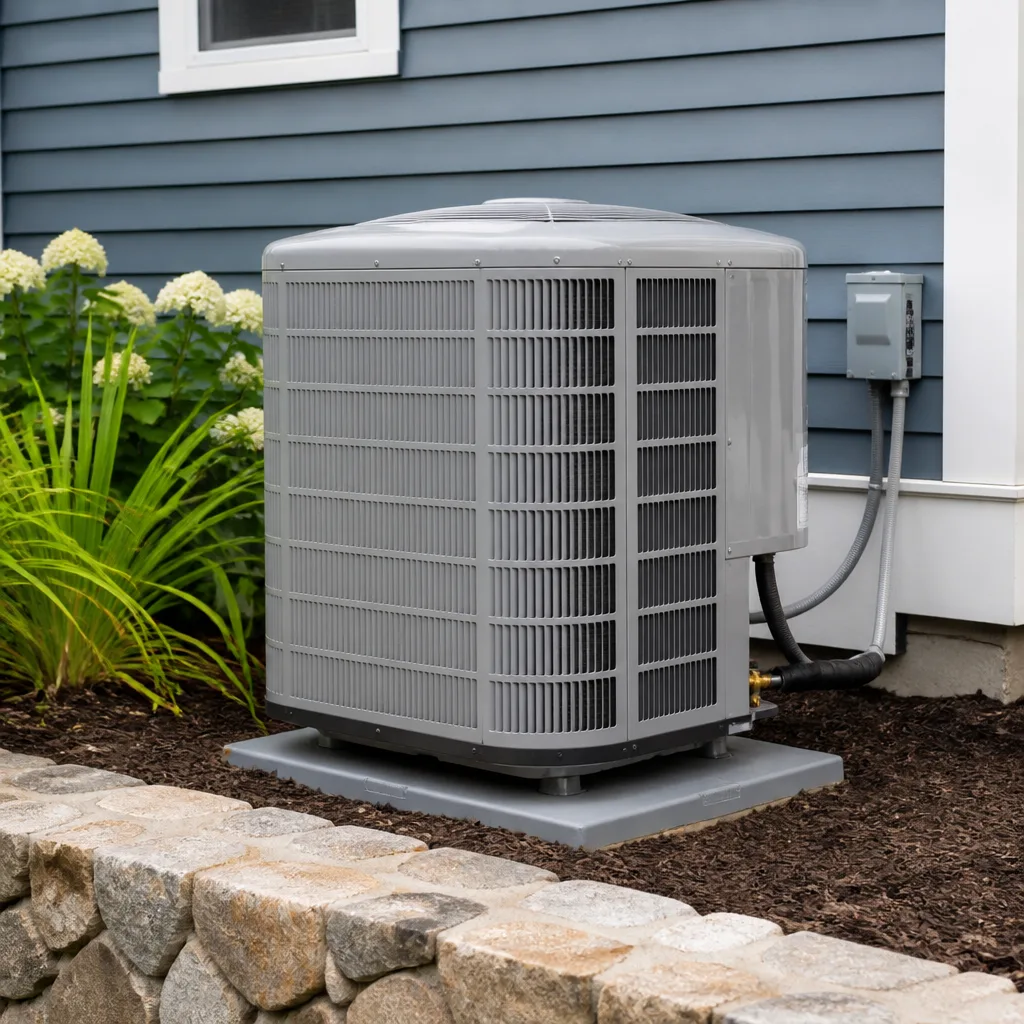 Carrier
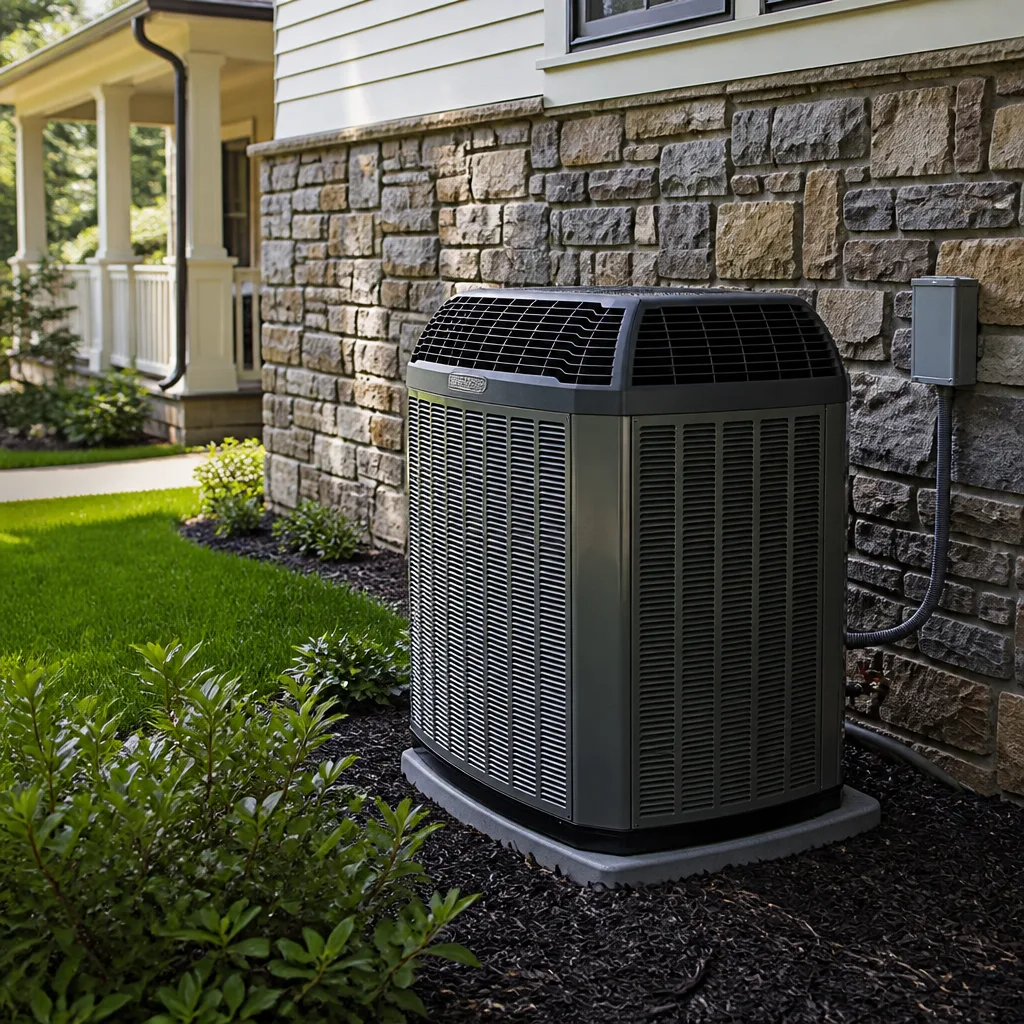 Trane
Trane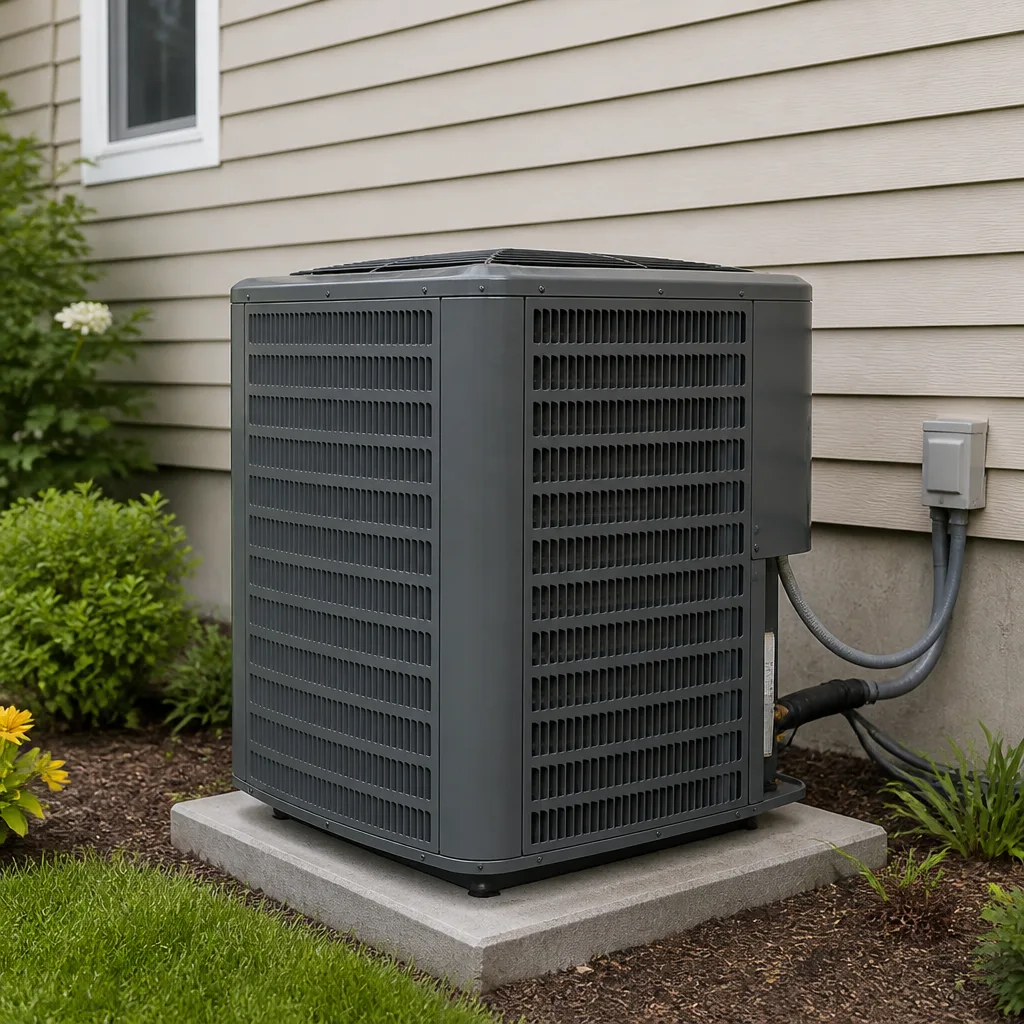 Goodman
Seasonal tune-up and full diagnostic on your Carrier, Trane, or Goodman system - readings shown to you before any repair is proposed
Diagnosis first, numbers second - you approve the repair price before a single part goes in.
Get your free estimateAC Repair Maintenance Checklist for Fort Worth Homeowners
A Fort Worth AC unit runs somewhere between 1,400 and 1,600 hours every cooling season. That’s nearly double what a system in Ohio or Pennsylvania logs. The practical result: parts that would last six or seven years up north wear out in three or four here, and a skipped maintenance visit in Fort Worth costs you roughly twice as much in accelerated wear as it would anywhere else. This checklist isn’t the generic 12-point list you’ll find on a manufacturer’s site. It’s built around the three things that actually kill air conditioners in North Texas: clogged condensate drains from humidity, capacitors and contactors failing under sustained triple-digit load, and refrigerant levels drifting out of spec without anyone noticing until the first 100°F Saturday. We’ll walk through each one, show you how to verify the work was actually done, and explain why late February beats April for scheduling in The Complete Guide to HVAC in Fort Worth.
Quick Answer
An AC maintenance checklist for Fort Worth homeowners should prioritize four items most generic checklists shortchange: monthly condensate drain flushes during cooling season, capacitor and contactor testing before summer heat arrives, a refrigerant pressure check with before-and-after numbers in writing, and a coil inspection that accounts for North Texas dust and cottonwood. Book maintenance in late February or early March, expect to pay $89 to $180 for a full visit, and ask for a written report with actual measurements, not checkmarks.
Styles & brands we work with
Table of Contents
- Why Fort Worth Breaks ACs Faster Than Most of America
- The Condensate Drain: Fort Worth’s Monthly Task, Not an Annual One
- Capacitors and Contactors: The Parts That Fail in 100°F Heat
- Refrigerant Pressure: What Your Tech Should Hand You (and What It Means if They Won’t)
- Coils, Filters, and the North Texas Dust Problem
- Your Printable Verification Checklist: How to Confirm the Work Was Done
- Why Late February Beats April: Fort Worth Scheduling Logic
- Common Mistakes to Avoid
- When to Call a Professional
- Frequently Asked Questions
Why Fort Worth Breaks ACs Faster Than Most of America
Before we get to the checklist itself, you need to understand what you’re up against. A Fort Worth cooling season runs from roughly late April through mid-October, and during that stretch, daytime highs above 95°F are common for weeks at a time. Your condenser unit sits outside in 100°F ambient heat while trying to reject heat from inside your house that’s another 20 to 30 degrees warmer. That’s a thermodynamic tightrope walk, and it’s why parts fail here that rarely fail elsewhere.
We’ve worked on systems in neighborhoods across Fort Worth, from the tree-heavy lots in Tanglewood to the newer builds in Alliance, and the pattern is consistent. The average lifespan of a central AC system in North Texas is 12 to 14 years, compared to 15 to 20 in milder climates. But here’s the thing: systems that get consistent, thorough maintenance routinely hit 16 or 17 years here. The difference isn’t luck. It’s whether the specific failure points of this climate got addressed before they turned into breakdowns.
There’s also a supply-demand problem baked into Fort Worth’s geography. When a June heat wave hits and every third house in your zip code has a dead capacitor, the best HVAC companies book out days in advance. A maintenance visit in March costs you $89 to $180 and takes an hour. A repair visit in July costs $150 to $500 for the part alone, plus whatever you lose in comfort while you wait. The math isn’t subtle.
Before we dive into specifics, if your system is already past the point where maintenance will save it, AC repair in Fort Worth is a page worth bookmarking. But if your unit still cools, keep reading. The checklist below is sequenced by what fails most often in this climate, not what’s easiest to check.
The Condensate Drain: Fort Worth’s Monthly Task, Not an Annual One
Your AC produces gallons of water every day it runs. That water collects on the evaporator coil inside your air handler, drips into a drain pan, and flows out through a condensate line, usually a white PVC pipe that exits near your outdoor unit or into a sink drain. In a dry climate, that line moves water fast enough to stay clear on its own. Fort Worth is not a dry climate.
Summer humidity in Fort Worth regularly sits between 50% and 70%, which means your system is condensing water at rates most manufacturers’ maintenance schedules never anticipated. That water sits in the drain line, and because it’s full of organic material – dust, skin cells, the occasional bit of insulation – algae and mold grow inside the line. An annual drain flush, which is what most national checklists recommend, simply isn’t frequent enough here.
What a clogged drain costs you:
- If the drain backs up and the float switch doesn’t trip, water overflows the drain pan and soaks whatever is beneath it. In a Fort Worth attic installation, that’s drywall, insulation, and potentially ceiling joists. Repair bills run $500 to $2,500 depending on how long it ran before you noticed.
- If the float switch does trip, your system shuts down completely. On a 102°F August afternoon, that’s a no-cooling emergency that costs more to fix same-day.
- Even before a full clog, a partially blocked drain line raises humidity inside your house, which makes the AC work harder and raises your electric bill. TXU and Reliant customers in Fort Worth see this every summer.
Here’s what monthly drain maintenance actually means:
- Find your condensate line. It’s the white or gray PVC pipe near your indoor unit, often with a small open tee or cap near the top.
- Pour one cup of white vinegar into the line. Not bleach, not drain cleaner. Vinegar dissolves the algae without eating the PVC. Do this on the first of each month from May through October.
- Wait 30 minutes, then pour a cup of warm water to flush the loosened material through.
- Check the outdoor end of the line. If water doesn’t flow freely during a hot afternoon when the AC is running, the line is already partially clogged and needs a professional flush.
During a professional maintenance visit in Fort Worth, the tech should do a pressurized drain line flush, not just a visual check. Ask. In our experience, maybe one in three companies actually flushes the line rather than peering at it and checking a box. If you’re booked with Halden Heating and Air Fort Worth home for maintenance, our techs do a nitrogen-pressurized flush on every visit and take a before-and-after photo, so you know it happened. If you’re with another company, ask them to show you the water flowing freely out the other end before they leave.
Capacitors and Contactors: The Parts That Fail in 100°F Heat
Two electrical components inside your outdoor condenser unit account for a disproportionate share of Fort Worth AC breakdowns. Neither is expensive. Both are easy to test. And almost no homeowner knows they exist until one fails on the hottest day of the year.
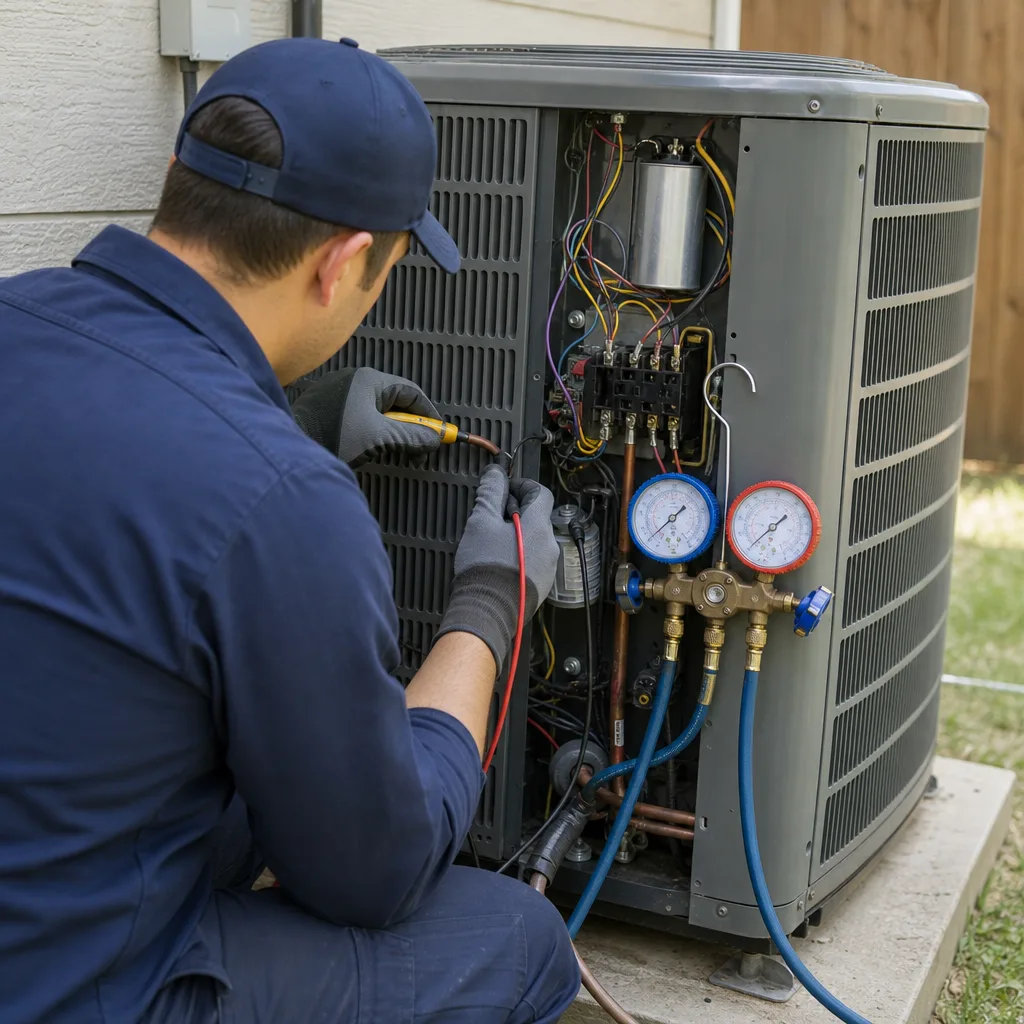
The capacitor is a small cylinder that stores the electrical burst needed to start the compressor and the condenser fan motor. Think of it as the starter on a car. The contactor is a switch, controlled by low voltage, that connects the high-voltage circuit when your thermostat calls for cooling. Both live in the outdoor unit, where they bake in direct sun and ambient heat every afternoon.
Capacitors are rated for a specific number of microfarads, usually printed on the side. Over time, in sustained high heat, the internal dielectric material degrades and the capacitor weakens. A capacitor running at 10% below its rated value can still start your system, but the compressor and fan motor draw more current every time they cycle on. That extra current creates extra heat, which degrades the capacitor faster, which creates more heat, until one July afternoon it simply won’t start. A capacitor that fails completely costs $150 to $350 to replace on a service call. A compressor motor damaged by months of weak starts costs $2,000 to $4,000.
Contactors fail differently. The contacts inside pit and arc over thousands of cycles, especially when the unit runs constantly, which a Fort Worth unit absolutely does. A pitted contactor creates electrical resistance, which generates heat, which damages the contactor further and can eventually weld the contacts or burn them open. We replace more contactors in July than any other month.
What maintenance should include:
- A capacitance test with a multimeter that compares actual microfarads to the capacitor’s rating. If it’s 10% below rating, replace it. This costs $30 to $80 for the part. Waiting until failure costs 3-5 times that in a service call fee plus part.
- A visual inspection and resistance test of the contactor, looking for pitting, charring, or insect debris. Fort Worth has a serious mud dauber and fire ant problem, and both love nesting inside condenser units.
- Checking the condenser fan motor bearings, which also wear faster in high ambient temperatures. A fan motor that seizes in August is a same-day replacement at $400 to $700.
If a tech tells you the capacitor tested at 35 microfarads when it’s rated for 35, they didn’t test with a meter, because that’s a suspiciously perfect number. Microfarad readings are never exactly the rating. A real reading is usually slightly above or below, like 33.7 or 36.1. We’ll cover verification in a later section, but this is one of the easiest tests to fake, and one of the most expensive to get wrong.
Refrigerant Pressure: What Your Tech Should Hand You (and What It Means if They Won’t)
Your AC’s refrigerant, usually R-410A or R-22 in older systems, is the coolant that actually moves heat out of your house. The system is sealed, which means the refrigerant level should never change. If it’s low, there’s a leak. There is no such thing as “using up” refrigerant. So when you hear phrases like “your Freon is a little low, we can top it off,” what you’re actually hearing is “your system has a leak and I’d like to charge you for a temporary fix instead of finding it.”
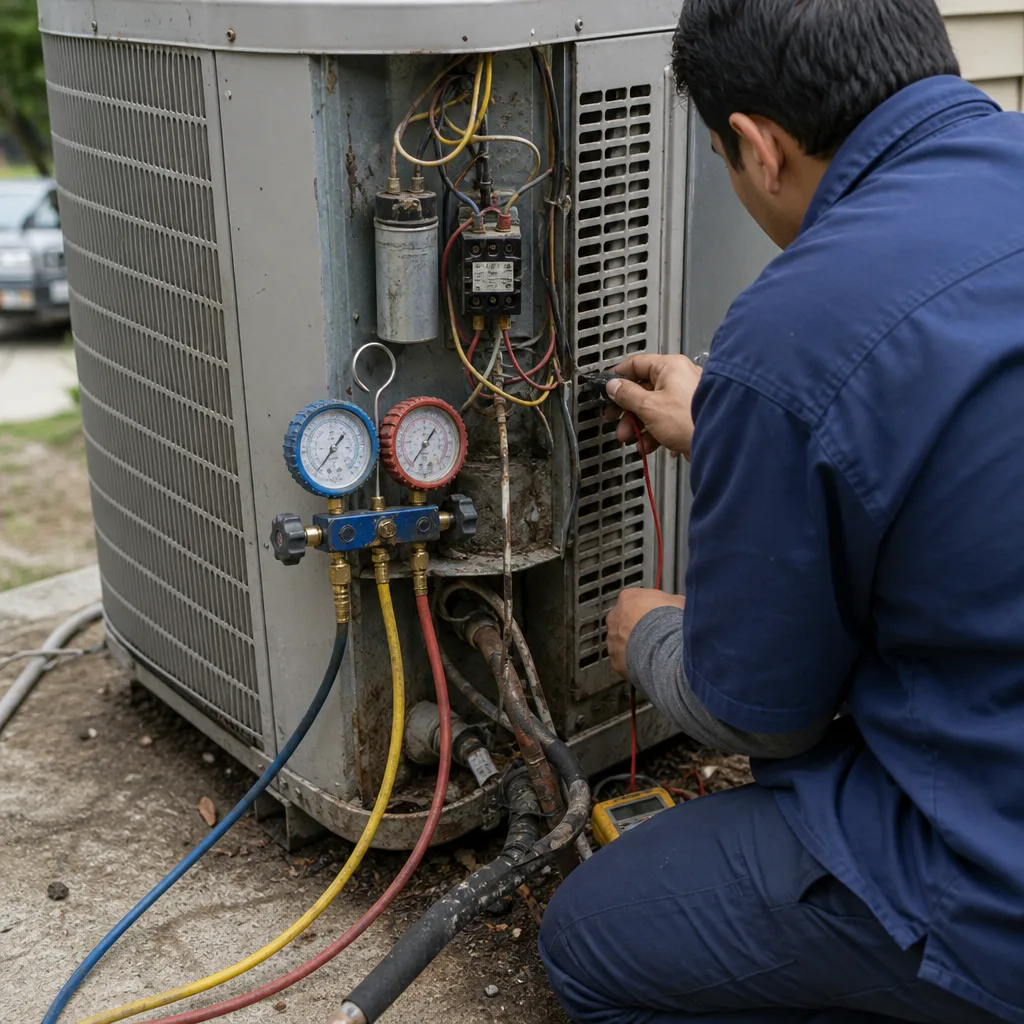
A proper maintenance visit includes measuring refrigerant pressures and superheat/subcooling values and giving you the numbers. Not “it looks fine.” Numbers. Here’s what a typical healthy R-410A system in Fort Worth should show on a 95°F day:
- Suction line pressure: roughly 100 – 125 psi
- Liquid line pressure: roughly 275 – 375 psi, varying with outdoor temperature
- Superheat: 8 – 12°F at the evaporator
- Subcooling: 10 – 15°F at the condenser
These numbers shift with outdoor temperature and indoor humidity, but a good tech accounts for that and gives you the measured reading on today’s conditions. If your tech won’t show you numbers, or takes a reading, stares at the gauge, and says “looks good” without writing anything down, be suspicious. Pressure testing takes an extra five minutes. If they skipped it, what else did they skip?
Low refrigerant on the cooling coil surface causes poor heat transfer, which makes the system run longer, which raises your electric bill and stresses the compressor. Worse, low refrigerant can indicate a slow leak in the evaporator coil, a common failure point on Trane and American Standard systems of certain vintages, though Carrier and Bryant units aren’t immune either. A small leak fixed now is a $200 to $600 repair. A compressor that burns out from running while low on coolant is a $2,000+ replacement that usually means a new system is the smarter play.
If your unit was installed before 2010 and still runs on R-22, that refrigerant is no longer manufactured in the U.S. and prices have climbed dramatically. A full R-22 recharge can run $800 to $1,500 depending on how much is needed. At that price point, you should be comparing it against the cost of AC installation in Fort Worth for a new R-410A or newer system. Sometimes the repair math makes sense. Often it doesn’t, and we’ll tell you straight which way the numbers point.
Coils, Filters, and the North Texas Dust Problem
Fort Worth is dusty in a specific way. It’s not just blowing dirt from construction sites, though there’s plenty of that in the Alliance and Chisholm Trail Parkway growth corridors. It’s a fine silt that settles on everything, plus spring cottonwood from the Trinity River bottoms, plus pollen from live oaks and mountain cedar depending on the season. Your AC system is a powered air filter. All of that stuff ends up somewhere.
That somewhere is your evaporator coil, the indoor coil that gets cold and pulls humidity out of the air. Dust on the evaporator coil acts like a blanket. It insulates the cold surface from the air moving across it, which means the coil can’t absorb heat efficiently. The system runs longer. The coil gets colder. Condensation on the coil can freeze, which blocks all airflow, which makes the problem worse until the system ices over completely and shuts down.
A frozen evaporator coil in a Fort Worth summer is a multi-hour thaw job. You’re looking at hours without AC while the ice melts, sometimes into a drain pan that overflows, which brings us right back to the water damage problem from the condensate drain section. Everything connects.
Here’s what Fort Worth-specific coil maintenance looks like:
- Replace your air filter every 30 to 60 days during cooling season, not the 90 days printed on the filter packaging. Homes with pets, kids, or high-traffic households should lean toward 30 days. In the dusty weeks after spring construction picks up or during cottonwood season, check the filter at the two-week mark.
- Your tech should inspect and clean the evaporator coil at least once per year. This means opening the air handler access panel and visually confirming the coil isn’t caked with dirt. If your tech says they cleaned the coil but you didn’t see them open the panel, they didn’t clean the coil.
- The outdoor condenser coil needs attention too. Cottonwood fuzz and lawn clippings from mowers blow against the coil fins and reduce heat rejection. A good maintenance visit includes washing the condenser coil with water and, if needed, straightening bent fins with a fin comb.
- Ask your tech about your blower wheel. Over time, the blower that pushes air through your ducts collects dust on its blades, reducing airflow by 20% or more. This is the most commonly skipped maintenance item we see, and it matters most in Fort Worth because our systems run nearly twice as long as the national average.
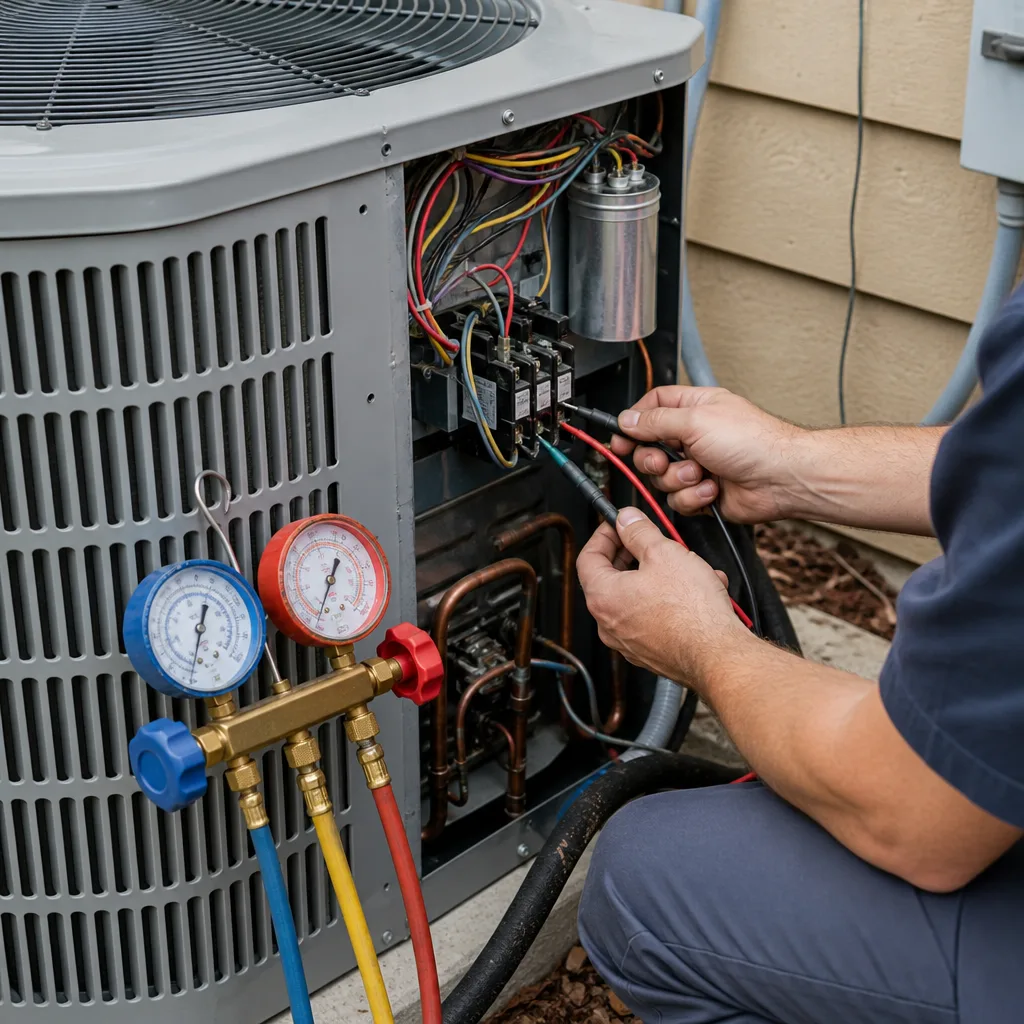
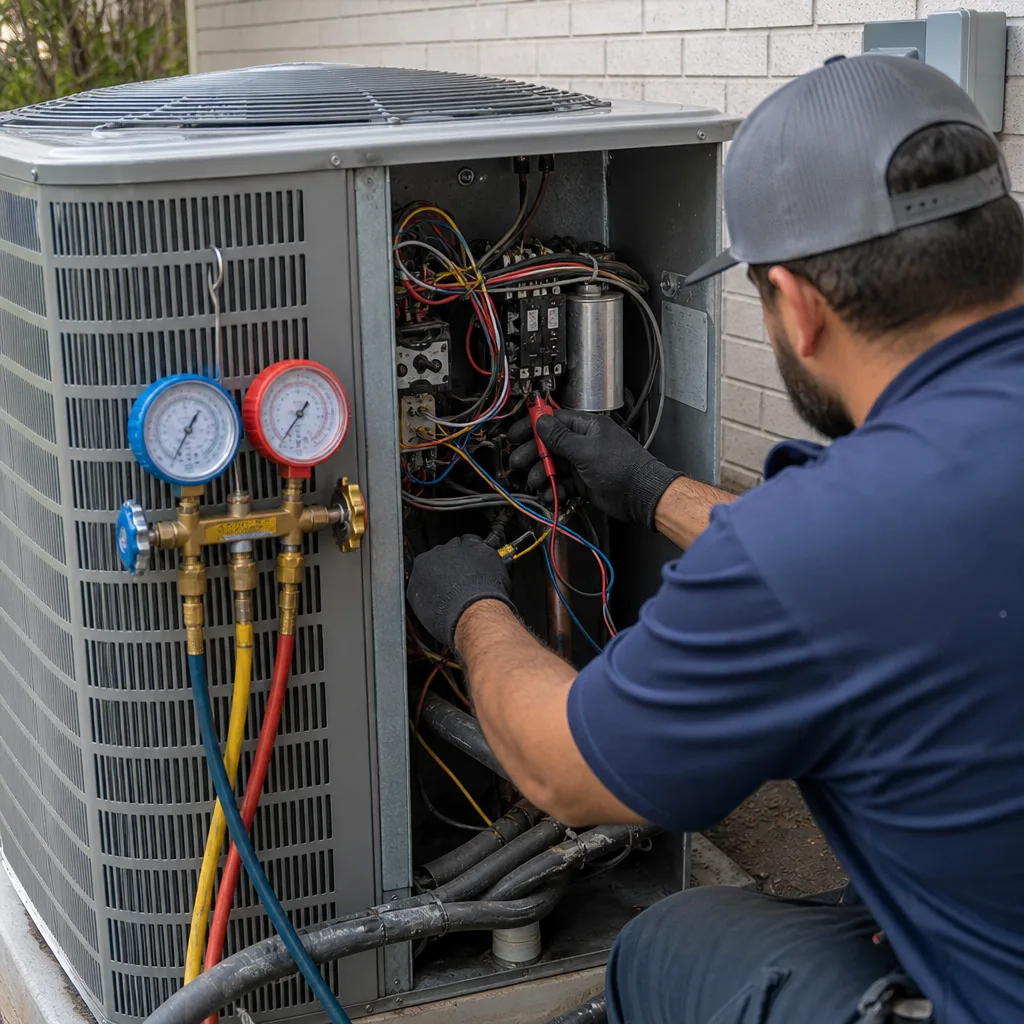
- Capacitor reading: Ask to see the multimeter reading and the rated value printed on the capacitor. Record both. If the reading is 10% or more below rating, the capacitor should be replaced. Too-close match to the rating is a red flag for a faked test.
- Contactor inspection: Ask to see the contactor points. They should be smooth and shiny, not pitted or blackened. If the tech won’t show you the contactor, ask why.
- Condensate drain flush: Ask to see water flowing through the drain line exit point after the flush. If the tech flushes from the indoor unit and you can’t see it exit, that’s incomplete verification.
- Refrigerant pressure numbers: Ask for the measured suction and liquid line pressures, plus superheat and subcooling if the tech measured them. Write them down. Next year, compare. Drifting numbers over time indicate a leak developing.
- Coil inspection: Confirm the air handler panel was opened and you saw the coil. Ask the tech to describe its condition. “Clean” and “needs cleaning” are both legitimate answers, but “I didn’t look” is not.
- Condenser coil wash: Check that the outdoor coil looks uniformly clean after the visit, not just in a splotchy pattern that suggests a quick exterior spray.
- Temperature split: At the end of the visit, the tech should measure the temperature at the return vent and the nearest supply vent. The difference should be 15°F to 20°F after the system has run for 10-15 minutes. Anything less means the system isn’t cooling properly and more diagnosis is needed.
- Amp draw: The tech should measure the compressor and fan motor amp draw and compare it to the rated values on the labels. High amp draw indicates a motor working too hard and failing early.
- Believing “it’s working fine, so it doesn’t need maintenance.” AC failure is not linear. The compressor, capacitor, and contactor all work fine right up until they don’t. The point of maintenance is finding the failure in progress before it becomes the failure that leaves you sweating through a Fort Worth July night waiting for a tech.
- Using the filter’s 90-day rating as gospel. That rating comes from laboratory conditions, not a house with two dogs, a busy street, and six months of Texas dust. In Fort Worth’s cooling season, 30 to 60 days is the real replacement interval.
- Ignoring the condensate drain until water damage appears. By the time you see a water stain on the ceiling below the air handler, the clog has been building for months. Monthly vinegar flushes from May through October prevent the problem for two dollars of vinegar and five minutes of time.
- Accepting a maintenance report without numbers. “Checked refrigerant, all good” is not a measurement. Ask for actual pressure readings, actual capacitor microfarad values, and an actual temperature split. If a company consistently won’t provide numbers, that’s a signal about what else they don’t document.
- Waiting until the first heat wave to schedule anything. The first 95°F day in Fort Worth triggers a wave of no-cooling calls that backs up every decent HVAC company for days. March maintenance is cheap and easy. June repair is expensive and involves waiting in a hot house.
- Topping off refrigerant repeatedly without fixing a leak. If a tech adds refrigerant more than once to the same system, there is a leak. Refrigerant does not get consumed. Repeated top-offs waste money and eventually destroy the compressor when it runs low again and overheats.
- Skipping maintenance because “the unit is new.” New units fail too, especially in the first two years, if the install had an issue with brazed joints, improper evacuation, or incorrect charge. Two maintenance visits in the first two years catch most of those before the warranty clock runs out on labor.
The filter and coil conversations tie directly into your monthly utility bill. Oncor delivers power to most of Fort Worth, and summer rates are steep. A system with a clean coil and a fresh filter moves more air per watt. If your cooling bills have crept up year over year while your thermostat setting hasn’t changed, airflow restriction is usually part of the story.
Your Printable Verification Checklist: How to Confirm the Work Was Done
Here’s the uncomfortable truth about HVAC maintenance: it’s easy to fake. Most homeowners never look inside their own AC unit. A tech who moves a couple of wires around, sprays some cleaner on the outside of the unit, and hands you a checkbox report will get a five-star review from a homeowner who doesn’t know what they were actually supposed to do. The following checklist is designed to be printed and used during a maintenance visit. If your tech can’t show you evidence for each item, ask for it. If they get defensive, call someone else next time.
This checklist isn’t about being a difficult customer. It’s about holding the $89 to $180 you just paid to a standard. In our experience, the technicians who do the work thoroughly are happy to show you the evidence. The ones who planned to fake it are the ones who get uncomfortable. Either way, you learn what you paid for.
Why Late February Beats April: Fort Worth Scheduling Logic
Most homeowners in Fort Worth don’t think about their AC until it’s 90°F and the unit makes a noise or refuses to start. That’s also when every HVAC company in Tarrant County is slammed with no-cooling calls, which means you’re waiting. For maintenance, the smart play is late February or early March.
Here’s the logic. Fort Worth’s first real heat usually arrives in April, sometimes earlier. By the last week of February, average highs are in the 60s, which means your system has been mostly idle for a few months and any issues that developed over the winter are detectable. More importantly, HVAC companies are slow. You can book a maintenance visit on your schedule, not the company’s, often for the same or next day.
If you wait until April, you’re competing with everyone else who just realized summer is coming. Bookings stretch out a week or more. And by late April, the first no-cooling calls start, which means emergency repair work pushes maintenance appointments back further. A maintenance task that takes an hour in February becomes a wait of several days in late spring.
There’s also a financial angle. Some HVAC companies raise their maintenance prices seasonally, though we don’t. The fixed price you get in February is typically the best price you’ll see all year. More importantly, catching a weak capacitor or a slow refrigerant leak in February means fixing it before the part fails on a 100°F Saturday and turns a $250 maintenance-plus-repair visit into a $500 emergency call.
If your system is aging and you’re thinking this might be the year to replace it, February is also the best month to have that conversation. You’ll get accurate load calculations done without time pressure, you’ll have weeks to compare options, and you’ll have the new system installed before anyone in Fort Worth actually needs cooling. AC installation in Fort Worth happens most efficiently in the shoulder seasons, before the summer rush starts.
And if you also need heat during those February nights, our furnace repair in Fort Worth page covers the heating side of the year. Many homeowners book both a furnace check and an AC check in one visit when the weather is mild, which is the most efficient use of one service call.
Common Mistakes to Avoid
When to Call a Professional
Some tasks on this checklist are homeowner-appropriate. Changing a filter takes sixty seconds. Pouring vinegar down a condensate line is safe and effective. But anything involving electrical components, refrigerant, or opening the system should be left to someone who does this daily, as covered in DIY vs Professional HVAC: The Fort Worth Homeowner’s Decision Guide. A capacitor stores enough voltage to stop a heart. Refrigerant under pressure can cause serious frostbite if mishandled. The condenser coil fins are sharp enough to need stitches. And every one of those risks lives inside your outdoor unit, fully exposed once the access panel comes off.
If your system is blowing warm air, making a grinding or buzzing noise, icing over, running constantly without satisfying the thermostat, or producing water where it shouldn’t, those are symptoms that need actual diagnosis, not a forum guess. Halden Heating and Air Fort Worth offers our AC Repair services with free estimates throughout Fort Worth. Call (817) 632-5499 and a real person answers, any hour, any day. We’ll schedule a tech with a live arrival time you can track, and you’ll get a written price before anyone touches a single tool.
Frequently Asked Questions
Most companies in Fort Worth charge between $89 and $180 for a full maintenance visit, which typically includes the condenser and evaporator coil inspection, drain line flush, electrical component testing, refrigerant pressure check, and a filter replacement if you provide the filter. Add-on services like a coil cleaning or capacitor replacement cost extra. Halden Heating and Air Fort Worth gives a written price before any maintenance work begins, so the number you’re quoted is the number you pay.
Every 30 to 60 days during cooling season, which runs roughly May through October. Homes with pets, heavy foot traffic, or nearby construction should lean toward 30 days. The 90-day rating on the filter package is for light-duty conditions, not a Fort Worth summer with dust, pollen, and cottonwood.
Capacitor failure is the most common AC repair in Fort Worth, driven by sustained exposure to high outdoor temperatures. A capacitor replacement typically costs $150 to $350 on a service call, while the part itself is $20 to $60. Regular maintenance that catches a weakening capacitor before it fails can save you the service call fee and the hotter house.
Repair the system if the repair cost is less than roughly 30% of the replacement cost and the system is under 10 to 12 years old. Replace it if the repair is a compressor or coil failure on a system older than 12 years, or if the system uses R-22 refrigerant and needs a full recharge, since an R-22 recharge in Fort Worth now runs $800 to $1,500 and the refrigerant was phased out over a decade ago. Get at least two written quotes before deciding.
Constant running with no cooling usually means one of three things: low refrigerant from a leak, a failed compressor, or badly restricted airflow from a dirty coil or failed blower. All three get worse the longer they’re ignored, and all three are diagnoses a professional should make with gauges and a meter, not a guess from a forum. Call (817) 632-5499 if that’s happening now.
Partially. You can and should change the filter monthly during summer, pour vinegar down the condensate line from May through October, and keep the outdoor unit clear of leaves, grass clippings, and cot
The Bottom Line
A Fort Worth AC system works twice as hard as the national average, which means it needs maintenance that accounts for that load. The drain line needs monthly attention in summer, not annual. The capacitor and contactor need tested with a meter, not eyeballed. The refrigerant pressures need measured and recorded, not waved at with a gauge. And the whole visit needs to produce numbers you can compare from one year to the next. Book in late February, expect to pay $89 to $180 for a thorough visit, and don’t accept a checkbox report with no measurements on it. For more guides & resources, or if you want a maintenance visit where the numbers are handed to you in writing and the work is guaranteed for a full year, Halden Heating and Air Fort Worth is ready. Call (817) 632-5499 for a free estimate.
Written by Andre Fuller, Owner at Halden Heating and Air Fort Worth, serving Fort Worth since 2004.
See the difference
 Before
 After
After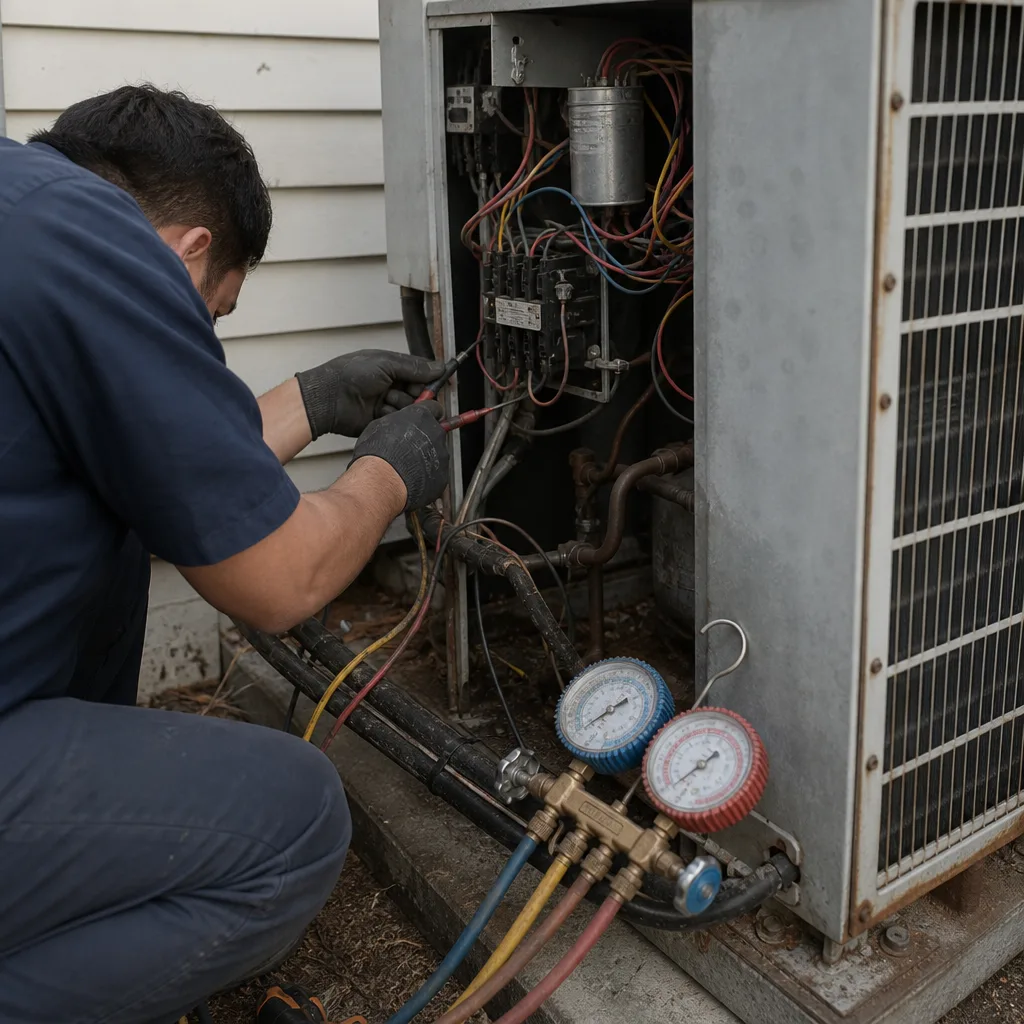 Before
 After
After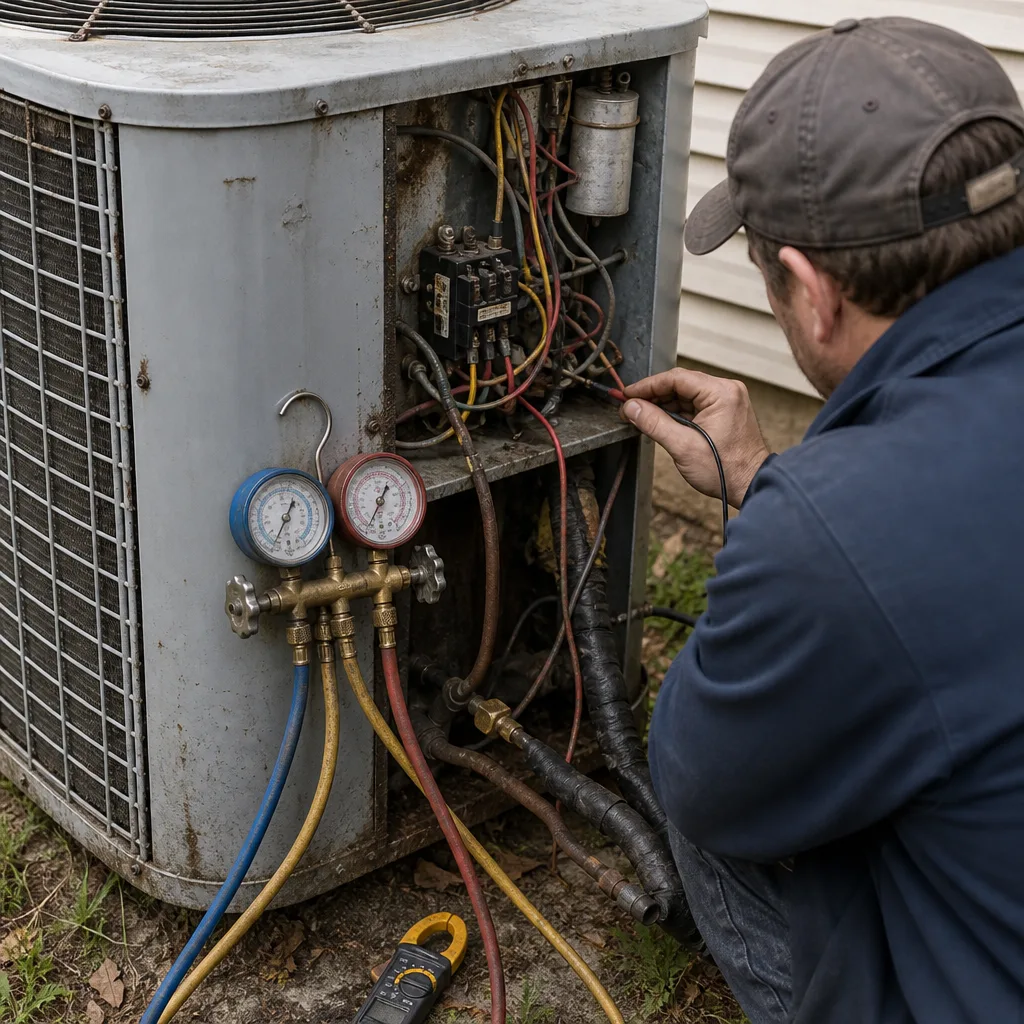 Before
 After
After