
Last updated October 16, 2026
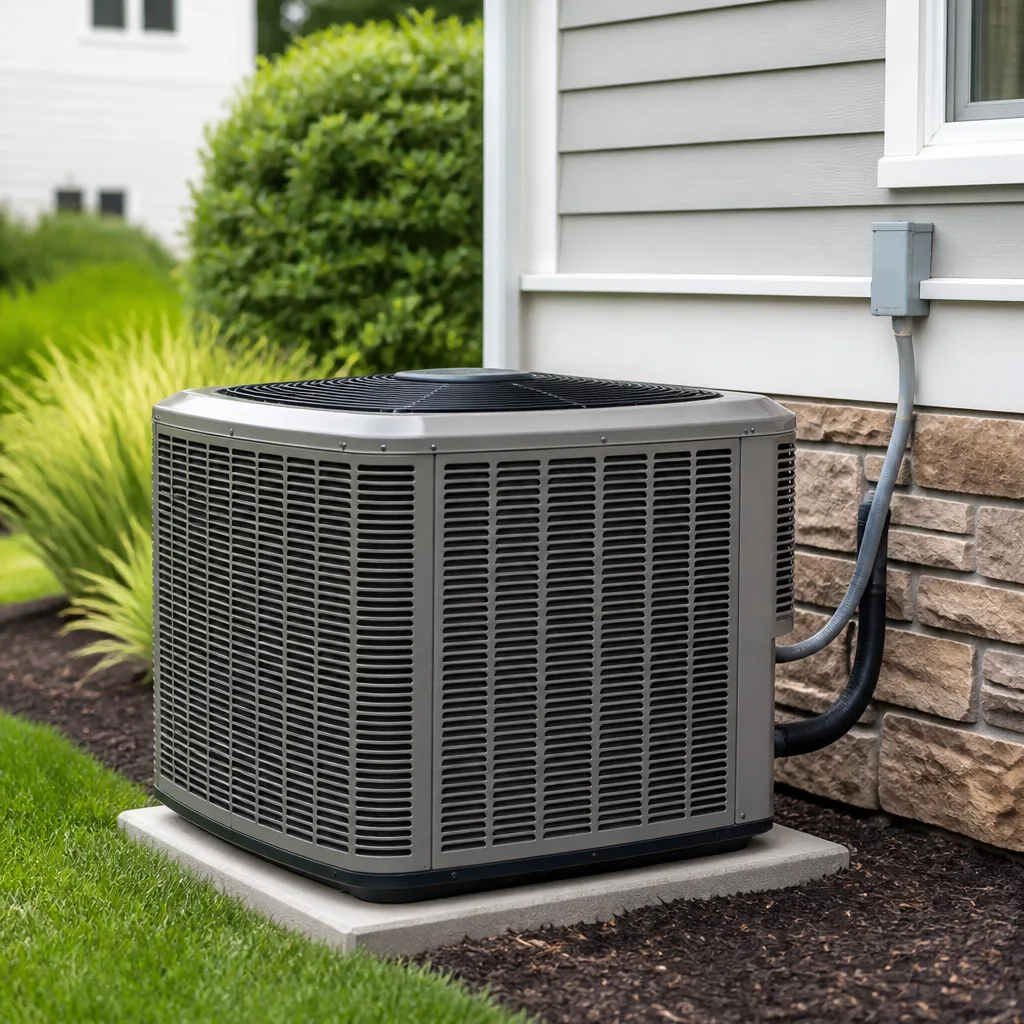 AC repair
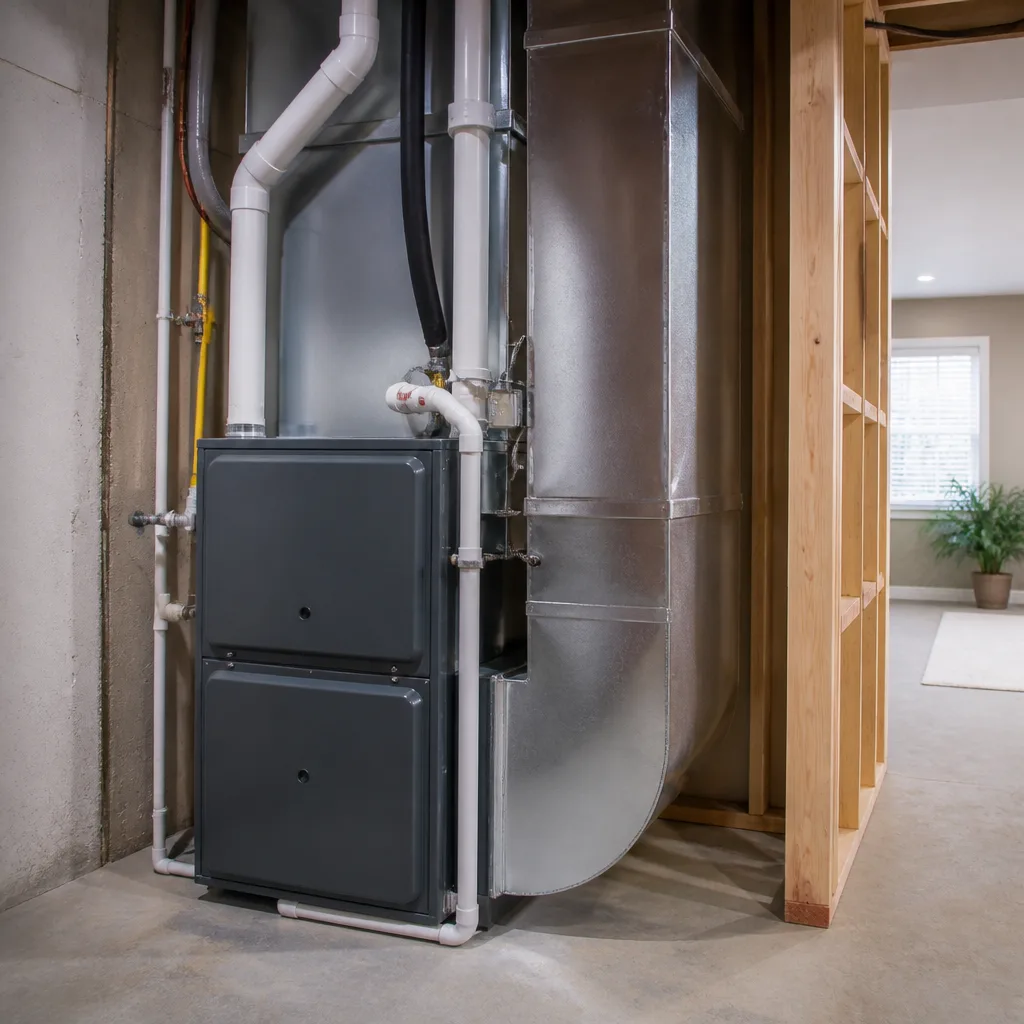 Furnace & heating
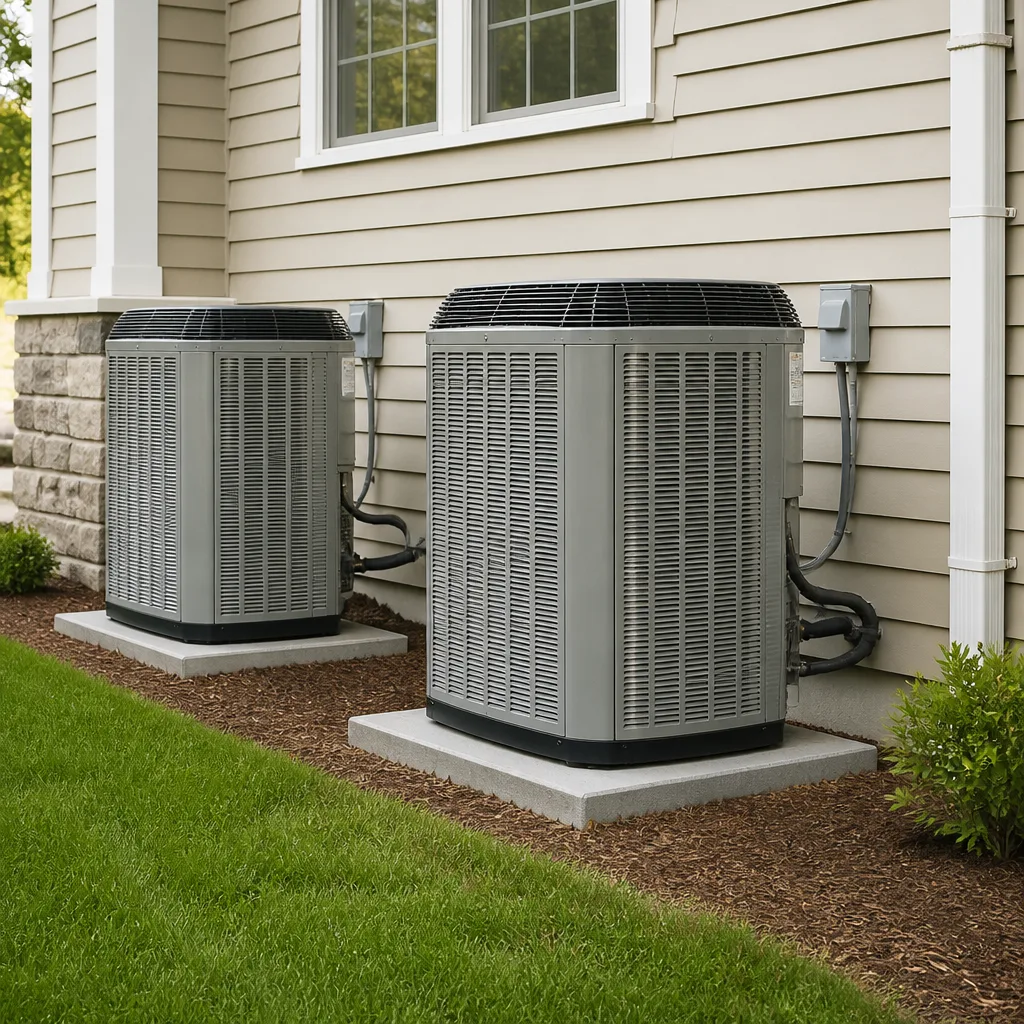 Heat pumps
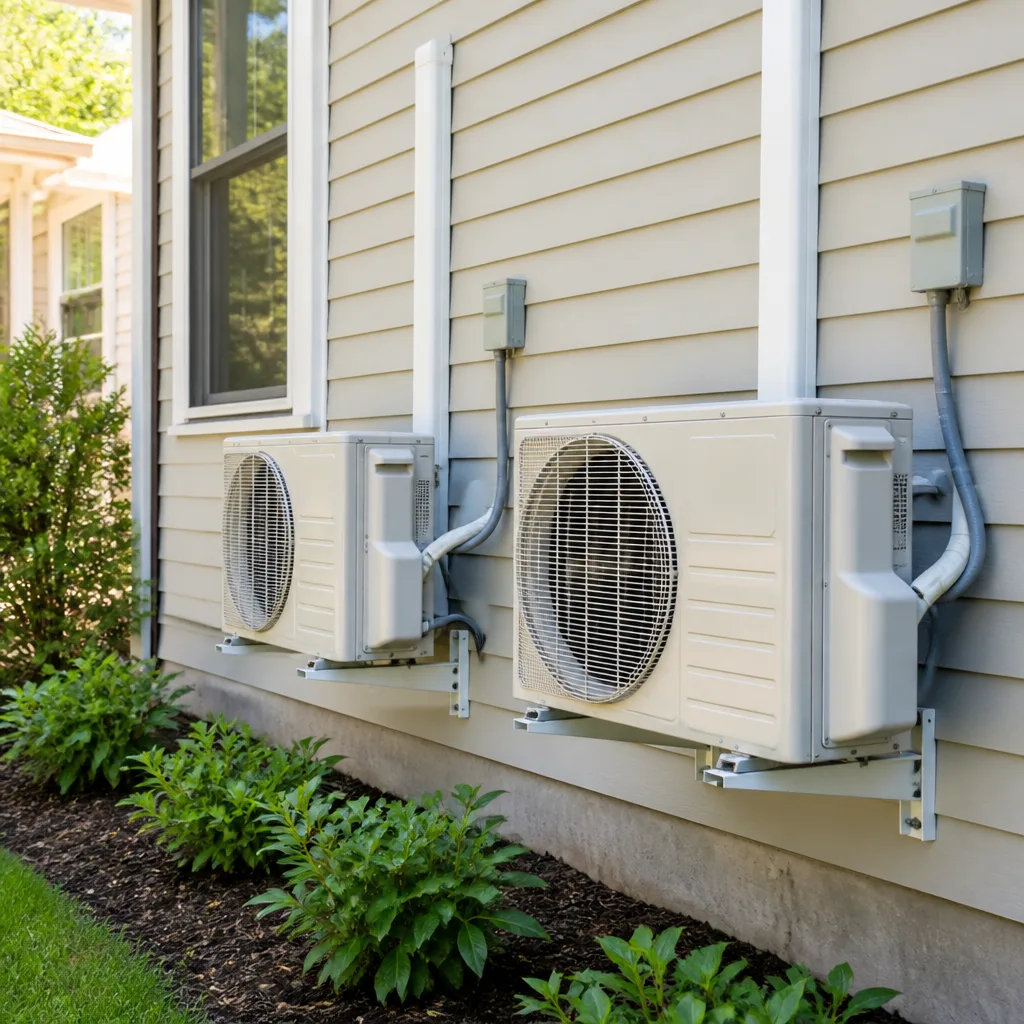 Ductless mini splits
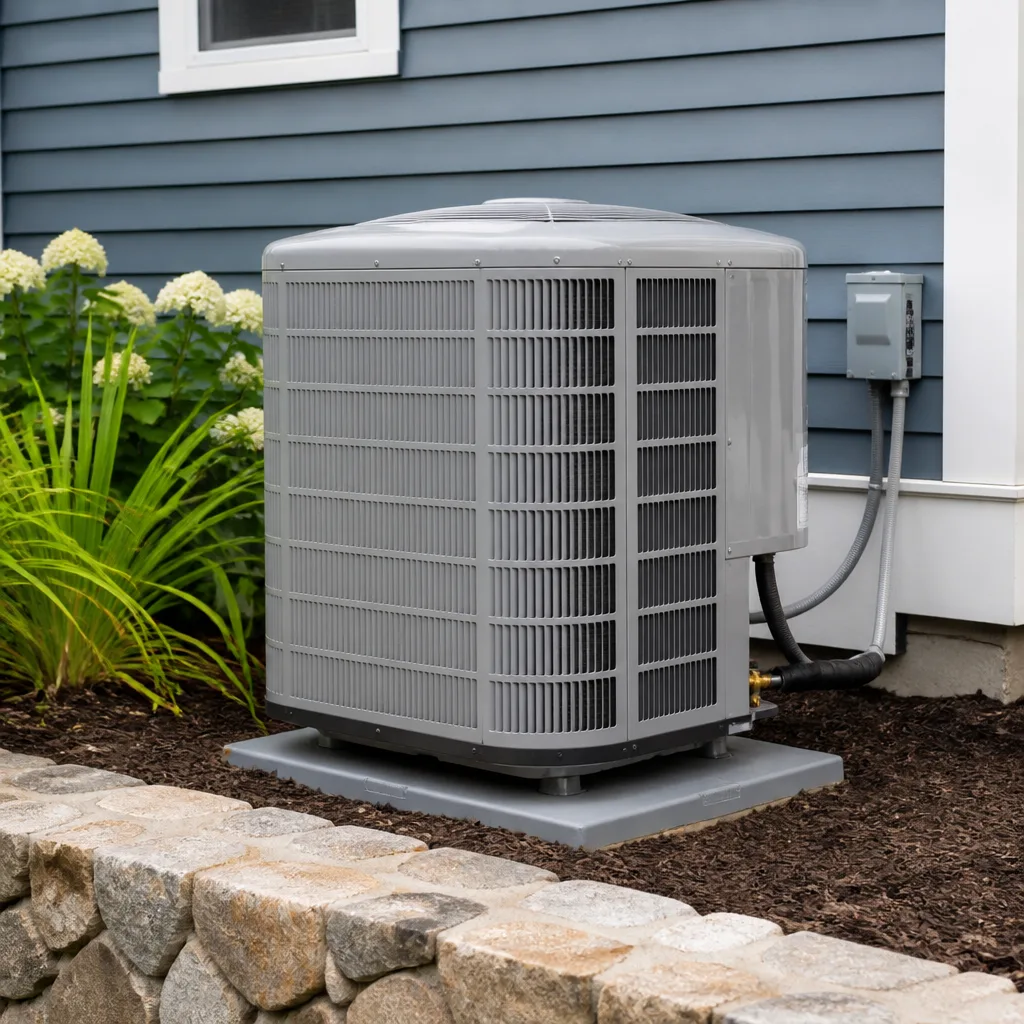 Carrier
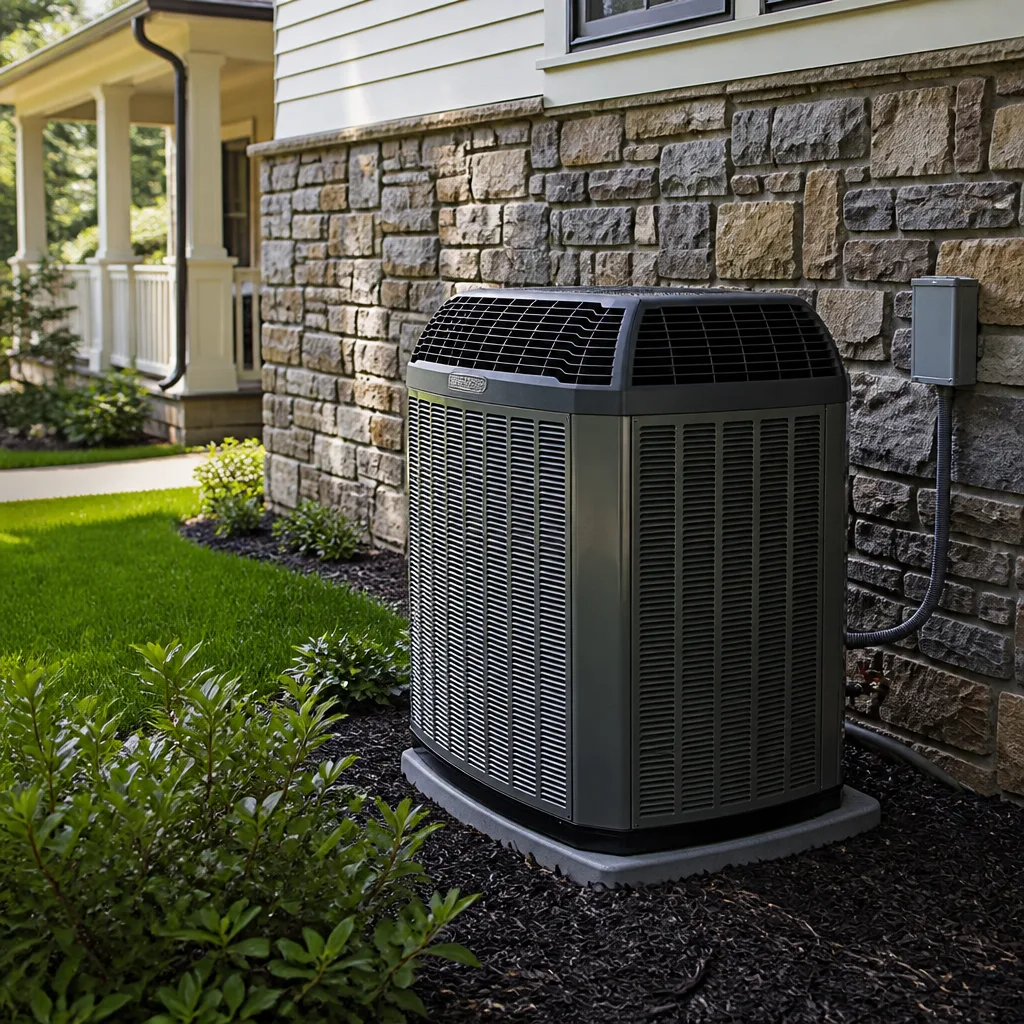 Trane
Trane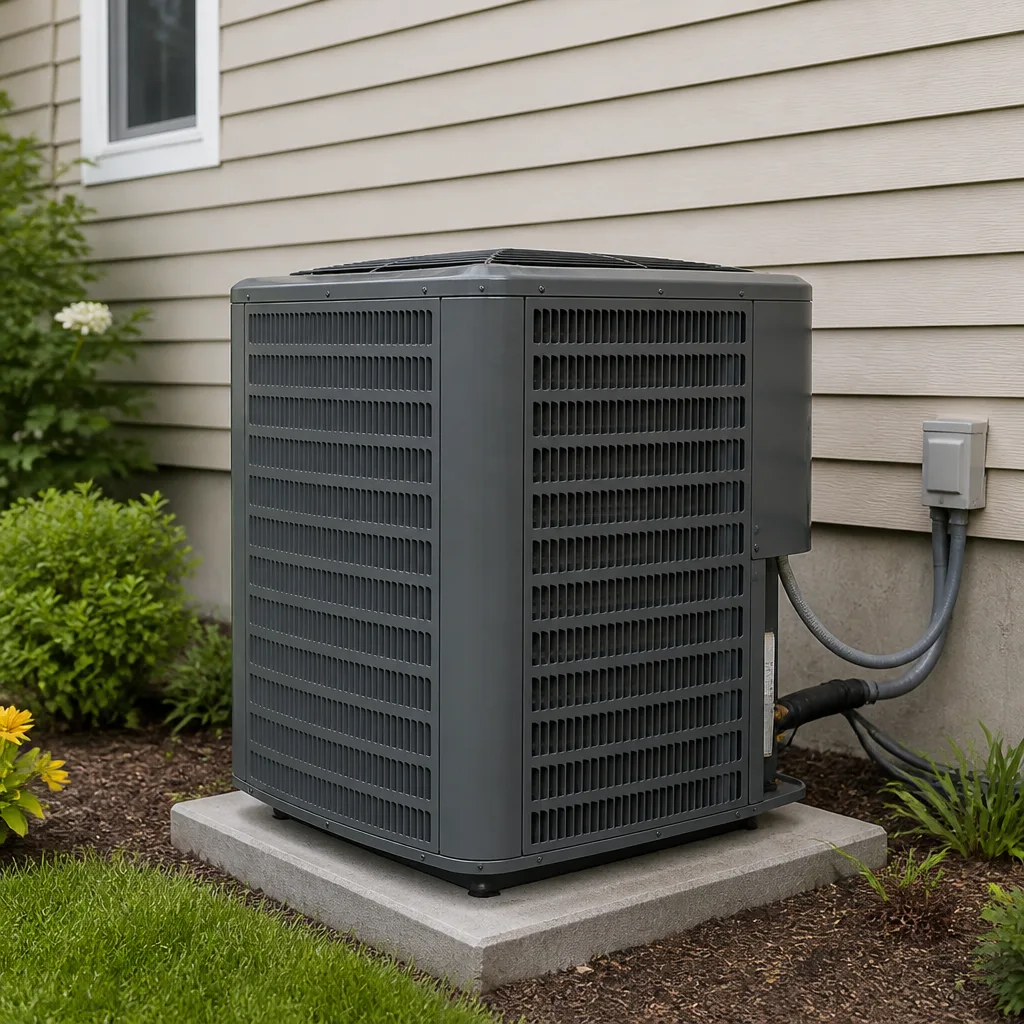 Goodman
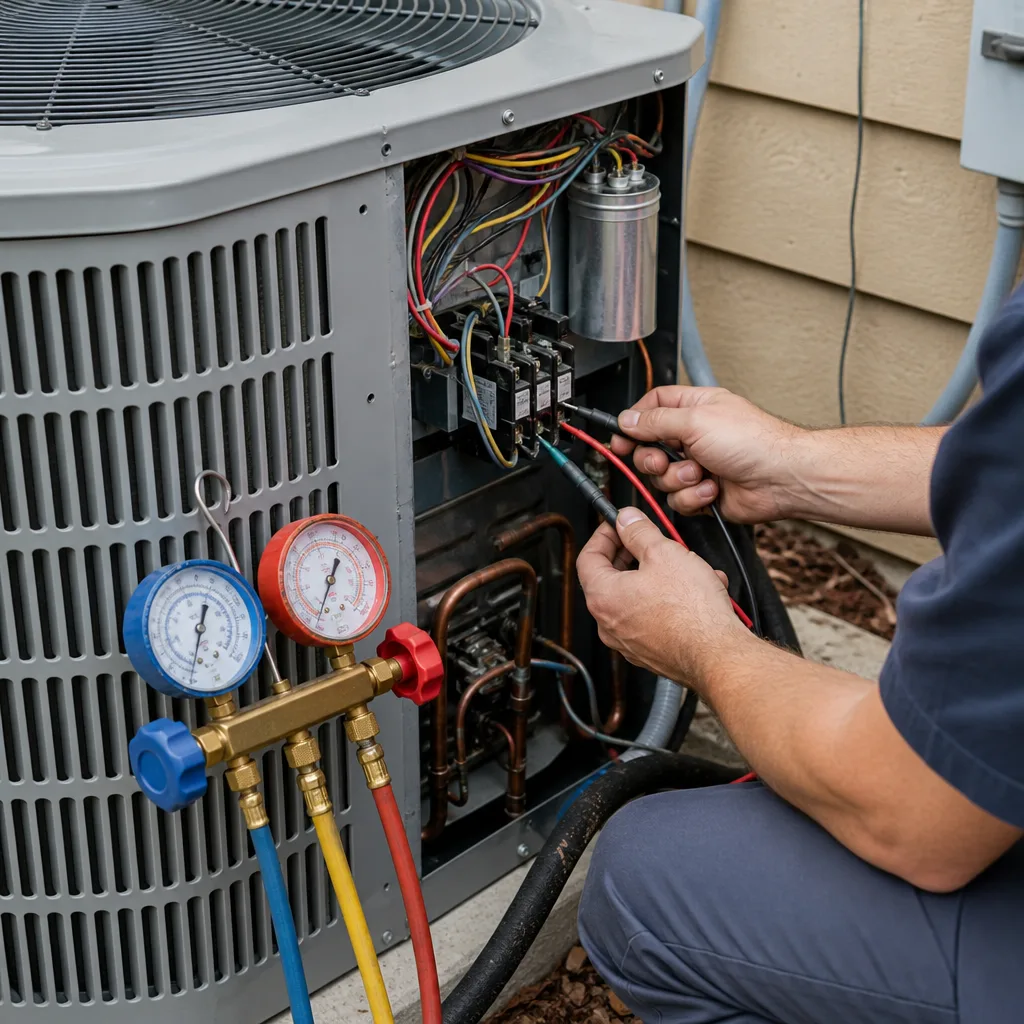
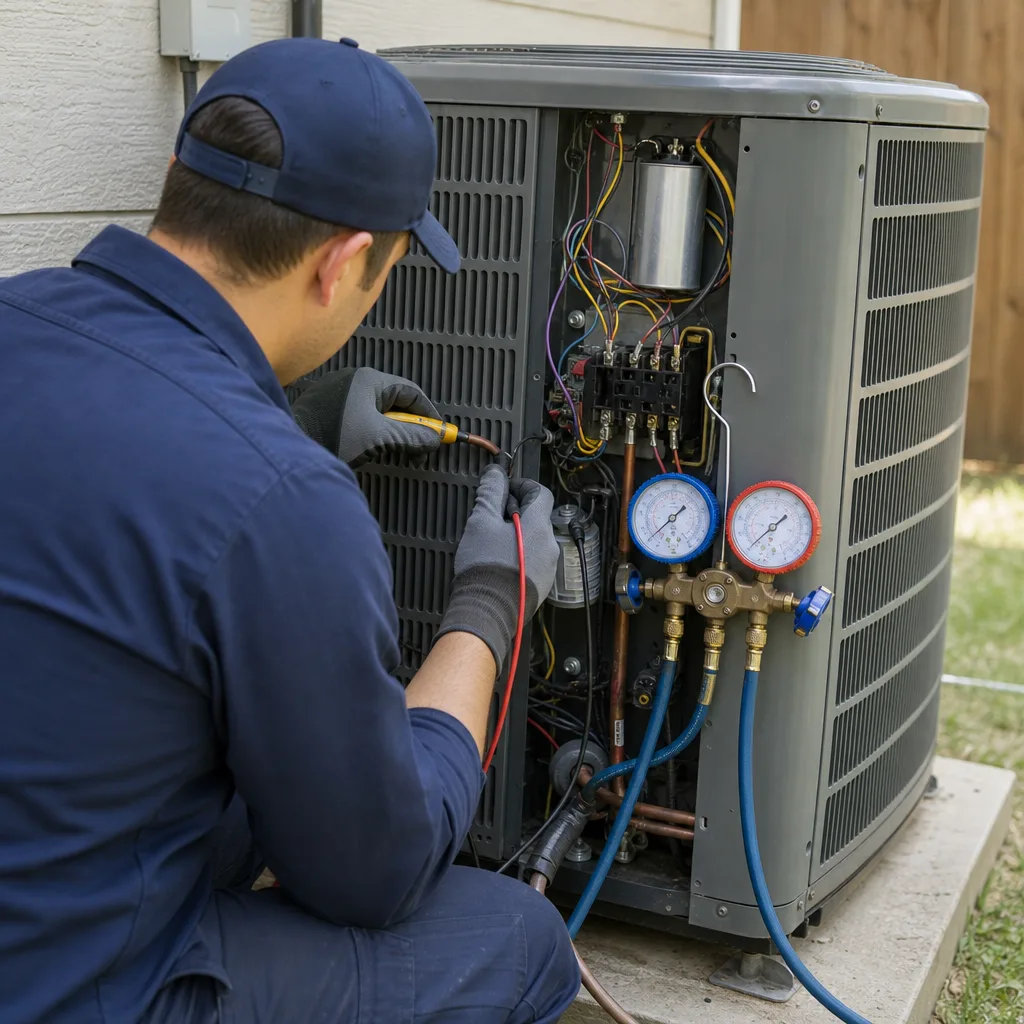
Seasonal tune-up and full diagnostic on your Carrier, Trane, or Goodman system - readings shown to you before any repair is proposed
Diagnosis first, numbers second - you approve the repair price before a single part goes in.
Get your free estimateThe Complete Guide to HVAC in Fort Worth
Fort Worth doesn’t get hot the way most people think Texas gets hot. It gets hot and it swings. The city ranks among the top ten U.S. metros for rapid temperature changes, and the heat index regularly clears 100°F from June through early September. That combination – extreme heat stacked on sudden temperature swings – quietly kills undersized or poorly zoned systems faster than either extreme alone. This guide explains what that means for your equipment, your ductwork, and your monthly bill, and how to make HVAC decisions that fit Fort Worth’s actual conditions, not generic Texas advice.
Styles & brands we work with
Quick Answer
HVAC in Fort Worth means choosing equipment sized for triple-digit heat index days and sudden winter ice storms, then maintaining it against the specific wear caused by clay soil, hard water, and long summer runtimes. Most AC repairs in Fort Worth run between $150 and $500 depending on the part, and a full system replacement typically lands between $6,500 and $14,000 before rebates. For a detailed HVAC Cost Breakdown: The Fort Worth Homeowner’s Reference for 2026, see our dedicated guide. The single most important decision isn’t brand – it’s whether the unit is sized correctly for your specific home, which requires a load calculation, not a rule-of-thumb guess.
At Halden Heating and Air Fort Worth home, we’ve spent more than two decades watching Fort Worth’s climate punish HVAC systems in ways no national guide ever mentions. This page is our complete playbook.
Table of Contents
- Why Fort Worth’s Climate Is the Real Design Brief
- Clay Soil, Slab Shifts, and Duct Stress: The Fort Worth Problem Nobody Mentions
- Manual J Load Calculations: Why “Rule of Thumb” Sizing Fails Here
- What AC Repairs Actually Cost in Fort Worth
- How Much a New HVAC System Costs in Fort Worth (With Real Numbers)
- Heat Pumps vs. Gas Furnace + AC: The North Texas Math
- Oncor Rebates, TXU Rate Schedules, and What SEER Actually Pays Off
- What the Relay Visibility Guarantee Means in Practice
- Common Mistakes to Avoid
- When to Call a Professional
- Frequently Asked Questions
- The Bottom Line
Why Fort Worth’s Climate Is the Real Design Brief
HVAC equipment gets spec’d for a climate zone, and Fort Worth sits in a genuinely awkward spot. We’re in ASHRAE Climate Zone 3A – hot and humid – but we’re at the northern edge of that zone, which means our winters throw curveballs that a Phoenix contractor never has to plan for. A system sized purely for summer cooling will struggle on those February mornings when Fort Worth drops into the teens.
Here’s the pattern we see year after year in Fort Worth:
- Summer: 90 to 105°F days are routine, with dew points in the 70s meaning humidity removal matters as much as raw cooling. A unit that cools the air without pulling moisture leads to that “cold but clammy” feeling in older homes.
- Shoulder seasons: March through May and October through November bring wild temperature swings – 80°F on Tuesday, 40°F on Thursday. Systems cycle irregularly, which is when electrical components and condensate lines fail.
- Winter: Not cold by Minnesota standards, but cold enough. February 2021 hit -2°F in Fort Worth and froze systems that had never seen temperatures that low. Even a normal winter night in the 20s pushes a heat pump to the edge of its efficient range.
- Storm season: Spring thunderstorms and the occasional hailstorm take out condenser coils. Hail damage is common enough that replacement coils and condensing units are a regular revenue line for every HVAC company in Fort Worth.
What this means practically: Fort Worth homeowners need equipment that can handle both ends of the spectrum – serious humidity removal in July and reliable heating in February – plus ductwork that doesn’t leak like a sieve. It’s not about buying a “stronger” unit. It’s about correct sizing and design for a climate that refuses to pick a lane.
Clay Soil, Slab Shifts, and Duct Stress: The Fort Worth Problem Nobody Mentions
Fort Worth sits on expansive clay soil – the same Blackland Prairie gumbo that runs through Dallas and down toward Waco. That soil swells when it’s wet and shrinks when it’s dry. During a dry summer, the soil pulls away from the edges of a concrete slab foundation. During the wet season, it swells back and pushes upward with surprising force. The result is slab movement measured in fractions of an inch – enough to shift a foundation slowly over years, and enough to strain rigid ductwork.
We’ve inspected homes in Arlington Heights, Fairmount, and the far north suburbs where flex duct has pulled loose from supply boxes or developed kinks at transition points because the foundation shifted. The signs are subtle:
- Rooms at the end of a duct run suddenly warm up or cool down less than others.
- Dust accumulating at certain registers because the duct boot has separated and started pulling in attic air.
- A whistling or hissing sound at floor registers in older pier-and-beam homes.
- Increased energy bills during a summer when the system runs longer to compensate for lost airflow.
What to check after a dry summer:
- Walk each room and feel the airflow from each register. Rooms that used to be comfortable but now lag are a red flag.
- Check for gaps around ceiling registers where the boot should create a tight seal. Visible cracks or separated caulk mean movement.
- In the attic (safely, on a ladder and without putting weight on drywall), look for flex duct that’s stretched tight at connection points or sagging where it used to be supported.
- Check the plenum – the metal box on top of the furnace or air handler – for separation or vibration when the blower runs.
Duct leakage in a typical Fort Worth home accounts for 20 to 30 percent of heating and cooling loss, and foundation movement only widens those gaps. Duct testing and sealing should be part of any system replacement, not an add-on you have to ask for.
Manual J Load Calculations: Why “Rule of Thumb” Sizing Fails Here
A Manual J is the engineering calculation that determines exactly how much heating and cooling capacity a specific house needs. It accounts for square footage, window orientation, insulation levels, ceiling height, air infiltration, occupant count, and local climate data. It’s not a chart lookup – it’s room-by-room math.
Here’s why it matters specifically in Fort Worth:
Mid-Cities homes (Hurst, Euless, Bedford, North Richland Hills) tend to be tract-built and reasonably tight. A Manual J on these homes often shows smaller loads than expected, which means an oversized unit is a genuine risk. Oversized equipment short-cycles – it cools the space too fast but never runs long enough to dehumidify. The house feels cold and sticky at the same time. Also, short-cycling beats up compressors and heat exchangers and shortens their lifespan.
Older Fairmount, Mistletoe Heights, or Ryan Place bungalows are the opposite. Single-pane windows, minimal wall insulation, and pier-and-beam foundations mean infiltration is high and heat gain is higher. A Manual J on these homes often reveals that the existing system has been undersized for decades, which is why rooms at the back of the house never quite cool down in August.
The takeaway: guessing at tonnage based on square footage alone is how Fort Worth homeowners end up with systems that never feel right. The math accounts for all the local variables, including Fort Worth’s specific summer design temperature of 99°F and winter design temperature of 22°F. A load calculation is non-negotiable before any equipment quote is worth anything.
What AC Repairs Actually Cost in Fort Worth
We’ll give you real numbers. No vague “it depends” without the depends attached. AC repair pricing in Fort Worth breaks down like this:
- Diagnostic service call: $89 to $129, depending on the time of day and whether it’s a weekend or after-hours call.
- Capacitor replacement: $140 to $250 installed. Capacitors are the single most common failure in Texas heat – they’re what gives the compressor and fan motor their startup jolt.
- Contactor replacement: $150 to $280 installed. The contactor is the electrical relay that switches the compressor on and off. Fort Worth’s heat and humidity corrode contacts faster than in drier climates.
- Condenser fan motor: $350 to $550 installed, depending on the unit brand and motor type.
- Refrigerant recharge (topping off the coolant your system needs to produce cold air): $200 to $450 for the labor and refrigerant, if the system uses R-410A. Older R-22 systems cost significantly more – sometimes $150+ per pound – because R-22 production has been phased out. If you have an R-22 system, replacement starts looking like the smarter financial move.
- Thermostat replacement: $200 to $500 installed, including a smart thermostat like a Nest or Ecobee if you want scheduling and remote access.
- Condensate drain line clearing: $120 to $180. Fort Worth humidity means drain lines clog with algae and sludge constantly. A float switch that shuts down a system right as the heat peaks is nearly always a clogged drain.
- Compressor replacement: $1,800 to $2,800 installed on a system under ten years old, and only worth it if the rest of the system is healthy. On older equipment, replace the system instead.
Most AC repairs in Fort Worth run between $150 and $500 depending on the part. That’s the honest range. When the bill climbs past $1,500 on a system older than eight or ten years, we tell homeowners to think hard about replacement instead of another repair.
See our full breakdown at AC Repair in Fort Worth.
How Much a New HVAC System Costs in Fort Worth (With Real Numbers)
We’re going to give you the same numbers we’d give on a phone call, because hiding pricing behind “free estimate” games is exactly the behavior that gives this industry a bad name. Full system replacement in Fort Worth – furnace, AC condenser, evaporator coil, and installation – falls in these ranges as of 2025:
- 14 SEER2, single-stage, basic equipment: $6,500 to $8,500. Budget-friendly, gets the job done, lowest upfront cost. Brands like Goodman and Rheem dominate this tier and are perfectly serviceable for most Fort Worth homes.
- 16 to 17 SEER2, two-stage equipment: $9,000 to $12,000. Better humidity control because the system runs in low stage more often. Noticeably more comfortable for homes with two stories or poor airflow distribution. Good candidates include York and Daikin units in this range.
- 18 to 20+ SEER2, variable-speed inverter equipment: $12,500 to $16,000+. Top-tier efficiency and the closest thing to set-and-forget comfort. Variable-speed blowers and compressors ramp up or down incrementally instead of cycling full-blast. Best suited for homes where utility bills are a genuine budget concern or where occupants have allergy or humidity sensitivity.
Important context: Fort Worth’s climate means the efficiency math works differently than it does in milder regions. We run our ACs hard from May through October. A higher SEER2 rating translates into bigger dollar savings here than it would in, say, rural Michigan. But it also depends on your utility provider. If you’re on TXU Energy or Reliant with a flat residential rate around 13 to 16 cents per kilowatt-hour, the payback period for stepping up from 14 SEER2 to 16 or 17 SEER2 clocks in at roughly six to nine years in a typical Fort Worth home. If electricity rates climb, the payback shrinks.
For a deeper cost breakdown, read AC Installation in Fort Worth.
Heat Pumps vs. Gas Furnace + AC: The North Texas Math
The “one-size” heat pump push you see on national HVAC sites and in federal electrification incentives is not always the right answer for Fort Worth homes. Here’s the actual math.
When a heat pump makes sense in Fort Worth:
- Your home doesn’t have natural gas service. Electric-only homes in unincorporated parts of Tarrant County or older neighborhoods without gas lines are prime candidates.
- Your furnace is reaching the end of its life and you’re ready to electrify. A modern cold-climate heat pump handles Fort Worth winters without backup heat strips kicking on except in rare dips below 25°F.
- You’re pairing it with solar panels or your goals are emissions-driven more than cost-driven. Heat pumps are more efficient than gas at mild temperatures, which covers most of our shoulder seasons.
When a gas furnace + AC split still wins on operating cost:
- Natural gas in Texas remains cheap. Even with recent price volatility, gas furnace heating typically costs less per BTU delivered than electric resistance or heat pump operation during our coldest winter nights, especially when temperatures drop into the 20s and a heat pump’s efficiency drops with it.
- Homes that already have gas lines and a working furnace get a lower upfront cost by replacing the AC only and keeping the existing gas heat, assuming the furnace is in good shape.
- If your home loses power frequently during ice storms, a gas furnace has a lower electrical draw than a heat pump. A portable generator that can power a furnace blower is a smaller, cheaper machine than one that needs to run a heat pump compressor.
The honest answer for most Fort Worth homes with existing gas service: a gas furnace paired with a mid-to-high efficiency AC remains the lowest-total-cost option over a 15-year equipment lifespan. The heat pump advantage narrows as electricity rates improve relative to gas, but we don’t see that happening in the immediate future. Anyone telling you the answer without looking at your utility bills and gas availability is selling something.
Oncor Rebates, TXU Rate Schedules, and What SEER Actually Pays Off
Fort Worth sits in Oncor Electric Delivery territory, which means Oncor’s residential efficiency rebate programs apply to most city homes. These programs offer cash back for qualifying high-efficiency AC and heat pump installations. The exact rebate amounts shift annually, but as of recent program cycles they’ve typically run $300 to $800 for 16 SEER2 and above systems, with higher rebates for heat pumps and fully variable-speed systems. The rebate is applied as a point-of-sale discount or a post-installation credit depending on how the contractor structures it.
How TXU and Reliant rate schedules factor in:
- TXU Energy and Reliant both offer “time-of-use” plans where electricity costs more during peak demand hours – roughly 3 p.m. to 7 p.m. from June through September. If you’re on one of these plans, a variable-speed system that runs longer at lower output is less affected by peak-hour pricing than a single-stage unit that cycles full-blast during the hottest part of the afternoon.
- Flat-rate plans make the SEER math simpler: higher SEER = lower monthly bill, full stop. The only question is payback period.
- Some plans include “free nights” or “free weekends” pricing. If you have that structure, a smart thermostat that pre-cools the house during free or cheap hours while reducing demand during peak periods can cut bills dramatically. The thermostat pays for itself in one Fort Worth summer.
The SEER payback reality check for Fort Worth: Upgrading from a 14 SEER2 to a 17 SEER2 system in a 2,000-square-foot Fort Worth home typically saves $250 to $450 per year in cooling costs, depending on your rate plan and how much you run the AC. A $3,000 price difference means a seven-to-ten-year payback. If you plan to be in the home that long, it’s a reasonable investment. If you’re moving in three years, keep the 14 SEER2 and put the difference into a new roof or better attic insulation, which helps more immediately.
What the Relay Visibility Guarantee Means in Practice
Most people have called an HVAC company and gotten a four-hour arrival window, a technician they know nothing about, and a price revealed only after the diagnostic. The Relay Visibility Guarantee exists to make that experience extinct. Here’s what it looks like when a Fort Worth homeowner books with us:
- Book online or by phone. You schedule the appointment through our website, or call and talk to a live person at 2 a.m. if that’s when the AC dies. No voicemail trees, no callbacks.
- Receive a live arrival time. You get a specific window that actually narrows as the technician approaches. Track the service vehicle to your door the same way you’d track a rideshare.
- See the technician’s photo and name before they arrive. A background-checked, uniformed professional shows up. You don’t have to wonder who’s knocking.
- Get a written price before any work starts. After the diagnostic, we put a locked number in writing. No surprises at the door, no “while we’re here” upsells without your permission.
- See before-and-after photos of the work. We document what we found, what we did, and what the finished job looks like. You can see the dirty coil and the clean one side by side.
- Walk away with a written guarantee. Every repair comes with a written guarantee. If it fails within the coverage window, we come back at no charge – automatically, not as a favor.
This is what transparency actually looks like in residential HVAC. The Relay Standard isn’t marketing language to us. It’s a checklist on every single job we run in Fort Worth.
Common Mistakes to Avoid
- Skipping the load calculation. Replacing a 3-ton system with another 3-ton because “that’s what was there” assumes the original was sized correctly. In Fort Worth’s older homes, it frequently wasn’t. You’ll keep the same hot upstairs or clammy living room and blame the equipment.
- Ignoring drain line maintenance. Fort Worth’s humidity means condensate lines clog every single season. A $150 drain clearing beats a $500 water-damage repair when the float switch fails and the pan overflows into your ceiling.
- Replacing an AC only without checking the ductwork. A brand-new high-efficiency system attached to leaky 25-year-old ducts delivers maybe 60 percent of its rated performance. You paid full price for partial output.
- Chasing lowest bid. A Fort Worth AC install quoted at $4,500 is either cutting corners on equipment, skipping permits, or paying laborers under the table. None of those hold up.
- Neglecting the furnace until December. Furnace issues surface on the first cold morning of the year. Every HVAC company in Fort Worth gets slammed the second the temperature drops. Getting a furnace inspection and minor repairs done in October – including Furnace Repair in Fort Worth – means you’re not waiting three days in the cold when it’s 28°F outside.
- Assuming the highest SEER always wins. A 20 SEER2 variable-speed system in a small, well-insulated home with cheap electricity will never pay for itself. Spend the difference on insulation or better windows.
- Buying equipment online and hiring a handyman for installation. We see systems from internet retailers installed by unlicensed installers fail within a year. No factory warranty, no local parts support, and no company to hold accountable. In Fort Worth’s heat, that’s a gamble you can’t afford to lose.
When to Call a Professional
There’s a line between “I can handle this” and “this needs a pro.” You’re past that line if you hear grinding, screeching, or banging from the condenser, if the system is blowing warm air despite the thermostat set correctly, if a breaker keeps tripping, if you see ice on the refrigerant lines or indoor coil, or if the system cycles on and off every few minutes. Any work involving high-voltage wiring or refrigerant is absolutely not a DIY job – both can hurt you badly. Halden Heating and Air Fort Worth offers free estimates in Fort Worth, and every repair comes with a written guarantee. Call (817) 632-5499 and you’ll talk to a real person, any hour.
Frequently Asked Questions
Twice a year – once in spring before the cooling season and once in fall before the heating season. Fort Worth’s long, hard summers make the spring inspection especially important because coils, capacitors, and drain lines take a beating. Between visits, change the air filter every one to three months depending on dust and pet load.
There’s no square-footage chart that answers this correctly. The right size comes from a Manual J load calculation that accounts for your home’s insulation, window area and orientation, ceiling height, air leakage, and Fort Worth’s design temperatures. Roughly, a tight 2,000-square-foot home might need 2.5 to 3 tons, while a leaky 1920s bungalow of the same size might need 4 tons or more.
If the furnace is over 12 years old, the heat exchanger has failed, or a repair costs more than half of what a new furnace would, replacement makes more sense – especially before a Fort Worth cold snap exposes a marginal system. A newer furnace under warranty with a simple part failure is usually worth repairing. Call (817) 632-5499 for an honest diagnostic.
A complete system – furnace, AC, and coil – ranges from $6,500 to $16,000 depending on efficiency level and home size. AC-only replacement starts lower, around $5,000 to $8,000 for a typical Fort Worth single-family home. Every quote we provide is a written fixed price before any work starts.
Yes. We answer calls 24/7 with a live person, and our Fort Worth service area is staffed for same-day emergency calls. Summers are busy, so call early in the day if you’re scheduling ahead, but we keep same-day and next-day slots open for system-down emergencies.
Yes. Oncor offers residential rebates for qualifying high-efficiency equipment, typically starting around 16 SEER2. The rebate is applied at installation. We handle the paperwork for you. Rebates change annually, so check current program details when you’re comparing quotes.
The Bottom Line
Fort Worth’s climate demands more from HVAC equipment than most of Texas, and the clay soil we build on adds a layer of wear that no generic guide covers. The right system is sized by calculation, not by habit. The right decision between gas and electric heat depends on your utility rates, your gas service, and how long you’ll stay in the home. And the right contractor is one who shows you a written price before a single tool is picked up, sends a technician you can track to the door, and backs every repair with a written guarantee. We built Halden Heating and Air Fort Worth on exactly those terms in 2004, and we run on them still today. For more guides & resources on keeping your system running right, visit our blog. Call (817) 632-5499 for a free estimate.
Written by Andre Fuller, Owner at Halden Heating and Air Fort Worth, serving Fort Worth since 2004.
See the difference
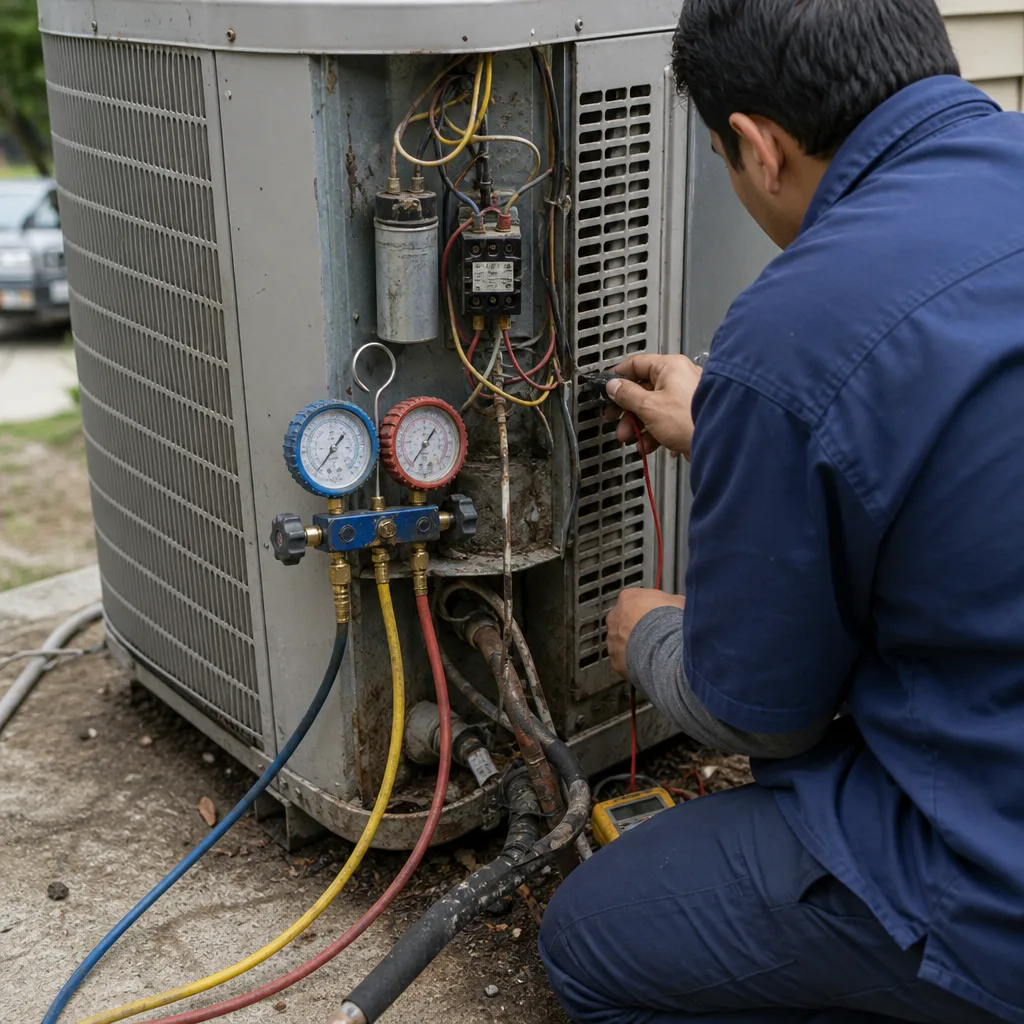 Before
 After
After Before
 After
After Before
 After
After